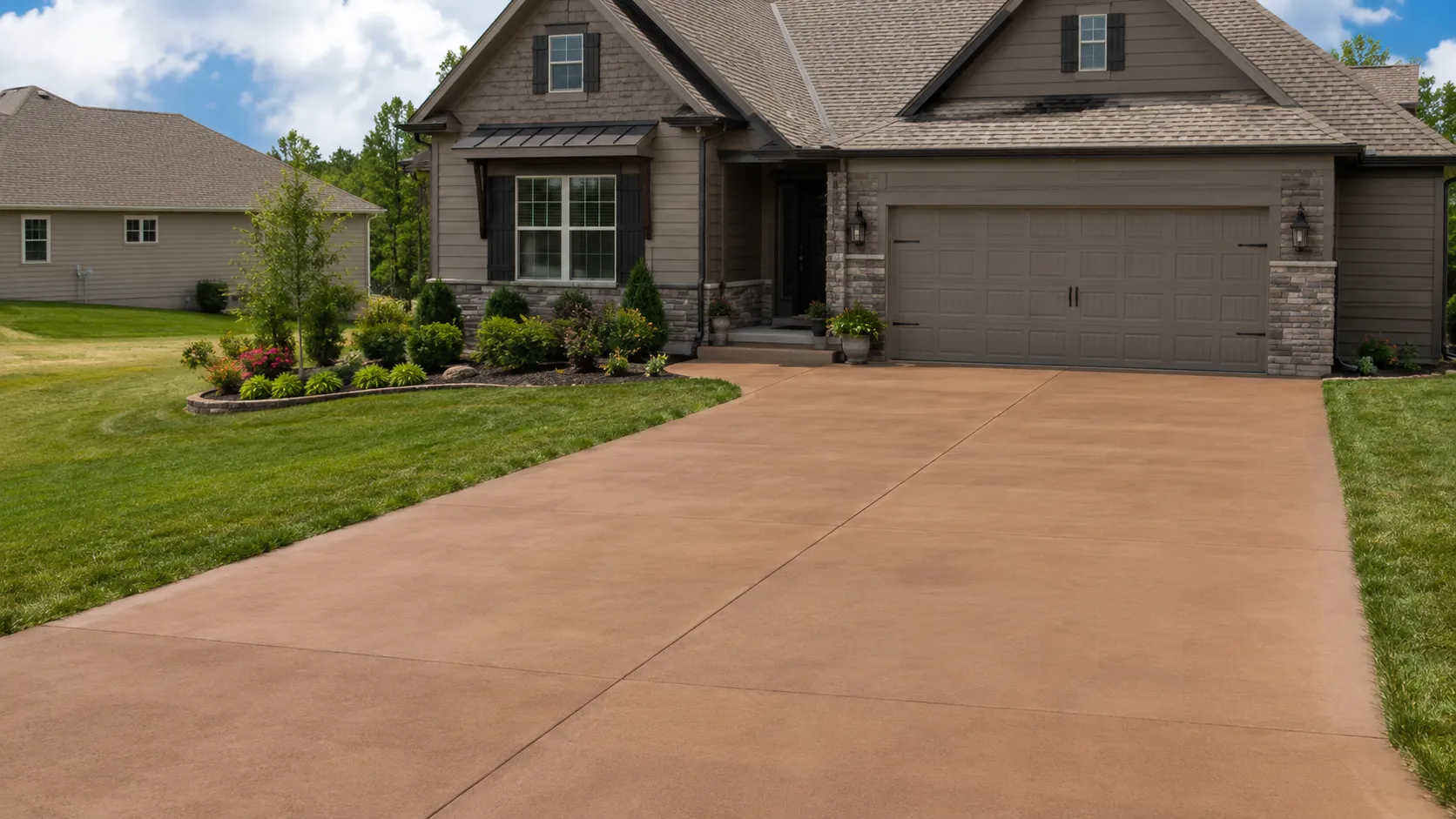
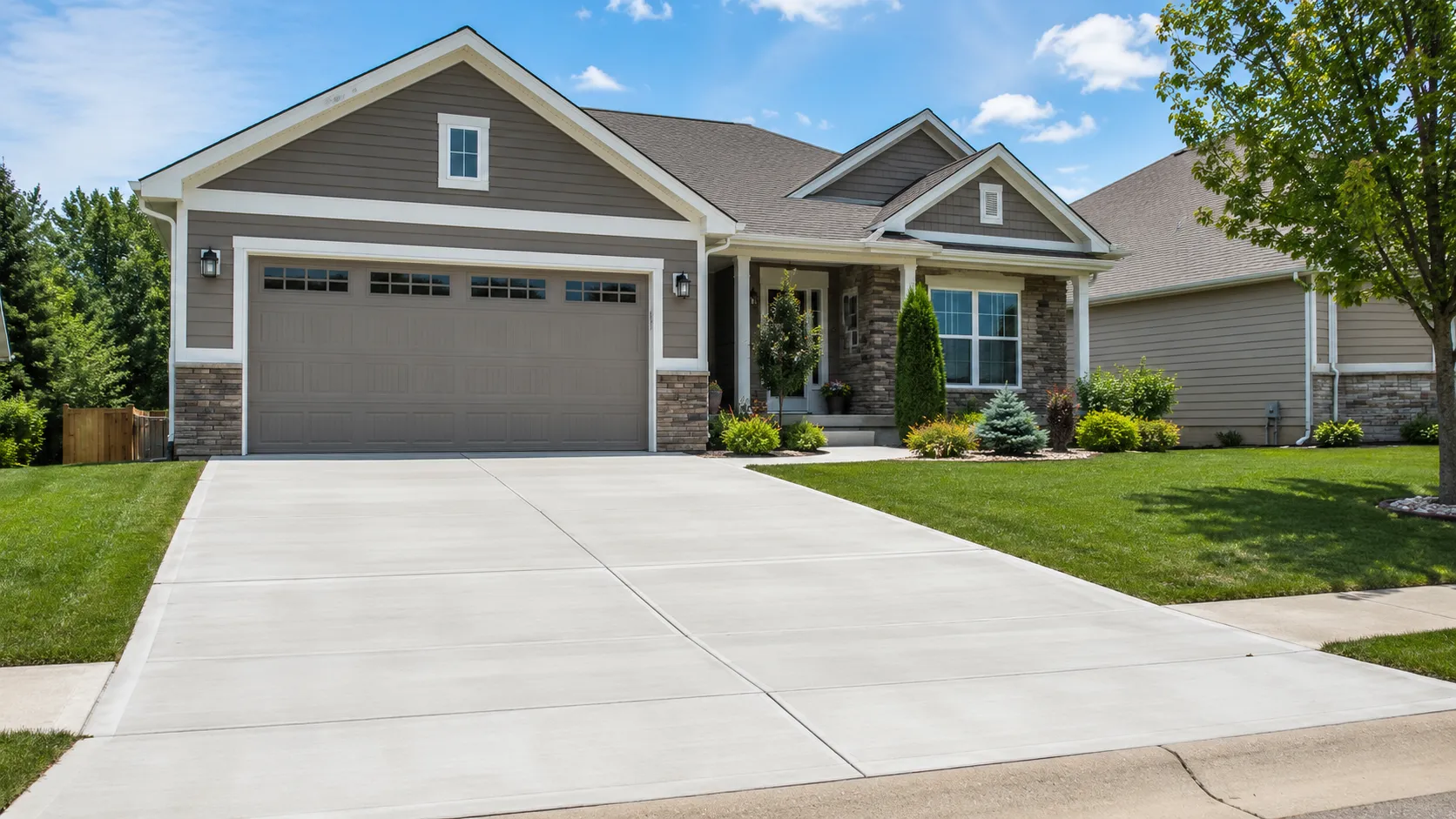
New concrete driveway at a residential home in Lee’s Summit

Concrete Replacement Service

Driveway Replacement
in Lee's Summit, MO

A damaged or aging driveway does not always need replacement. We recommend it when cracking is widespread, slabs have moved or settled, or failed patches show that another repair will not hold up.

We replace individual driveway sections and complete driveways in Lee's Summit. We remove broken concrete, inspect the material beneath it, prepare the base as site conditions require, then place, joint, finish, and cure the new concrete.

Get a Free Estimate

Project Photos - OptionalAdd up to three photos showing the full area and the damage.

    Local ServiceServing Lee's Summit
    Concrete ServicesResidential & commercial projects
    Replacement SpecialistsFull and partial options
    Free EstimatesRequest a project review

    When Repair Isn't Enough

    Many driveway problems can still be addressed with focused repairs when the surrounding concrete remains stable.

    Replacement becomes more practical when damage affects large areas, multiple slabs have significant movement, the concrete is extensively fractured or deteriorated, or underlying support problems make repeated localized repairs unreliable.

    A driveway with several failing sections may also become difficult to repair effectively if each repair creates additional transitions between old and new concrete.

    We inspect the crack pattern, vertical movement, drainage, base support, slab edges, and nearby driveway sections before recommending repair, partial replacement, or full replacement.

    For a more detailed explanation of repair options and how driveway damage is evaluated, see our Driveway Repair page and Driveway Replacement Cost Guide.

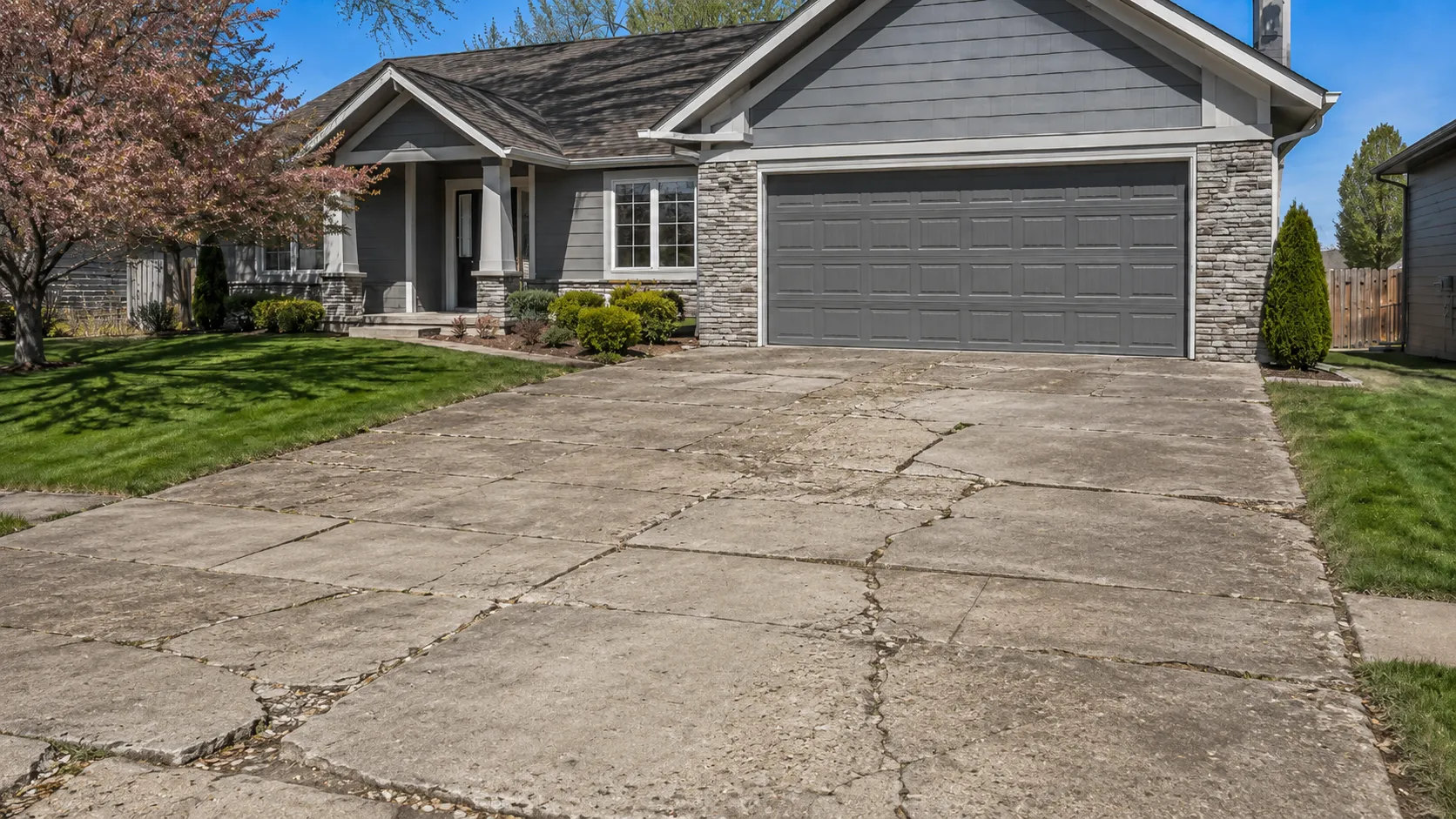
    BEFORE

    Damaged concrete driveway with large cracks and uneven slabs

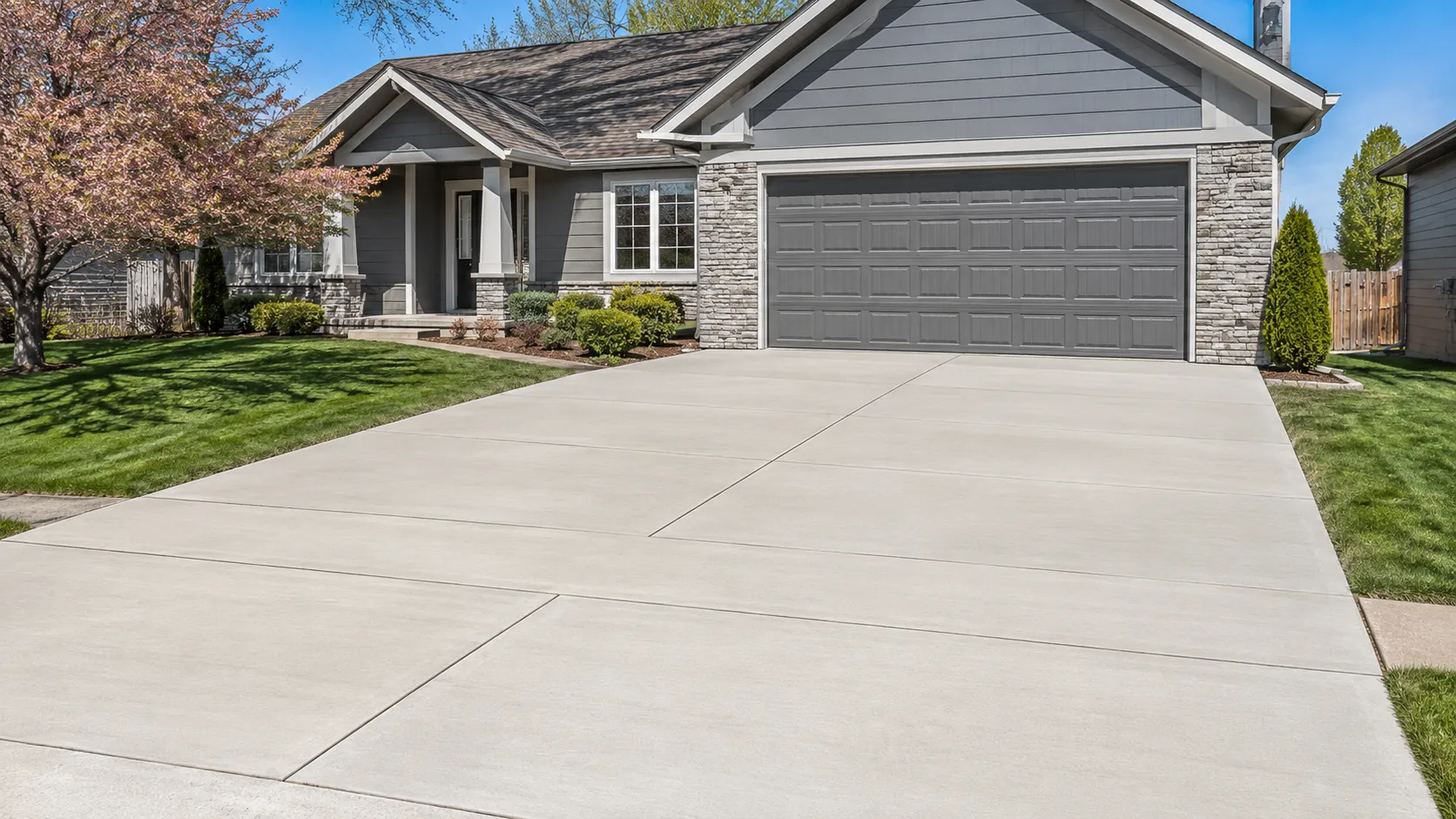
    AFTER

    Newly replaced concrete driveway in front of a residential home

    Full Replacement vs Partial Replacement

    Not every replacement project requires removing the entire driveway.

    Full Driveway Replacement

    Full replacement may be appropriate when deterioration affects most of the driveway, multiple sections have significant settlement or movement, drainage problems affect the overall surface, or the existing concrete has reached the end of its practical service life.

    Removing the full driveway also gives us the opportunity to evaluate and rebuild the underlying base, adjust grades where conditions allow, improve transitions, and modify the driveway layout if needed.

    Partial Driveway Replacement

    When deterioration is limited to one or several clearly defined sections, partial replacement may be possible.

    Individual slabs near the garage, driveway apron, parking area, or another damaged section can sometimes be removed and replaced while stable concrete remains in place.

    We evaluate joint locations, elevation differences, drainage patterns, and the condition of adjacent slabs so the new section integrates properly with the remaining driveway.

    New Driveway Installation & Extensions

    Our driveway work is not limited to replacing damaged concrete.

    We can also evaluate projects that include:

    We plan an extension as part of the overall driveway rather than treating it as an isolated slab.

    Vehicle movement, drainage, transitions to existing concrete, property layout, and expected loads should all be considered before the new area is installed.

    When new concrete connects to an existing driveway, we also plan the transition and joint between the old and new sections as part of the overall layout.

    New concrete driveway at a residential home in Lee’s Summit
    • Driveway extensions
    • Additional parking areas
    • Wider driveway entrances
    • Side parking pads
    • New connections to garages or detached structures
    • Replacement of gravel or deteriorated paved areas with concrete

    Replacement Project

    What Goes Into a Replacement Project

    A durable driveway depends on more than the visible concrete surface.

    Conditions beneath the slab, water movement across the property, construction specifications, and how the new concrete connects to surrounding surfaces can all influence long-term performance.

    Site & Structural Preparation

    1

    Local Soil and Weather Conditions

    Driveway replacement in Lee's Summit requires attention to local soil, drainage, and seasonal weather conditions.

    Soil conditions vary across Lee's Summit and Jackson County. Where the subgrade contains moisture-sensitive or clay-rich soils, changes in moisture can affect how uniformly the ground supports the concrete above it.

    Seasonal freezing and thawing can place additional stress on exterior concrete when water reaches poorly drained or inadequately supported areas beneath or around the slab.

    For that reason, we evaluate the exposed subgrade after removal rather than assuming that the material beneath the old driveway is ready to support new concrete.

    Proper drainage, removal of unsuitable material where necessary, and a well-prepared compacted base are important parts of creating more consistent support for the replacement slab.

    2

    Removal and Site Preparation

    We remove the existing concrete so we can evaluate the condition of the area beneath the driveway.

    Soft, unstable, disturbed, or poorly supported areas should not simply be covered with new concrete.

    Removal also allows us to examine slab edges, transitions, drainage paths, and the condition of the material that supported the previous driveway.

    Where necessary, we address unsuitable areas before preparing the replacement base and placing the new slab.

    We also identify site limitations, access concerns, and adjoining surfaces that may affect how the replacement area can be prepared.

    The goal is to provide more consistent support rather than reproduce conditions that may have contributed to movement in the previous driveway.

    3

    Base Preparation

    The base beneath a driveway helps distribute vehicle loads and provide uniform support for the concrete.

    Depending on site conditions, preparation may include removing unsuitable material, adding compactable aggregate, grading the area, and compacting the base before concrete placement.

    The type and amount of preparation depend on what is exposed after removal, including soft areas, inconsistent fill, moisture conditions, and changes in elevation across the driveway.

    Base material must be placed and compacted so the slab has a stable, reasonably uniform working surface rather than isolated areas of weak support.

    We determine base preparation from actual site conditions rather than assuming every driveway requires exactly the same treatment.

    A properly prepared base cannot eliminate every possibility of cracking or movement, but it can reduce avoidable problems caused by inconsistent support.
    4

    Drainage and Grade

    Driveway replacement gives us an opportunity to review how water moves across and around the existing surface.

    The finished driveway should direct water appropriately and avoid unnecessary low areas near the garage, foundation, sidewalks, or adjoining landscaping.

    Drainage is particularly important where water can collect near slab edges or reach moisture-sensitive areas beneath the concrete.

    Existing elevations, street connections, garage floors, sidewalks, and surrounding property conditions may limit how much the grade can be changed.

    We plan drainage and elevations before concrete placement so these constraints can be addressed as part of the project rather than after the driveway is installed.

    Slab Design & Installation Details

    5

    Concrete Thickness

    Driveway concrete must be designed for vehicle traffic rather than treated like a light-duty patio or walkway.

    Appropriate thickness can depend on expected vehicle loads, base and soil conditions, transitions, reinforcement, and the specific area of the driveway.

    Sections that regularly carry heavier vehicles or concentrated loads may require different specifications from lightly used residential areas.

    We determine slab requirements as part of the overall project design rather than considering thickness independently from the conditions below the concrete.

    6

    Reinforcement

    Reinforcement may be incorporated into a driveway to help the slab remain connected and distribute stresses if cracking occurs.

    The appropriate reinforcement method depends on the project design, slab configuration, expected loads, and applicable construction requirements.

    When reinforcement is used, its placement must be coordinated with slab thickness, control joints, edges, and transitions so it functions as part of the planned system.

    Reinforcement does not prevent all cracking or compensate for poor subgrade or base preparation. It works with proper support, joint layout, placement, and curing as part of the overall driveway system.

    7

    Control Joints

    Concrete naturally changes volume as it cures and responds to changes in temperature and moisture.

    Control joints are intentionally placed to help manage where cracking is more likely to occur.

    Joint spacing, depth, timing, and alignment influence how effectively the joint creates a planned location for shrinkage-related cracking.

    We plan the layout around driveway dimensions, slab geometry, corners, transitions, openings, and adjoining concrete before placement begins.

    The goal is to integrate the joints with the driveway layout rather than adding them as an afterthought.

    8

    Transitions and Connections

    Areas where a driveway meets garage slabs, sidewalks, streets, curbs, steps, and existing concrete require careful elevation and layout planning.

    Poor transitions can create abrupt edges, drainage problems, uneven vehicle movement, trip concerns, or weak locations between adjoining slabs.

    We consider the elevation of each adjoining surface, how water should move through the area, and whether existing concrete should remain separate from the new driveway.

    These details affect forming, joint placement, edge support, and final slope.

    We address transitions during project design so the replacement driveway connects appropriately with the surrounding property.

    Design Options

    Availability and additional costs may vary depending on the existing concrete condition, selected design, and site conditions. Contact us for a free consultation and estimate to discuss the options available for your project.

    Replacing a driveway can also provide an opportunity to change its appearance.

    Traditional broom-finished concrete remains a practical option for residential driveways because it provides a clean appearance and a textured surface for traction.

    Other design options may include:

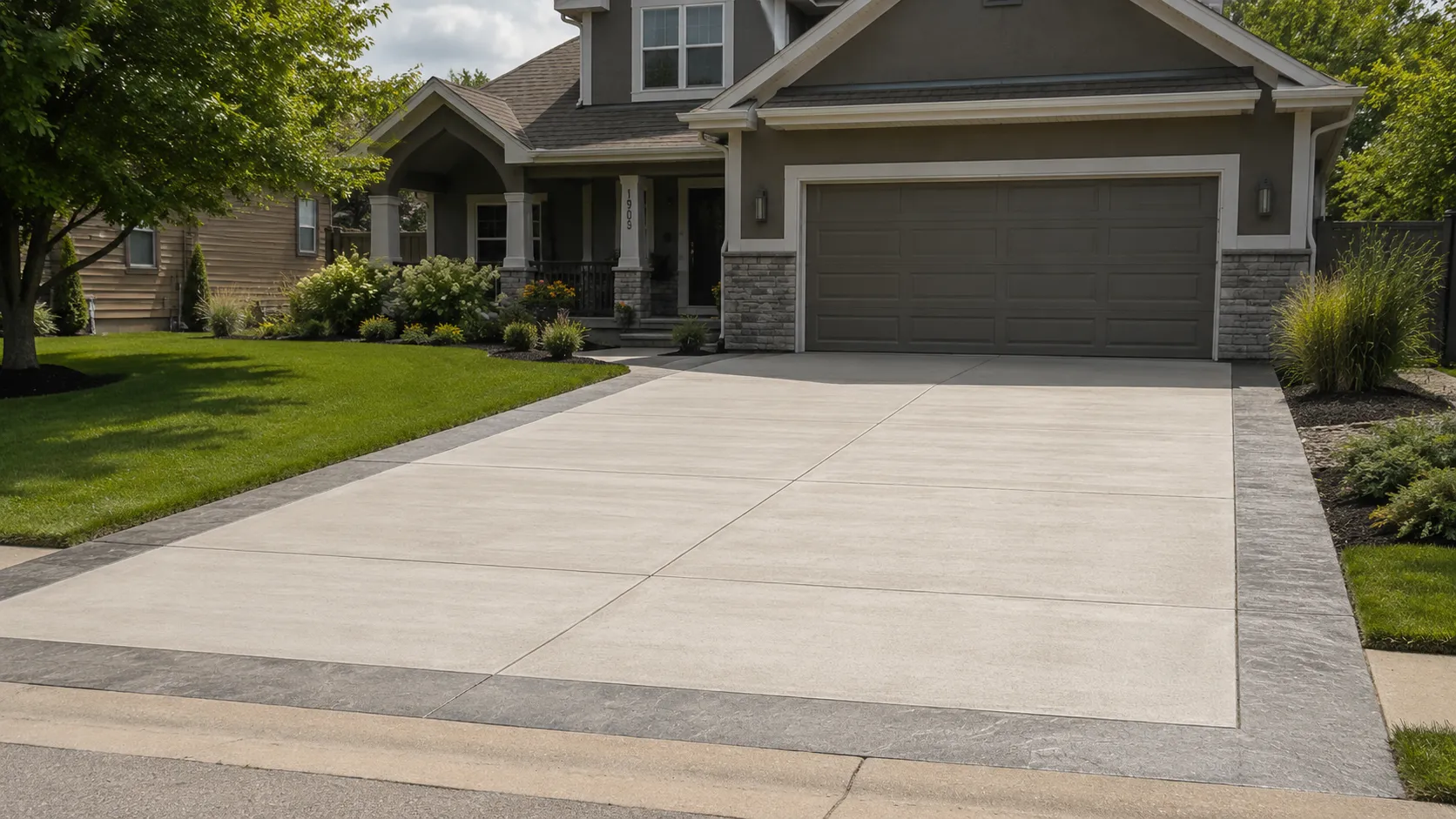
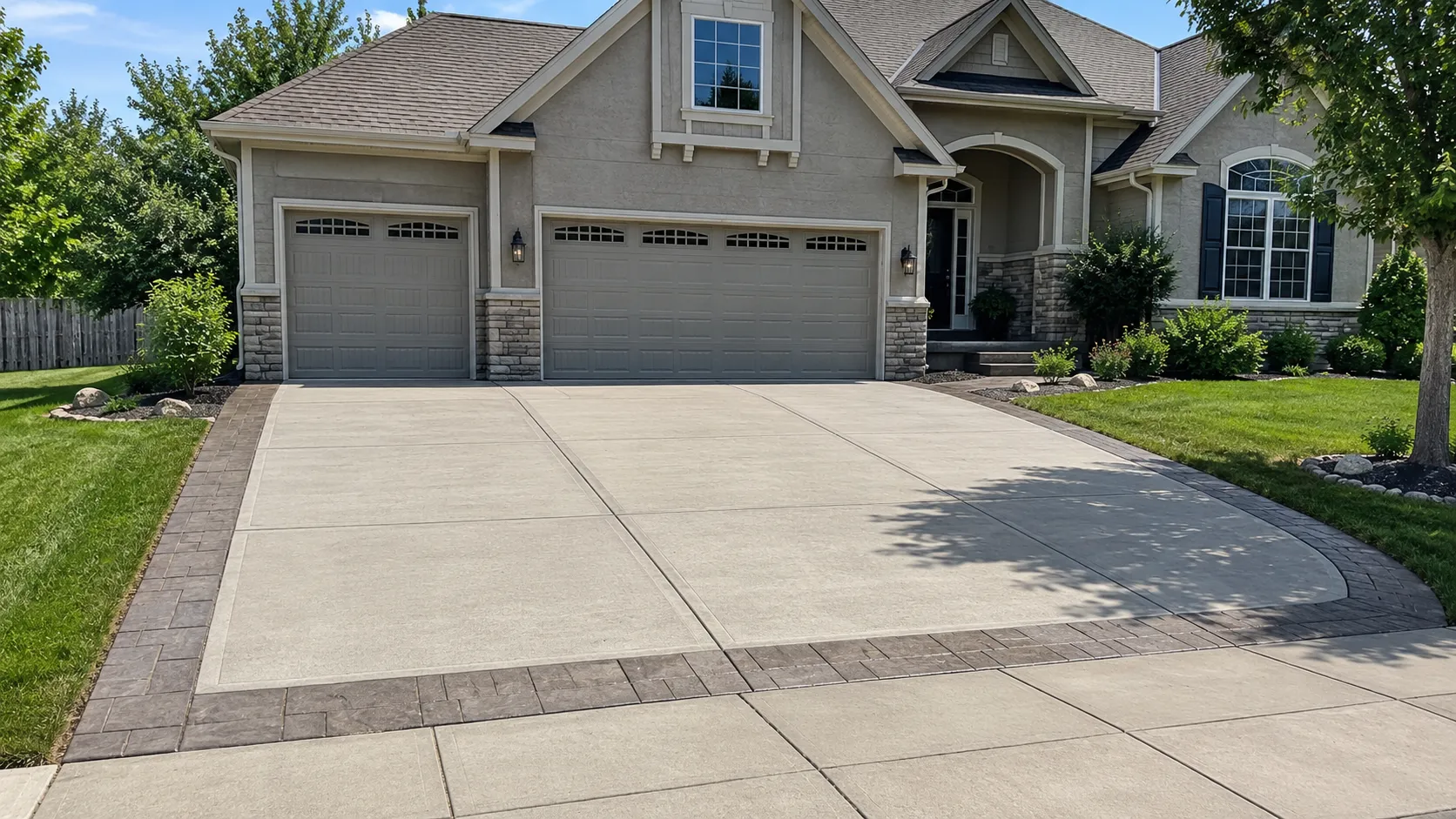
    Concrete driveway with contrasting decorative border

    Decorative Borders

    Contrasting borders can define the perimeter of a driveway or highlight selected areas without applying a decorative finish to the entire surface.

    Borders may be placed around the outer edge, near the garage, or in selected areas to organize the overall driveway design.

    We help coordinate border width, pattern, color, and transitions with the driveway layout while keeping durability, drainage, traction, and long-term maintenance in mind.

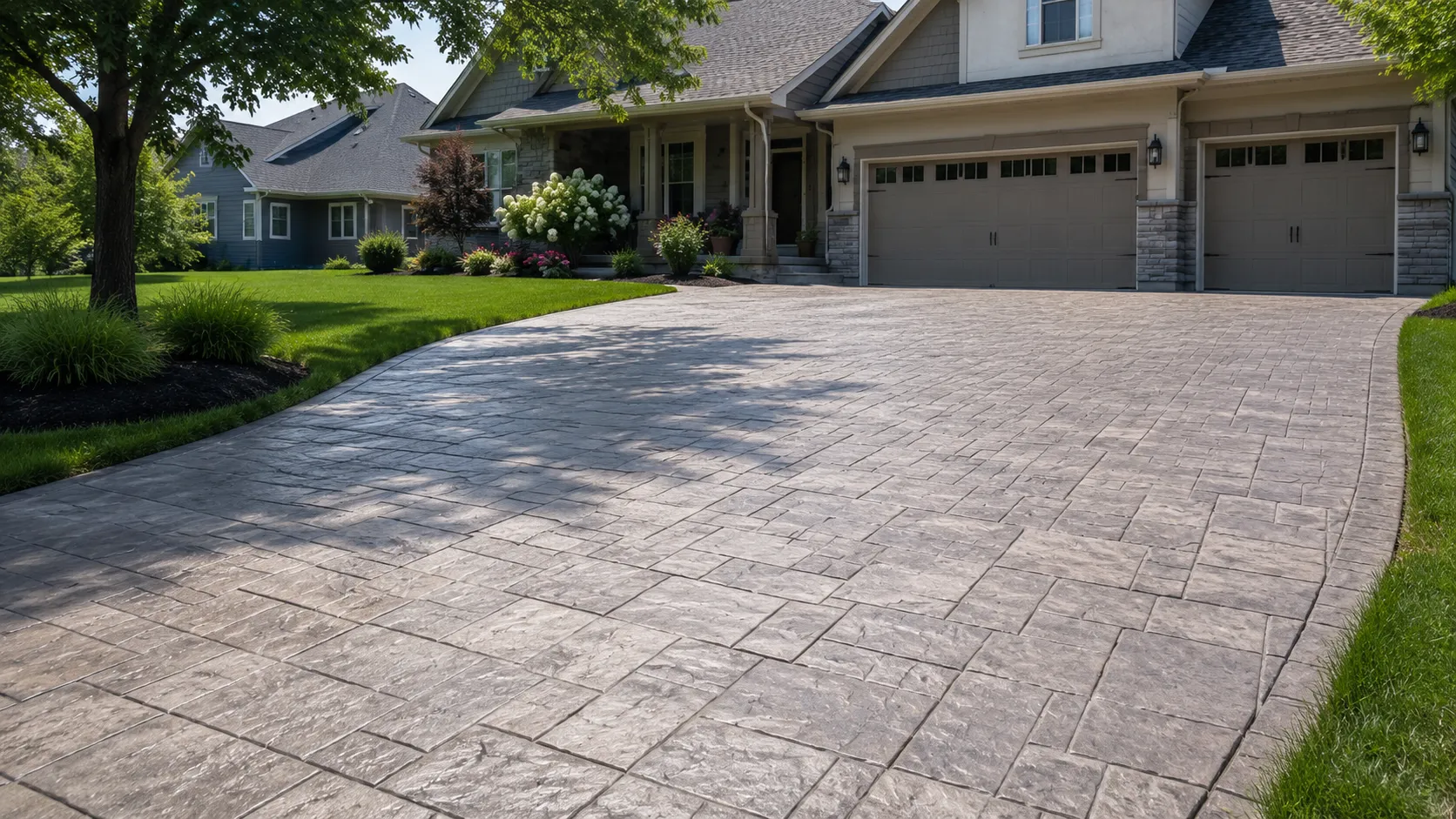
    Stamped concrete driveway with a stone pattern

    Stamped Concrete

    Stamped patterns can create the appearance of stone, brick, or other textured materials.

    Because driveways receive regular vehicle traffic and exterior exposure, we help evaluate decorative finish options with durability, traction, maintenance, and long-term appearance in mind.

    Pattern depth, surface texture, and sealer selection should also be considered because the driveway must remain practical for regular vehicle and pedestrian use.

    Warm-toned colored concrete driveway in front of a home

    Colored Concrete

    Integral color or other coloring methods can provide an appearance different from standard gray concrete.

    When new decorative or colored concrete is installed next to older concrete, some variation in color and appearance should be expected.

    Color selection should also account for sun exposure, surrounding materials, surface finish, and the natural variation that occurs during concrete installation and curing.

    Concrete driveway with decorative stamped border and smooth center

    Combined Finishes

    Some driveway designs combine a standard broom-finished driving surface with decorative borders or selected accent areas.

    This can add visual interest while keeping the primary vehicle surface relatively simple.

    We establish functional requirements such as drainage, base preparation, slab design, and transitions before finalizing decorative options.

    Our Process

    1. 1

      Inspect the Existing Driveway

      We inspect cracking, slab movement, drainage, transitions, and nearby concrete to determine whether repair, partial replacement, or full replacement is appropriate.

      We also review elevations, water collection, vehicle access, and connections to the garage, street, sidewalks, and adjoining slabs.

    2. 2

      Define the Replacement Area

      We identify the sections to be removed based on the driveway layout, damage pattern, and condition of individual slabs.

      Planned widening, extensions, additional parking, access needs, and changes to the existing layout are also defined before removal begins.

    3. 3

      Plan the Installation

      We plan subgrade and base preparation, grading, drainage, slab requirements, reinforcement, joint layout, transitions, and finish options before concrete placement begins.

      Planning these details in advance helps avoid making important structural or drainage decisions only after demolition has started.

    4. 4

      Remove and Prepare

      We remove the designated concrete and evaluate the exposed subgrade and surrounding conditions.

      Where needed, unsuitable material is addressed, the base is prepared, and final elevations are established before placement. We also protect adjoining surfaces and maintain practical site access.

    5. 5

      Place and Finish the Concrete

      We place and finish the concrete according to the project specifications and selected surface treatment.

      Control joints, edges, and transitions are formed as planned, while the finished surface is graded for drainage. Final details are checked before curing begins.

    6. 6

      Cure and Protect the New Driveway

      New concrete needs adequate time to cure and develop strength before normal vehicle use.

      We provide project-specific guidance for foot traffic, vehicle access, and early protection based on the concrete, curing conditions, weather, site exposure, and expected loads.

    Frequently Asked Questions

    How do I know whether my driveway should be repaired or replaced?

    The decision depends on the extent of the damage, whether slabs have significant movement, the condition of the surrounding concrete, drainage and support problems, and whether localized repairs are likely to provide a durable result. Isolated damage may still be repairable. Replacement becomes more practical when deterioration affects large portions of the driveway, multiple sections have lost stability, or repairing individual areas would leave too many failing or mismatched sections. We evaluate the overall condition before recommending whether repair, partial replacement, or full replacement is the more appropriate approach.

    Can only one section of a concrete driveway be replaced?

    Yes. Partial replacement may be possible when the damaged area can be clearly separated from concrete that remains stable. We evaluate joint locations, elevations, drainage, and the condition of neighboring slabs before determining where the replacement should begin and end.

    Will new concrete match my existing driveway?

    An exact match between new and existing concrete should not be expected. Differences in age, aggregate, cement, curing conditions, weather exposure, and surface wear can create visible color and texture differences. The contrast may become less noticeable as the new concrete ages, but some variation can remain.

    How thick should a concrete driveway be?

    The appropriate thickness depends on expected vehicle loads, subgrade and base conditions, reinforcement, transitions, and the design of the driveway. Residential driveway concrete should be designed for vehicle traffic rather than using the same assumptions as light-duty pedestrian concrete. Areas that regularly support heavier vehicles may require different specifications. We evaluate the project conditions before determining the appropriate slab design.

    Can I widen or extend my driveway during replacement?

    In many cases, yes. Driveway replacement can be a practical time to widen the existing driveway, add parking space, or extend concrete into another usable area. We evaluate the proposed extension together with drainage, vehicle access, property layout, existing elevations, and connections to the original driveway.

    How long before I can drive on a new concrete driveway?

    New concrete should not be opened to vehicle traffic immediately after placement. The appropriate waiting period depends on the concrete mix, curing conditions, weather, slab design, and expected vehicle loads. We provide project-specific instructions before vehicles return to the driveway.

    How much does driveway replacement cost in Lee's Summit?

    The cost of replacing a concrete driveway in Lee's Summit depends on the size of the replacement area, demolition requirements, site access, concrete thickness, subgrade and base conditions, drainage corrections, reinforcement, and the selected finish. Partial replacement may cost less than removing and rebuilding an entire driveway. Projects that require extensive removal, significant base correction, driveway widening, additional concrete, difficult access, or decorative finishes can increase the overall cost. Because underlying conditions are not always fully visible before the existing concrete is removed, an on-site evaluation is the most reliable way to define the project scope and prepare an accurate estimate.

    Plan Your Driveway Replacement Project

    We start by marking the damaged sections to remove, then inspect the slab edges, drainage, and material beneath the driveway before we prepare the base for new concrete.

    Send photos showing the damaged areas, the overall layout, the garage connection, and any sections that have settled, cracked extensively, or broken apart. For limited damage, see Driveway Repair. See how existing damage, base support, and project extent affect the choice between driveway repair and replacement. Our concrete repair cost factors and estimate preparation guide explain the details that shape an estimate.

    Request an estimate for your driveway replacement project in Lee's Summit.

    • Describe the issue
    • Add project photos
    • Submit for review

    Tell Us About Your Project

    Project Photos - OptionalAdd up to three photos showing the full area and the damage.

      Request an Estimate