Concrete patio beside a residential home in Lee's Summit

Concrete Replacement Service

Patio Replacement
in Lee's Summit, MO

A cracked or aging patio does not always need removal. We recommend replacement when surface damage is widespread, sections have settled, or repeated repairs would leave an uneven surface.

We replace damaged patio sections and complete patios in Lee's Summit. We remove the failed slab, inspect the soil and base beneath it, prepare the area as needed, then place, joint, finish, and cure new concrete with drainage in mind.

Get a Free Estimate

Project Photos - OptionalAdd up to three photos showing the full area and the damage.

    Local ServiceServing Lee's Summit
    Concrete ServicesResidential & commercial projects
    Replacement SpecialistsFull and partial options
    Free EstimatesRequest a project review

    When Repair Isn't Enough

    Focused patio repair can still be appropriate when damage is limited to a stable, clearly defined area and the surrounding slab remains sound. A small crack with little vertical displacement, a chipped corner with solid support, shallow surface wear, or localized joint deterioration may be addressed without removing the entire patio.

    Partial replacement becomes more practical when one section has broken apart, settled, moved independently, or lost support while the adjoining concrete remains stable. Defining the work at appropriate joints can preserve sound portions of the patio while allowing the failed section, edge, or landing to be removed and rebuilt.

    Full replacement may be the better long-term option when widespread cracking, scaling, slab movement, or edge deterioration affects much of the patio. Repeated patching can leave multiple transitions between old and new concrete and may not correct the drainage, settlement, or support conditions that caused the damage.

    We also review water flow, low spots, and support near the patio perimeter. Drainage problems near the home, doors, steps, landscaping, walkways, or adjacent concrete can continue to affect a repaired area if the surrounding elevations and transitions are not addressed.

    Before defining the scope, we evaluate the damage pattern, slab movement, edge conditions, exposed support, drainage, and the condition of the remaining patio. For stable, localized damage that may still be suitable for repair, see our Patio Repair page.
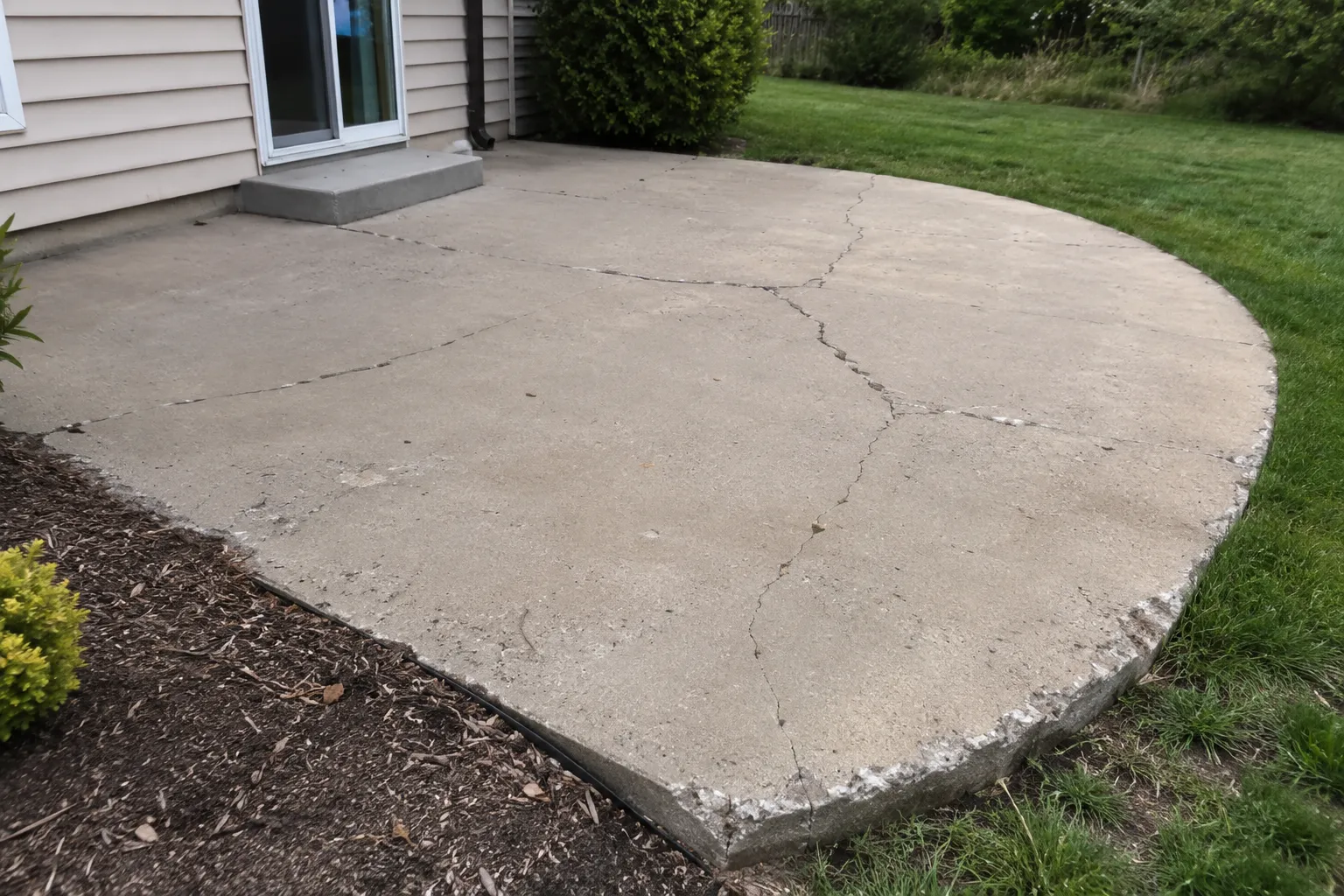
    BEFORE

    Cracked concrete patio beside a residential home

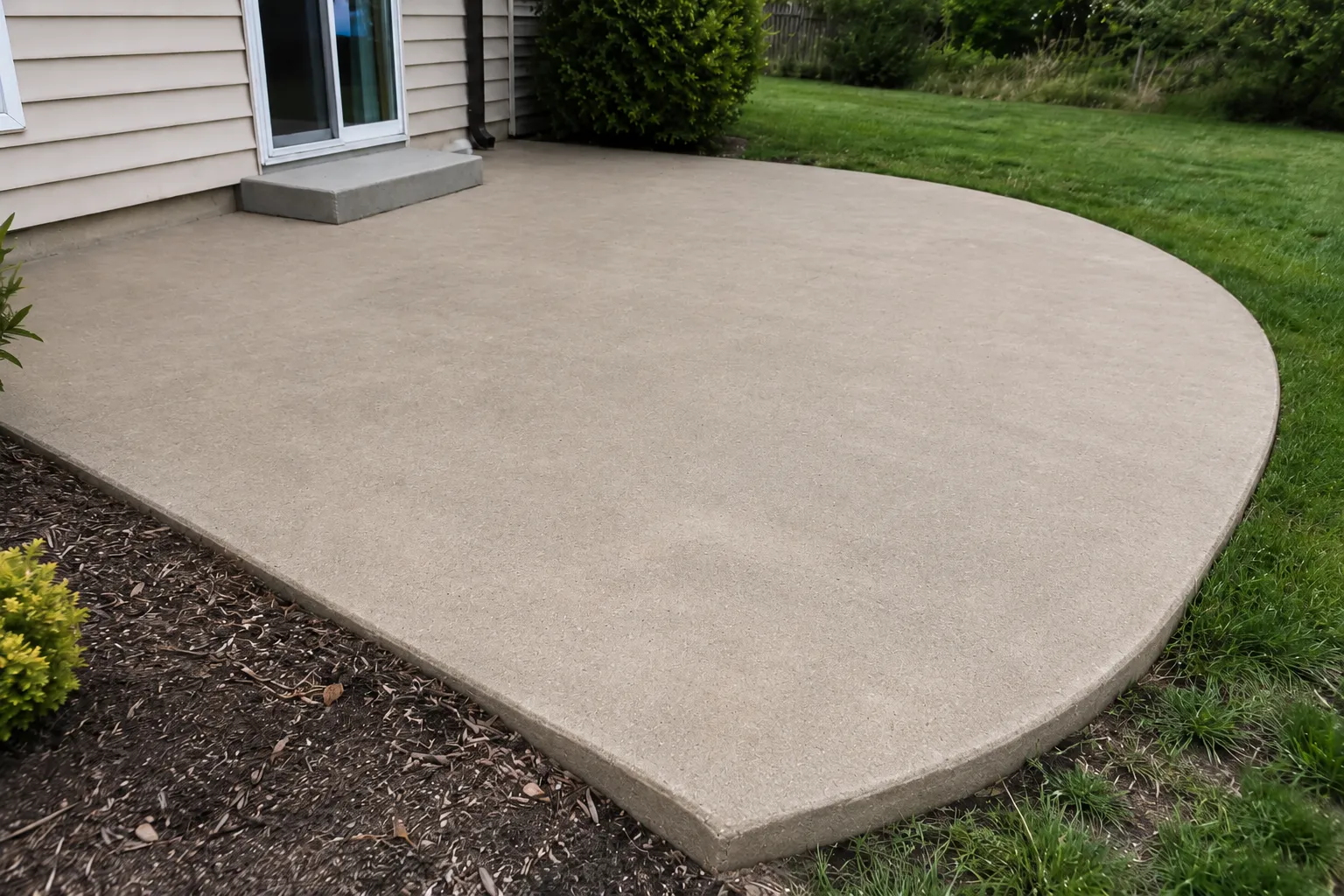
    AFTER

    Newly replaced concrete patio beside a residential home

    Full Replacement vs Partial Replacement

    Not every patio replacement requires removing the entire slab.

    Full Patio Replacement

    Full replacement may be appropriate when deterioration affects most of the patio, several sections have significant movement, drainage affects the overall surface, or the existing concrete has reached the end of its practical service life. Removing the full patio provides an opportunity to review the base, establish appropriate slope away from the home where site conditions allow, and plan a cohesive layout for doors, steps, landscaping, and outdoor living areas.

    Partial Patio Replacement

    When damage is limited to one or several clearly defined sections, partial replacement may be possible. Stable portions can sometimes remain while a cracked landing, settled edge, or damaged section is removed and replaced. We evaluate joints, elevation differences, drainage, and adjacent concrete so the new work connects appropriately with the remaining patio.

    Planning Your New Patio

    Patio replacement can be an opportunity to improve how the outdoor space works, not just to replace damaged concrete. The new layout can be planned around how you use the area and how it connects with the home and surrounding hardscape.

    We can evaluate projects that include:

    Seating, dining, grills, planters, and other outdoor features can affect the usable shape of the patio and the clear space needed around doors and steps. We consider those needs along with existing landscaping, retaining edges, walkways, driveways, and other hardscape so the replacement fits the property rather than functioning as an isolated slab.

    Finished elevations and drainage should be considered before the new concrete is placed. The patio needs appropriate slope while still making dependable transitions at doors, steps, adjoining concrete, and landscaping edges. Joint locations and connections between new and existing surfaces are also planned as part of the layout to help manage normal concrete movement and avoid weak or awkward transitions.

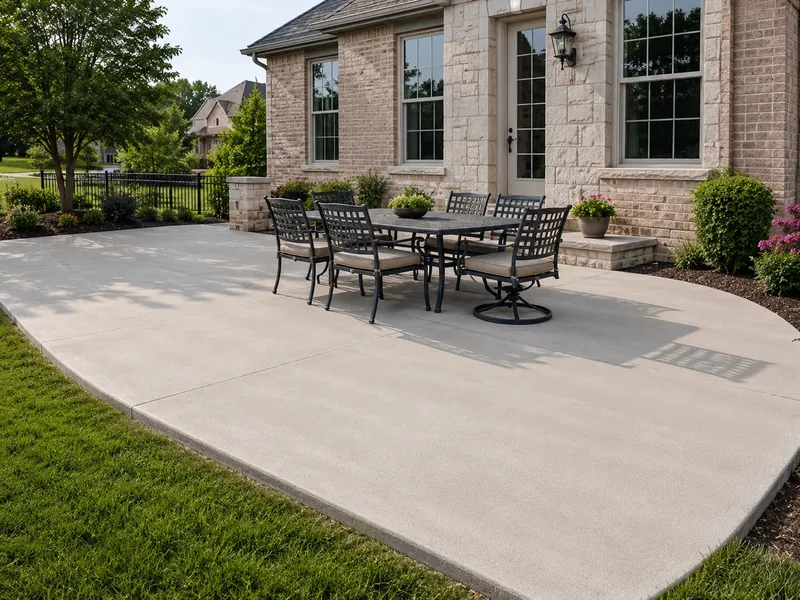
    Concrete patio beside a residential home in Lee's Summit
    • Enlarging an existing patio
    • Adding a seating or dining area
    • Reconfiguring the patio around steps, doors, or landscaping
    • Creating a new connection to a walkway or driveway
    • Replacing an older gravel, paver, or deteriorated concrete area with a concrete patio

    Replacement Project

    What Goes Into a Replacement Project

    A durable patio depends on more than its finished surface. Conditions beneath the slab, water movement near the home, construction details, and connections to surrounding surfaces all affect long-term performance.

    Site & Structural Preparation

    1

    Local Soil and Weather Conditions

    Patio replacement in Lee's Summit requires attention to local soil, drainage, and seasonal weather conditions. Moisture-sensitive or clay-rich soils can change how uniformly the ground supports the patio, while freeze-thaw cycles can add stress where water reaches poorly drained areas beneath or around the slab.

    2

    Removal and Site Preparation

    We remove the designated concrete so the area beneath the patio can be evaluated. Soft, unstable, disturbed, or poorly supported areas should be addressed before the replacement base is prepared and the new slab is placed.

    3

    Base Preparation

    Depending on the conditions exposed after removal, preparation may include removing unsuitable material, adding compactable aggregate, grading, and compacting the base. The goal is more consistent support beneath the patio rather than recreating conditions that may have contributed to movement.

    4

    Drainage and Grade

    The finished patio should direct water appropriately and avoid unnecessary low areas near the home, doors, steps, foundations, or adjoining landscaping. Existing elevations and property conditions can limit grade changes, so drainage and slope are planned before concrete placement.

    Slab Design & Installation Details

    5

    Concrete Thickness

    Patio slab requirements depend on the intended use, base and soil conditions, slab configuration, and connections to surrounding concrete. Areas supporting outdoor kitchens, masonry features, or other concentrated loads may need different consideration than a typical seating area.

    6

    Reinforcement

    Reinforcement may be incorporated to help the slab remain connected and distribute stresses if cracking occurs. It is one part of the overall patio system and does not replace proper subgrade or base preparation.

    7

    Control Joints

    Control joints help manage where concrete is more likely to crack as it cures and responds to temperature and moisture changes. We plan their placement around patio dimensions, geometry, corners, transitions, and adjoining concrete before placement.

    8

    Transitions and Connections

    Patios often meet house slabs, steps, doors, walkways, retaining edges, and existing concrete. These connections require careful elevation and layout planning to avoid abrupt changes, drainage issues, and weak transitions.

    Our Process

    1. 1

      Inspect the Existing Patio

      We inspect cracking, surface deterioration, slab movement, loose edges, drainage, transitions, and nearby concrete to decide whether repair, partial replacement, or full patio replacement will solve the problem.

      Doors, steps, landscaping, walkways, and connected hardscape are included in the review because their elevations and condition can affect the replacement limits and the finished patio layout.

    2. 2

      Define the Replacement Area

      We identify the concrete to be removed based on the patio layout, joint locations, slab movement, and the condition of individual sections. Where stable areas can remain, we define a replacement limit that supports a dependable connection to the existing patio or adjacent concrete.

      Planned changes to the patio size, shape, seating or dining areas, doors, steps, landscaping, and nearby walkways or driveways are considered at this stage.

    3. 3

      Plan the New Patio Layout

      We plan the new patio layout, finished elevations, drainage slope, base preparation, reinforcement, joint layout, transitions, and selected surface finish before concrete placement begins. The plan accounts for how the patio will meet doors, steps, landscaping edges, and surrounding hardscape.

      Planning these details before demolition and placement helps avoid making important drainage, layout, or transition decisions only after work is underway.

    4. 4

      Remove and Prepare

      We remove the designated concrete and evaluate the conditions beneath the patio. Soft, unstable, eroded, or poorly supported areas are addressed where necessary rather than covered by the new slab.

      The area is graded and prepared for consistent support, with base material compacted as appropriate and final elevations established before concrete is placed. This preparation is important for drainage, edge support, and the long-term performance of the replacement patio.

    5. 5

      Place and Finish the Concrete

      We place and finish the concrete according to the planned slab configuration and selected surface. Reinforcement, control joints, transitions, and the finished slope are incorporated into the installation so the patio works with the surrounding space and manages water appropriately.

      The final finish is selected for the intended outdoor use while keeping footing, maintenance, and the appearance of adjoining concrete in mind.

    6. 6

      Cure and Protect the New Patio

      New concrete needs adequate time to cure and develop strength before normal use. We provide project-specific guidance on when foot traffic can return and how curing conditions and weather affect the new surface.

      Furniture, grills, planters, and other items should remain off the patio until the new concrete is ready for them. Protecting the surface during curing helps avoid avoidable marks, edge damage, and premature wear.

    Frequently Asked Questions

    How do I know whether my patio should be repaired or replaced?

    The decision depends on the extent of cracking or surface deterioration, slab movement, support and drainage conditions, and whether localized repairs are likely to provide a durable result. Isolated stable damage may still be repairable, while widespread failure or movement can make replacement more practical.

    Can only part of a concrete patio be replaced?

    Yes. Partial replacement may be possible when the damaged area can be clearly separated from stable concrete. We evaluate joints, elevations, drainage, and adjoining slabs before defining the replacement area.

    Can a replacement patio be made larger?

    In many cases, yes. Replacement can be a practical time to enlarge the patio or change its layout. The proposed addition should be evaluated with drainage, access, property layout, existing elevations, and connections to the home or other concrete.

    Will new concrete match my existing patio?

    An exact match should not be expected. Differences in age, materials, curing conditions, weather exposure, and surface wear can create visible variation in color and texture.

    How should a concrete patio drain?

    The patio should be planned to direct water appropriately and avoid low areas near the home, doors, steps, foundations, or landscaping. Existing site conditions may limit grade changes, so drainage is evaluated as part of the overall replacement plan.

    How much does patio replacement cost in Lee's Summit?

    Cost depends on the replacement area, demolition, access, base and soil conditions, drainage corrections, concrete specifications, layout changes, reinforcement, and selected finish. An on-site evaluation is the most reliable way to define the scope and prepare an accurate estimate.

    Plan Your Patio Replacement Project

    We mark the patio sections to remove after checking cracks, slab movement, drainage, doors, steps, and nearby concrete. After demolition, we inspect and prepare the area beneath the slab before placing new concrete.

    Send photos showing cracked or settled areas, the overall layout, doors or steps, and places where water collects. For stable, localized damage, see Patio Repair. See how we evaluate localized patio damage against partial or full replacement. Our concrete repair cost factors and estimate preparation guide help you prepare an estimate request.

    Request an estimate for your concrete patio replacement project in Lee's Summit.

    • Describe the issue
    • Add project photos
    • Submit for review

    Tell Us About Your Project

    Project Photos - OptionalAdd up to three photos showing the full area and the damage.

      Request an Estimate