Common Concrete Patio Problems
Cracks Across the Slab
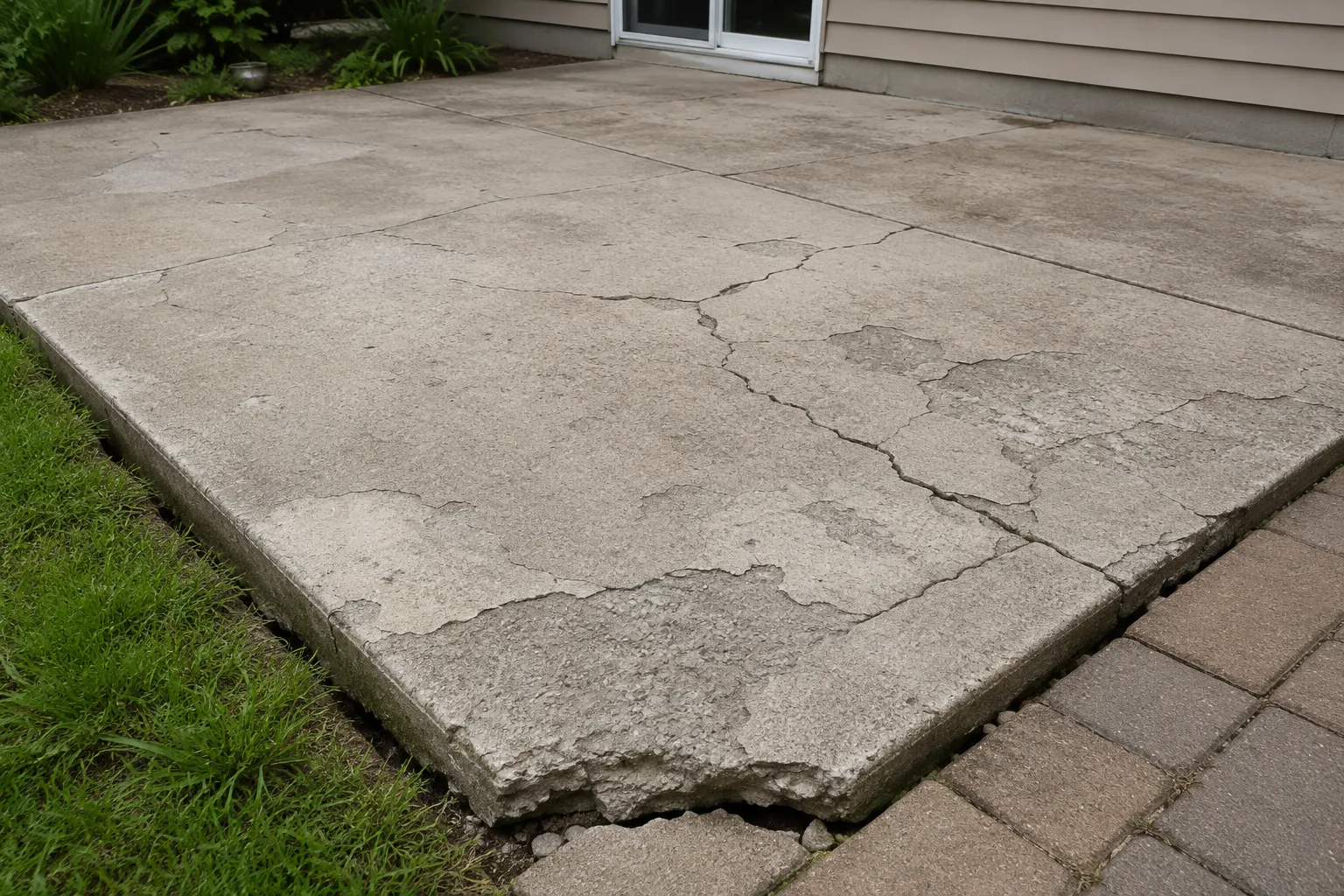
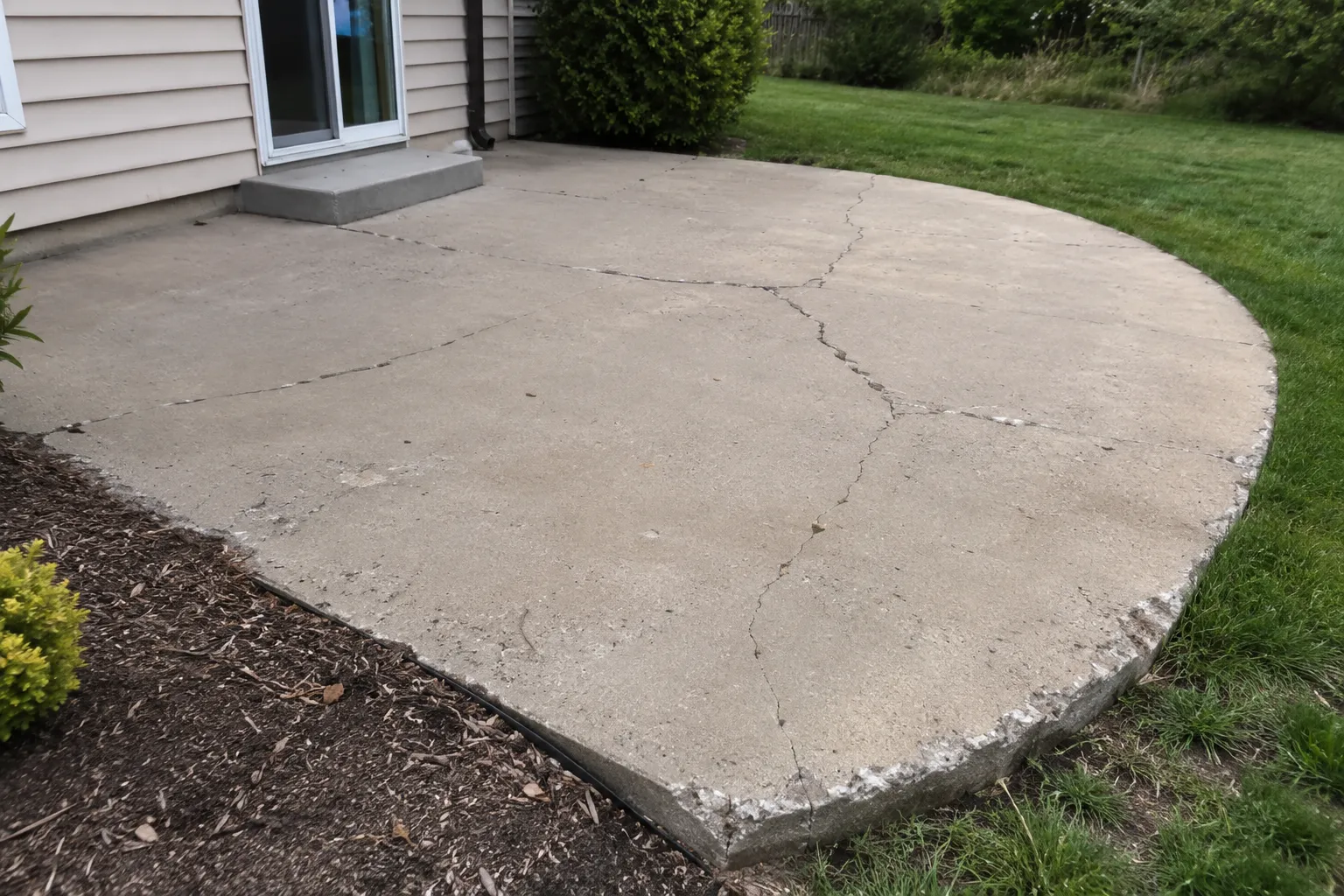
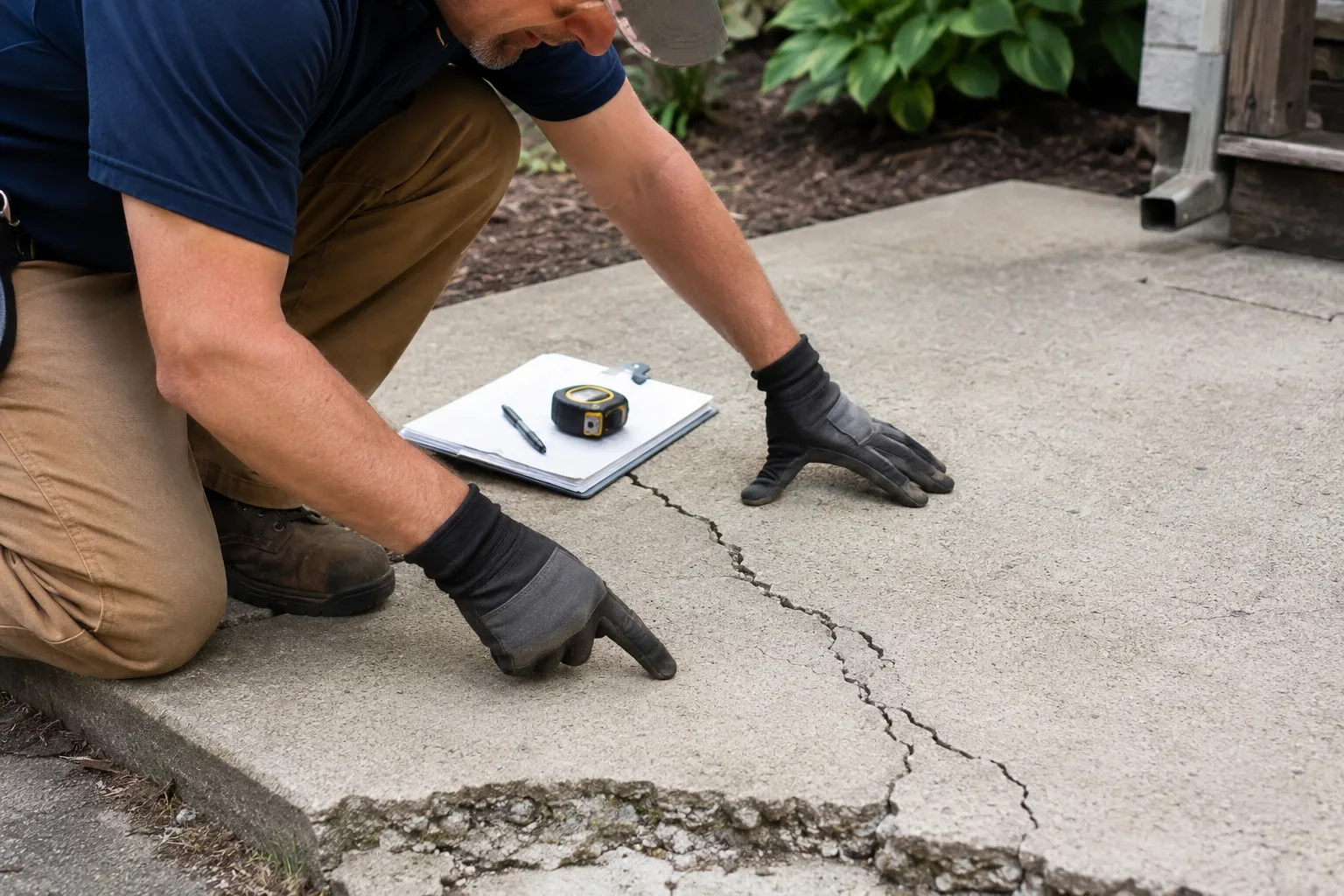
Small, stable cracks may be suitable for cleaning and sealing. Cracks that widen, branch, or show vertical movement require a closer evaluation. See Concrete Crack Repair for more detail.
Chipped Edges and Broken Corners
Patio edges can lose support because of erosion, landscaping changes, impact, or repeated loading near the perimeter. Small defects may be rebuildable if the surrounding concrete remains stable.
Surface Scaling or Pitting
The patio surface may begin to flake, pit, or feel rough. Shallow deterioration may be a candidate for localized surface repair. Deep or widespread deterioration can make removal and replacement more reliable.
Water Pooling
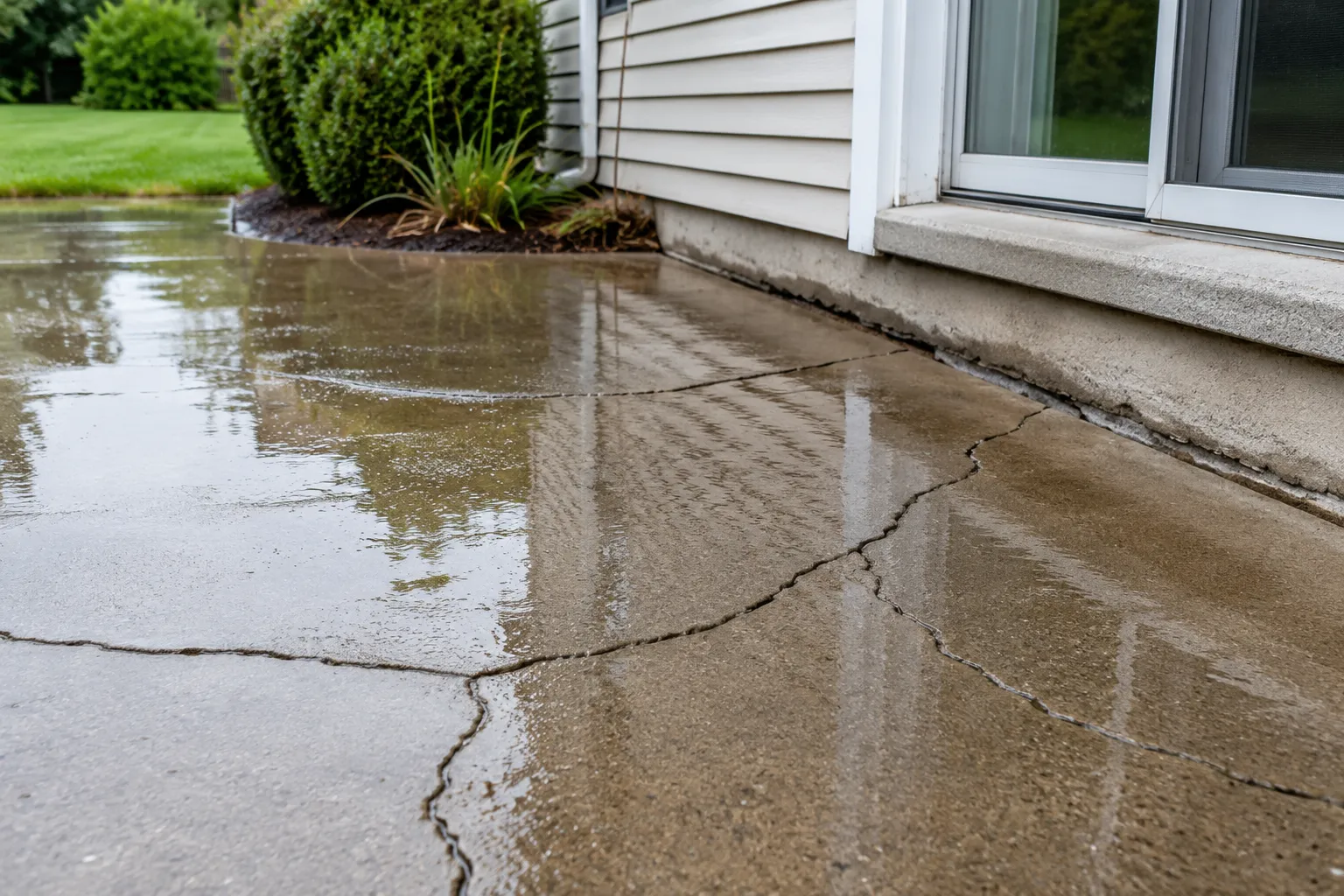
Low areas can hold water after rain or cleaning. The source may be a localized surface depression, slab movement, or the overall patio grade. A patch is not always an appropriate drainage solution, especially when the slab has shifted.
Separation Near Steps or the House
Gaps can develop where a patio meets steps, foundations, walkways, or other concrete. These transitions should be evaluated for movement, drainage, and the condition of the adjoining structure.
Broken or Moving Sections
A patio section that rocks, shifts, or has divided into several pieces is usually not a good candidate for a simple surface patch. Localized replacement may be possible if the surrounding patio remains serviceable.
Patio Repair Options
The repair method should fit the depth and cause of the damage.
Crack Cleaning and Sealing
Stable cracks may be prepared and sealed to reduce water and debris entry. The repair may remain visible, and active movement can cause the crack to reopen.
Edge and Corner Repair
Missing material may be rebuilt when the remaining concrete is sound and the repair can be properly bonded and supported.
Localized Surface Repair
Small areas of shallow scaling or pitting may be repaired after weak concrete is removed. Surface repair is not appropriate when deterioration extends deeply through the slab.
Joint Repair
Open or deteriorated joints may be cleaned and refilled with a material suitable for exterior movement and exposure.
Partial Patio Replacement
One or more sections may be removed and replaced when damage is concentrated in a defined area. The new concrete will likely differ in color from the existing patio.
Full Patio Replacement
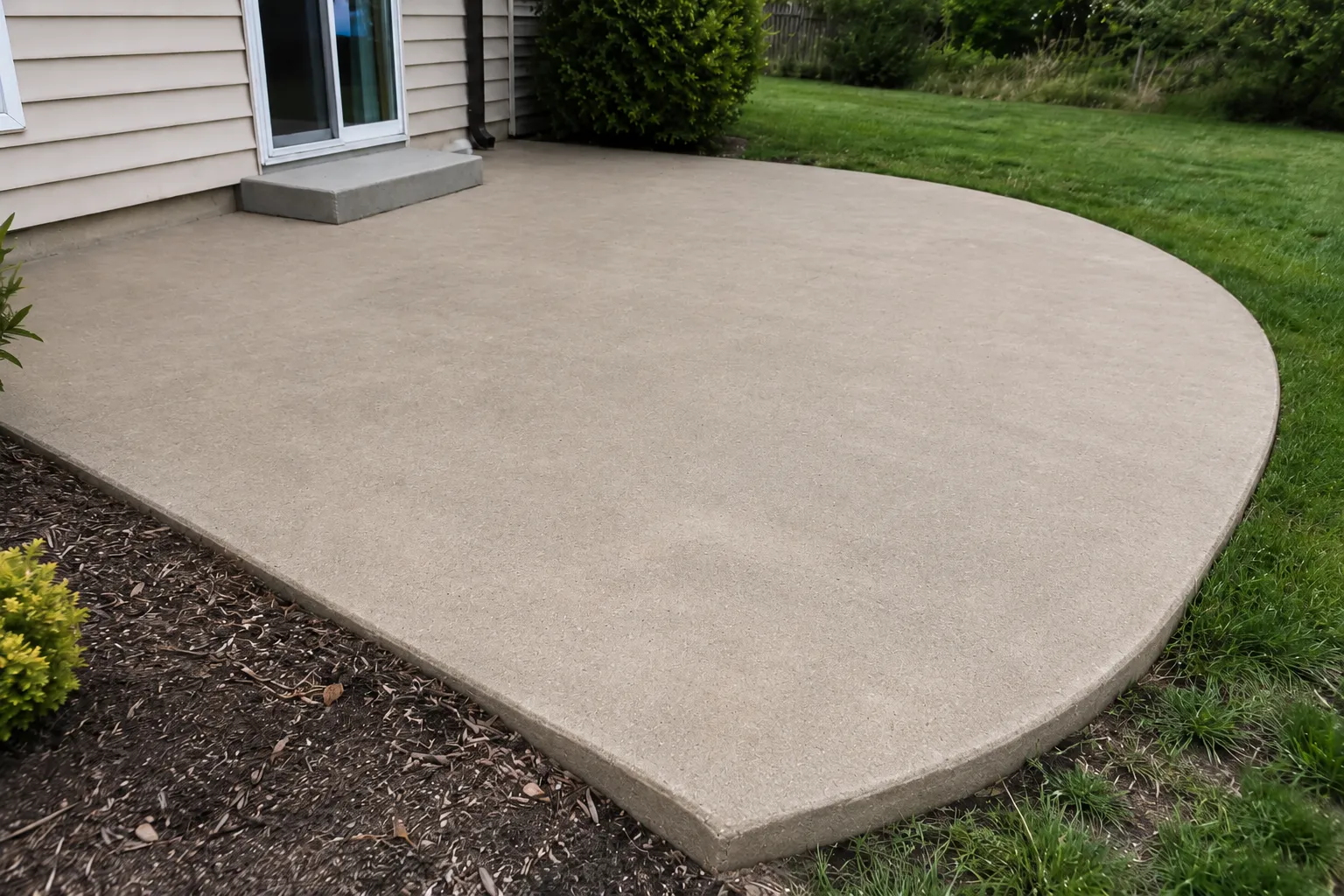
Replacement may be the better choice when the patio has widespread cracking, poor drainage, multiple displaced sections, or extensive surface failure.
Repair or Replace the Patio?
A repair-focused approach should preserve sound concrete whenever doing so produces a useful and durable result. However, repair is not automatically the least expensive option over time.
Repair May Be Appropriate When
- Damage affects a limited portion of the patio.
- Cracks are stable and have little vertical displacement.
- The patio still drains reasonably well.
- The surrounding slab is solid.
- The repair can restore normal use without creating weak transitions.
Replacement May Be Appropriate When
- Several sections are moving or badly fractured.
- Water consistently flows toward the house or collects across a large area.
- Surface deterioration covers much of the patio.
- Previous patches have failed.
- The patio layout or size needs to change.
- Multiple separate repairs would approach the cost of replacement.
The evaluation should consider both immediate cost and expected service life.
Patio Repair Process
1. Describe the Outdoor Space
Use the form to provide the patio location, approximate dimensions, type of damage, and whether water collects after rain. Attach wide and close-up photos.
2. Review Access and Adjoining Areas
Patio projects may be affected by gates, fences, landscaping, steps, decks, utilities, and the distance from the street. These factors can influence the project scope.
3. Evaluate Movement and Drainage
The slab should be checked for vertical displacement, unstable sections, low spots, and the direction water moves across the surface.
4. Define the Recommended Work
The scope may include crack repair, edge rebuilding, surface repair, joint work, partial replacement, or full patio replacement.
5. Protect the Finished Surface
Concrete and repair materials require appropriate curing and temporary limits on use. Furniture, grills, planters, and other loads should not be returned until the surface is ready.
Coordinate Connected Concrete Areas
Patios often connect to walkways, steps, and driveway-side paths. Damaged access walks can be reviewed through Sidewalk Repair. Driveway-related damage is covered under Driveway Repair. Return to Concrete Repair in Lee's Summit for the complete service overview.
Frequently Asked Questions
Can a cracked concrete patio be repaired?
Yes, when the crack is stable and the surrounding slab remains sound. Cracks with significant vertical movement, widespread branching, or recurring failure may require partial or full replacement.
Can patio repair fix standing water?
Sometimes, but not every low spot should be patched. The source of the drainage problem must be identified. If the slab grade has changed or water flows toward the house, replacement may be more appropriate.
Can only part of a patio be replaced?
Often, yes. Partial replacement may work when damage is concentrated in one section and the remaining slab is stable. The transition and expected color difference should be discussed in advance.
Will resurfacing fix all patio damage?
No. Surface treatments depend on a stable underlying slab. Resurfacing or surface repair is not a substitute for correcting movement, deep deterioration, or major displacement.
How should I prepare for a patio repair estimate?
Remove small movable items if practical, note drainage patterns after rain, and provide photos of the full patio, damaged areas, and access route. Keep heavy items in place until project instructions are provided.
How soon can I use the patio after repair or replacement?
Timing depends on the material, weather, project depth, and expected loads. The project provider should specify when foot traffic, furniture, grills, and other items can safely return.
Request a Patio Repair Estimate
Describe the cracks, damaged edges, surface wear, drainage concerns, or broken sections. Attach up to three photos showing the full patio and the affected areas. The review will help determine whether repair, partial replacement, or full replacement is appropriate.