Learn how driveway size, removal, base preparation, drainage, access, and other site conditions can affect concrete driveway replacement scope in Lee's Summit.
What Affects Driveway Replacement Cost?
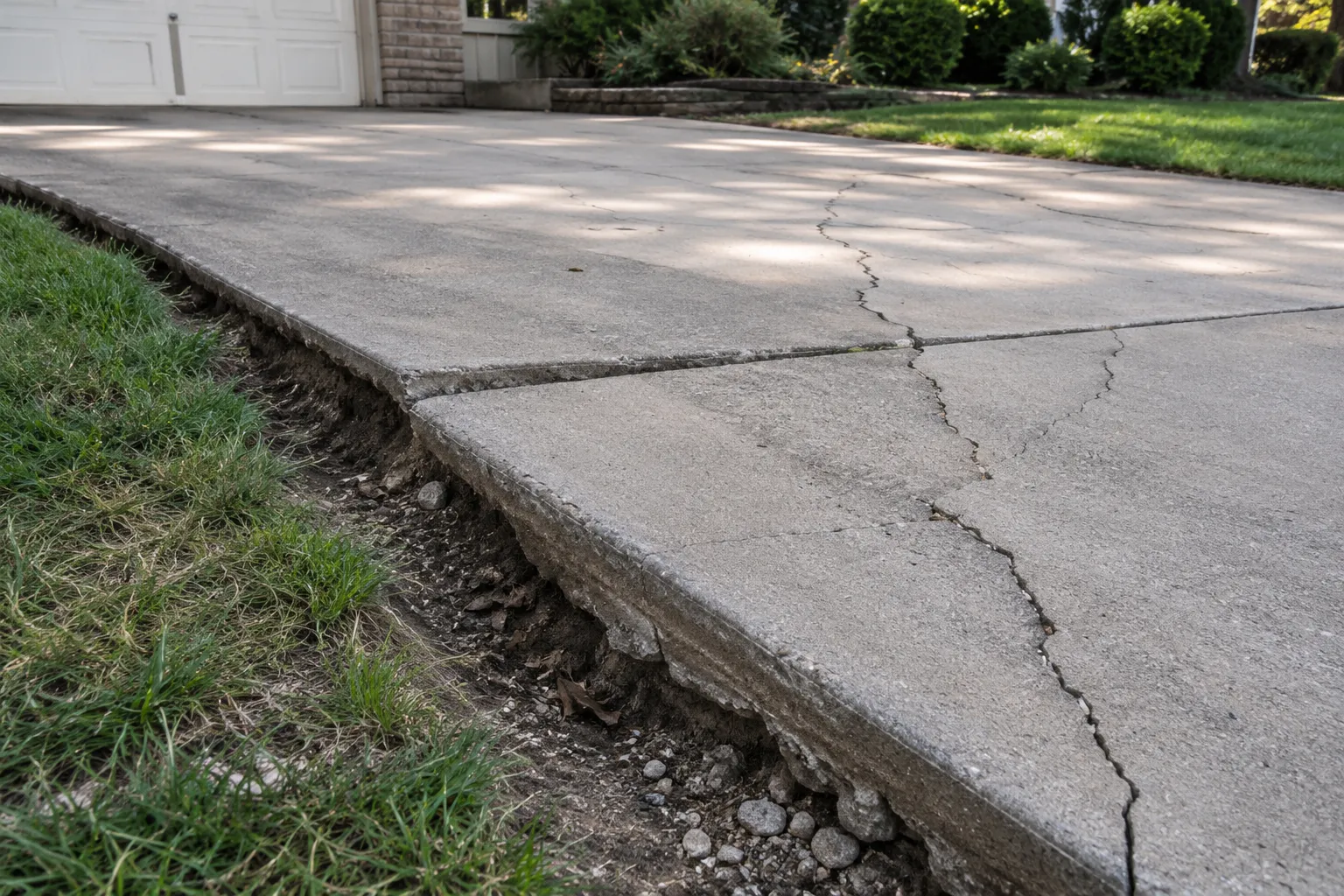
Driveway replacement cost cannot be determined from square footage alone. We review the existing slab, the support beneath it, drainage, access, and the work required to create a dependable replacement area. A larger driveway can involve more concrete, but a smaller area with difficult removal, poor support, or tight access can require more planning than its size suggests.
Driveway Size, Layout, and Intended Use
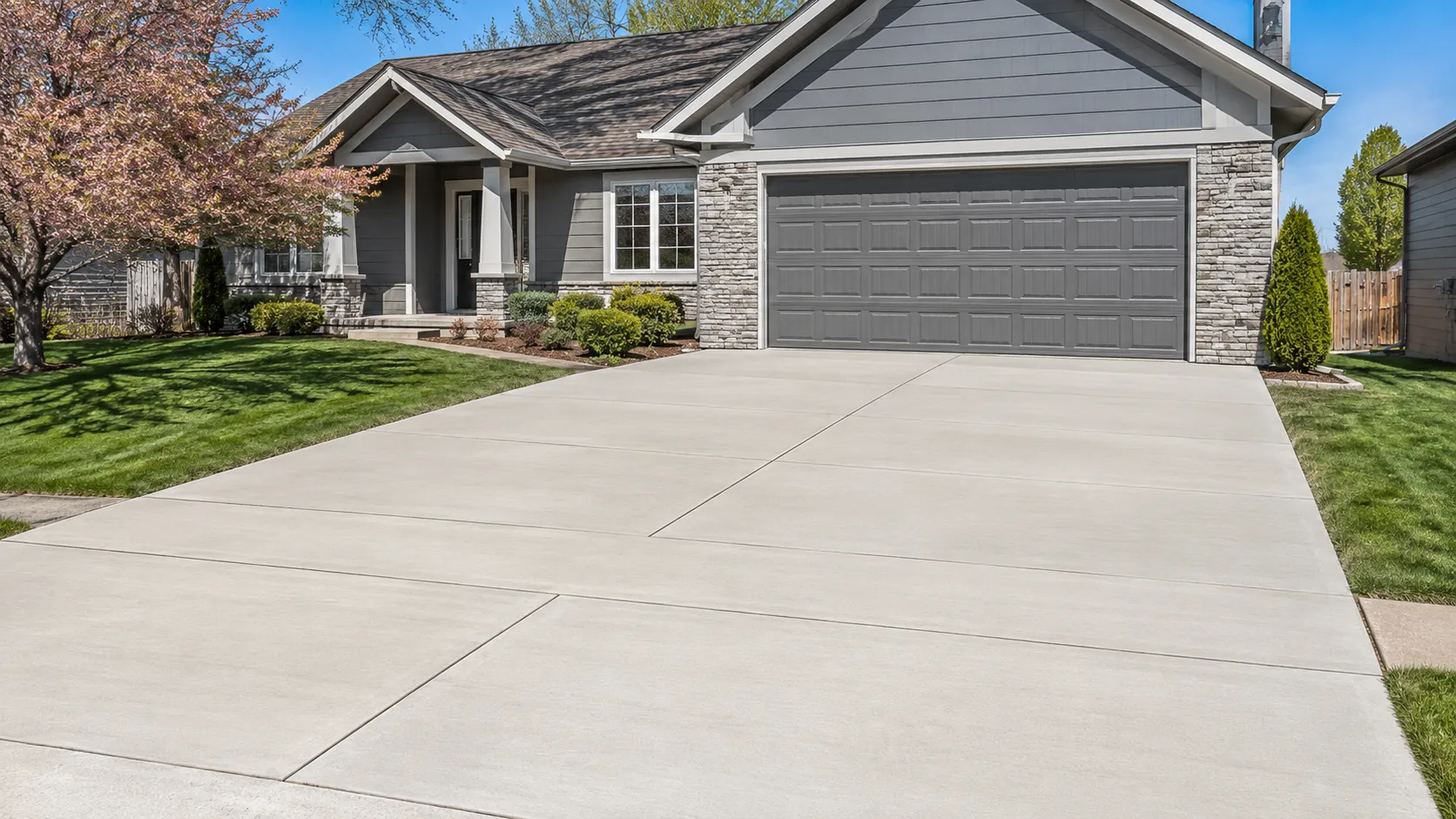
The overall area, width, length, curves, slopes, and connections all help define the work. We also consider how the driveway is used, including normal vehicle traffic and locations that carry turning, braking, or heavier loads. Concrete thickness and reinforcement requirements are reviewed as part of the site and intended use, rather than as standalone selections.
Existing Concrete, Removal, and Disposal
Replacement can involve cutting, breaking, lifting, loading, and disposing of existing concrete. The slab condition, visible reinforcement, attached walkways, garage transitions, aprons, and access for removal equipment can all affect the scope. Not every driveway requires the same removal method or the same limits.
Base Preparation, Drainage, and Grade
Once concrete is removed, the material beneath it can be reviewed for soft areas, disturbed material, moisture, erosion, or uneven support. Some projects need additional base preparation or removal of unsuitable material. Existing slope, water movement, downspouts, low areas, and elevations at the garage, street, or adjoining concrete can also affect the replacement plan.
Access, Details, and Replacement Limits
Equipment access and concrete delivery depend on the route through the property, parked vehicles, gates, landscaping, overhead limits, and nearby surfaces that need protection. Curves, edge details, finish expectations, transitions, and attached sections may also influence the work. A full driveway replacement and a limited replacement area are different scopes, so we identify sound concrete and practical work limits before making a recommendation.
Lee’s Summit Site Conditions
Support conditions vary by property. Moisture-sensitive or clay-rich soils may affect support beneath concrete on some properties, especially where water movement or inconsistent material is present. Freeze-thaw cycles can also increase the importance of drainage and stable support around exterior concrete.
Those conditions do not mean every Lee’s Summit driveway has the same soil or drainage problem. We evaluate visible clues and the material exposed after removal instead of assuming a city-wide condition applies to a specific project. Our Lee’s Summit concrete conditions guide offers additional local context for drainage and seasonal exposure.
Full Driveway Replacement vs. Partial Work
Localized damage does not automatically mean the entire driveway needs replacement. When damage is confined and the remaining concrete is stable, a defined section may be evaluated for repair or partial replacement. Our driveway repair page explains the conditions we review when a focused repair may still be practical.
Widespread settlement, repeated cracking, poor support, drainage problems, or broad deterioration can make a larger replacement scope more practical to evaluate. That still does not determine the final work limit from photos alone. Read our driveway replacement service page and concrete repair or replacement guide for the factors we compare before recommending a path forward.
What a Contractor Needs to Review
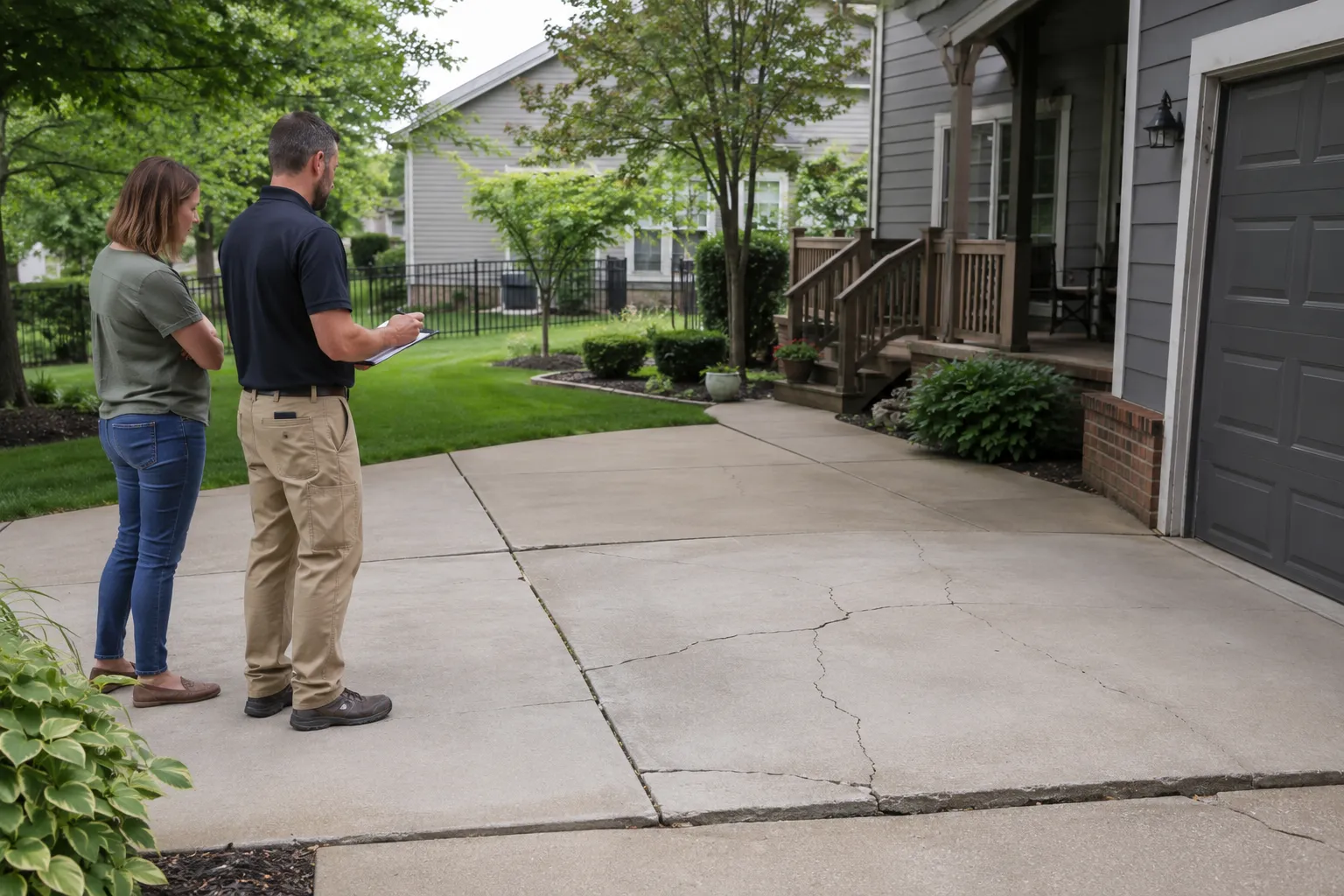
Useful starting details include approximate driveway dimensions, photos of cracking or settlement, and views of the garage and street transitions. We also review slopes, downspouts and runoff, equipment access, and whether an adjacent sidewalk, apron, steps, patio, or other attached section is involved.
Photos and measurements help us identify questions, but they do not confirm the condition beneath the slab, a final quantity, or an engineering conclusion. A site review may be needed to confirm removal limits, base preparation, drainage considerations, and how new concrete should meet the surrounding property.
Preparing for an Estimate
Before requesting an estimate, send wide photos of the full driveway, close views of damaged areas, approximate length and width, drainage observations, and the route equipment would use. Note any garage, street, sidewalk, or landscaping connection that may affect access or transitions.
Our concrete estimate preparation guide explains how to organize those details safely and clearly. The project scope estimator below provides a preliminary classification, not a price quote or engineering determination.
Project planning tool
Driveway Replacement Scope Estimator
Answer a few questions about the driveway and site conditions. The result provides a preliminary replacement-scope classification, not a price quote or engineering determination.
General scope category
Why this result
What could change the scope
This tool provides a general project-scope category, not a diagnosis, quote, or guarantee. Final recommendations depend on an on-site evaluation.