Understand the conditions that can shape a concrete repair estimate, from damage and drainage to access, removal, finish, and curing.
At a glance
Key Takeaways
Damage
The type and extent of damage helps define the repair scope.
Access
Gates, stairs, and work-area limits can change how materials move through the property.
Drainage
Water movement and underlying conditions should be reviewed before a repair approach is confirmed.
Scope
The amount, location, preparation, and finish expectations all shape the work involved.
Estimate considerations
What Affects Concrete Repair Cost?
Every project is evaluated as a combination of visible conditions, preparation needs, and the work area itself.
- 1Damage condition
- 2Repair or replacement
- 3Repair area size and location
- 4Base and subgrade
- 5Drainage and water movement
- 6Removal, hauling, and cleanup
- 7Site access and work constraints
- 8Materials and repair approach
- 9Finish and appearance
- 10Protection and curing
Scope decision
Repair vs. Replacement
Repair
May focus on a crack, joint, edge, or limited section when there is a suitable repair area.
Replacement
May be considered when the existing concrete cannot provide a suitable repair area or the condition is more extensive.
Concrete repair pricing cannot be reduced to one reliable price table. The appropriate scope depends on what is damaged, why it changed, how much concrete is involved, and what must happen before and after the repair. An accurate estimate depends on inspecting the affected concrete, underlying support, drainage, access, and total project scope before we recommend a repair or replacement plan.
Project planning tool
Concrete Project Scope Estimator
Answer a few questions about the affected area, visible damage, and possible drainage or settlement concerns. The result provides a general project-scope category rather than a fixed quote.
General scope category
Why this result
What could change the scope
This tool provides a general project-scope category, not a diagnosis, quote, or guarantee. Final recommendations depend on an on-site evaluation.
Damage & Existing Conditions
Damage Condition and Signs of Movement
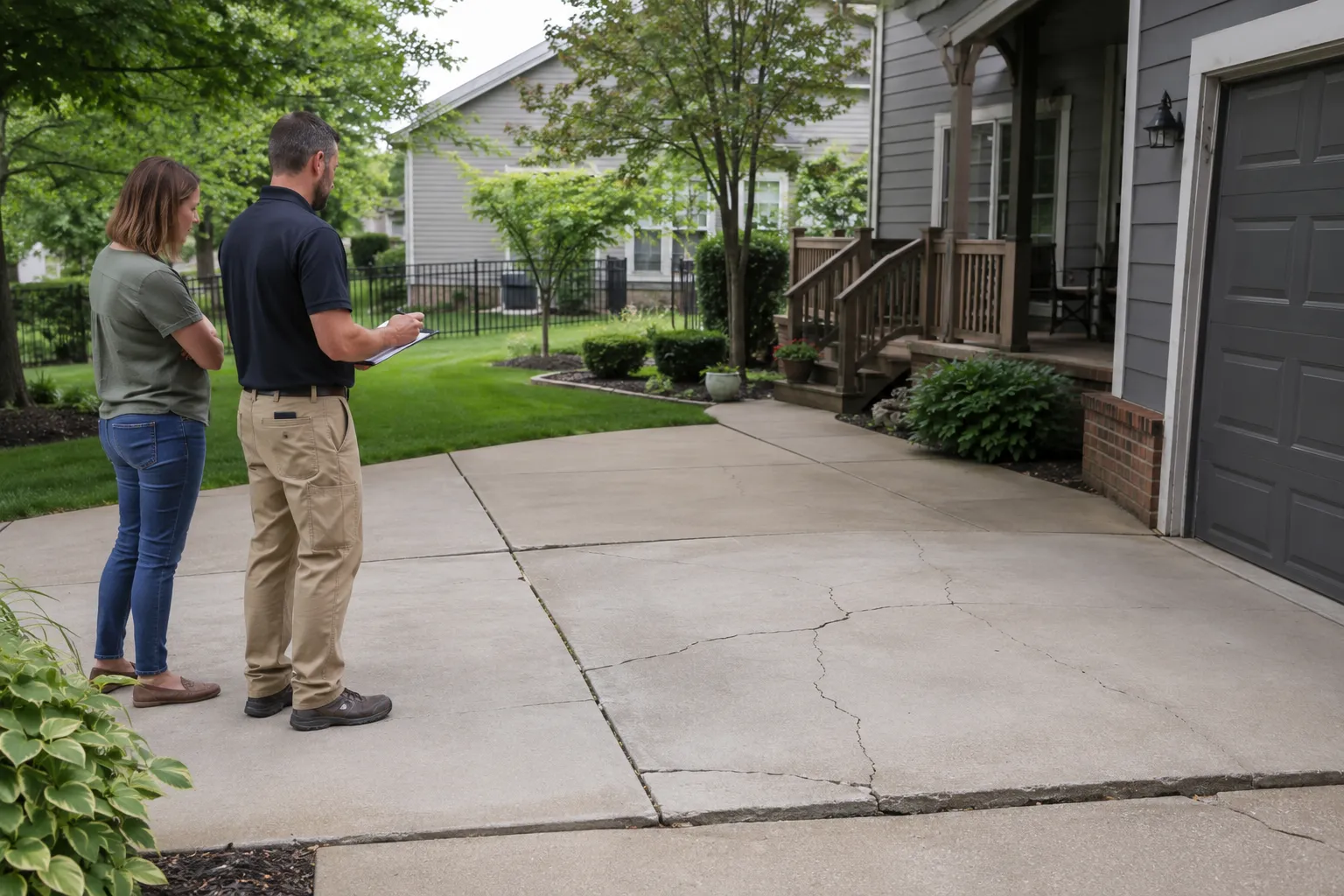
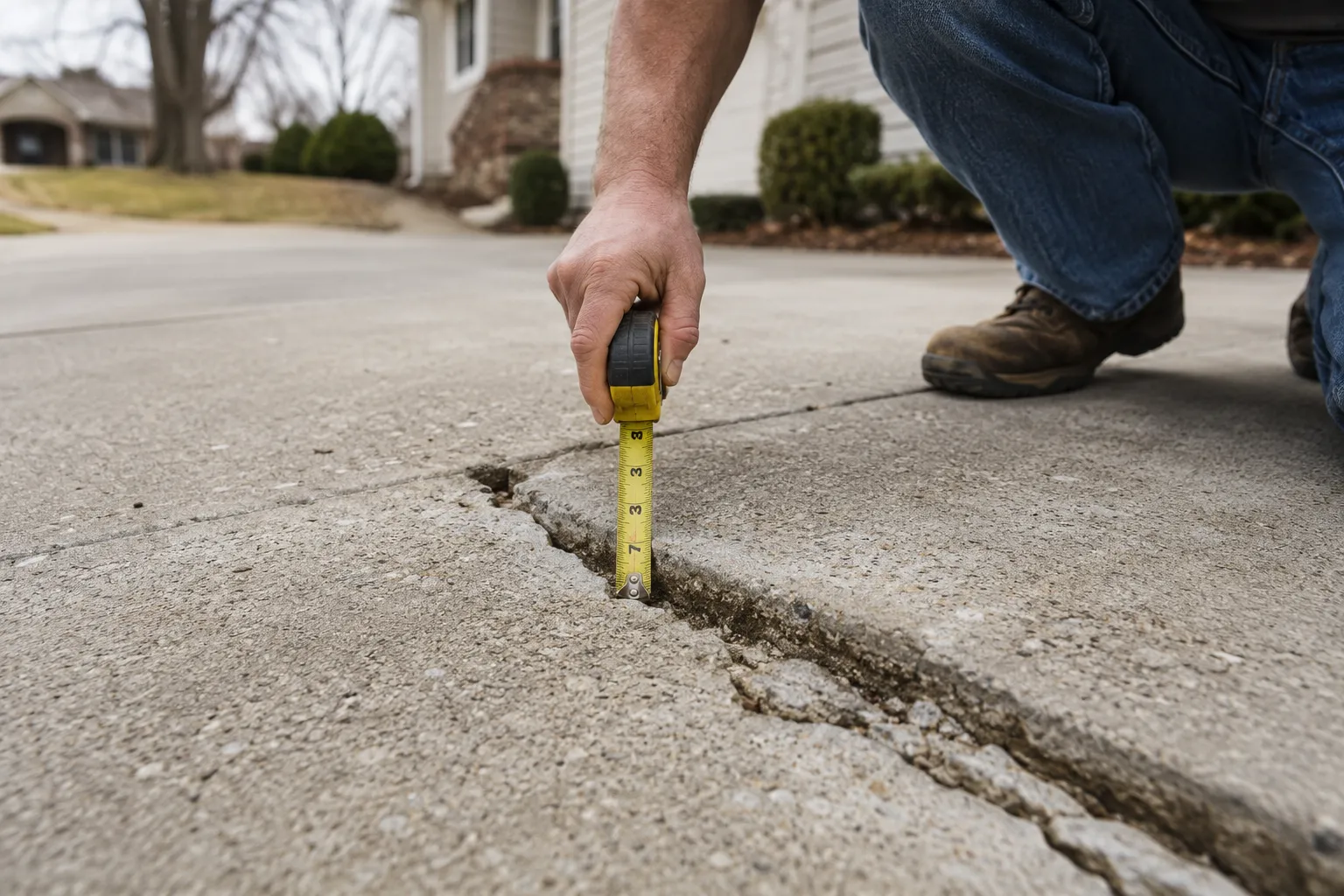
The first cost factor is the condition of the concrete. A narrow, stable-looking crack presents a different question from a slab with deep deterioration, vertical displacement, broken edges, repeated cracking, or movement near a joint. The depth and severity of the damage can change whether we can address a localized area or need to remove failed concrete and prepare the support beneath it. Photos can document visible symptoms, but we may still need to determine whether the damage is isolated or part of a larger problem.
Note where the damage starts and ends, whether it has changed over time, and whether nearby doors, steps, drains, or adjoining slabs are affected. Those details help define what needs to be inspected rather than assuming that every crack requires the same response.
Base and Subgrade Conditions
Concrete depends on the material beneath it. Voids, disturbed soil, washed-out areas, inadequate support, or an unknown base condition can affect the repair approach and the amount of base or subgrade preparation required. Surface work alone may not address a problem connected to support below the slab.
A site review may be needed to understand what can be seen at slab edges, cracks, or removed sections. Subgrade conditions are one reason a photo-only review cannot always confirm the final scope.
Drainage and Water Movement
Water direction, low spots, downspout discharge, soil erosion, and drainage paths near the concrete should be documented. A repair that changes slab height or slope can affect where water travels. Existing drainage concerns may also point to conditions that should be considered before damaged concrete is patched or replaced.
Photograph the area after rain when it is safe to do so, or describe where water collects and how it leaves the property. Do not assume a concrete repair alone will resolve a separate drainage problem.
Repair Scope
Repair Versus Replacement
Repair and replacement are different scopes. A localized repair may focus on a crack, joint, edge, or limited section. Panel replacement involves removing and rebuilding a defined area while stable adjoining concrete remains in place. Full replacement involves a larger removal and rebuild when the existing concrete cannot provide a suitable repair area or when the condition is more extensive.
The decision should be based on the slab condition, movement, remaining sound concrete, safety concerns, and the expected function of the area. A lower-effort repair is not automatically appropriate, and replacement should not be assumed without reviewing the affected section. For example, we may evaluate a limited driveway problem for driveway repair before recommending driveway replacement, while a cracked walking surface may call for sidewalk repair or sidewalk replacement depending on the panel condition and support.
Size, Number, and Location of Repair Areas
The amount of concrete involved matters, but total square footage is only one part of the scope. Several separated repair areas may require different preparation than one continuous section. Corners, steps, transitions, control joints, garage approaches, property edges, and connections to other slabs can also change how the work must be planned. The same distinction applies to a patio repair versus patio replacement: the visible damaged area may be small, but the final scope depends on the concrete and support around it.
When a crack remains localized in otherwise sound concrete, concrete crack repair may be part of the discussion. We still inspect the surrounding slab and the cause of the crack before confirming the scope.
Site Preparation & Access
Removal, Hauling, and Cleanup
Some projects require cutting, breaking, lifting, loading, and hauling existing concrete before new work can begin. The thickness and condition of the slab, reinforcement that becomes visible, concrete removal and disposal access, and protection of nearby surfaces can all affect that part of the scope.
Clarify whether loose pieces are already present, whether debris can be moved directly to a driveway or street-side loading area, and whether landscaping or finished surfaces limit the route.
Site Access and Work Area Constraints
Access affects equipment choices and how materials or debris can move through the property. Gates, fences, stairs, narrow side yards, overhead restrictions, parked vehicles, utility equipment, and occupied areas may require additional planning.
An estimate request should note the narrowest access point and any surfaces that must be protected. The concrete repair estimate preparation guide explains how to photograph and measure these conditions before a site visit.
Materials & Appearance
Materials and Repair Approach
Material selection depends on the repair type, existing concrete, exposure, joint design, and intended use of the surface. Crack sealants, patching materials, joint materials, reinforcement, base materials, and replacement concrete serve different purposes. Reinforcement requirements and the selected finish can also change the work needed for a replacement section. Product choice should follow the confirmed scope rather than being selected from a generic list.
Ask what the proposed material is intended to do and what preparation it requires. A useful estimate should distinguish between filling a visible opening and addressing damaged or unsupported concrete around it.
Finish and Appearance Expectations
New or repaired concrete may not match the color, texture, aggregate exposure, or weathering of the surrounding slab. Edge details, broom direction, joints, transitions, and the limits of the repair area should be discussed before work begins.
If appearance is important, include wide photos of the entire surface as well as close views of the damage. This helps the reviewer understand whether the project involves a small functional repair, a larger visible section, or a transition between old and new concrete.
Curing & Final Evaluation
Protection and Curing Requirements
Concrete and repair materials may require time and protection before normal use. The required curing or protection period depends on the material, weather during the work, slab use, and the contractor’s method. Vehicle traffic, foot traffic, furniture, pets, sprinklers, and drainage may need to be managed during that period.
The estimate should identify the expected access restrictions for the proposed scope. Avoid relying on a generic timeline before the material and conditions are known.
What Photos Can and Cannot Confirm
Photos are useful for showing the overall area, visible damage, nearby joints, drainage clues, access, and scale. They can help route the request and identify questions for follow-up. They usually cannot confirm slab thickness, buried reinforcement, the full base condition, concealed voids, or the cause of movement.
A photo review is an initial step, not a guaranteed final diagnosis or price. Start at the concrete repair resources hub or return to the home page if you are still comparing service categories. When you are ready, request an estimate and attach project photos so the visible conditions can be reviewed in context.