Concrete Repair Services
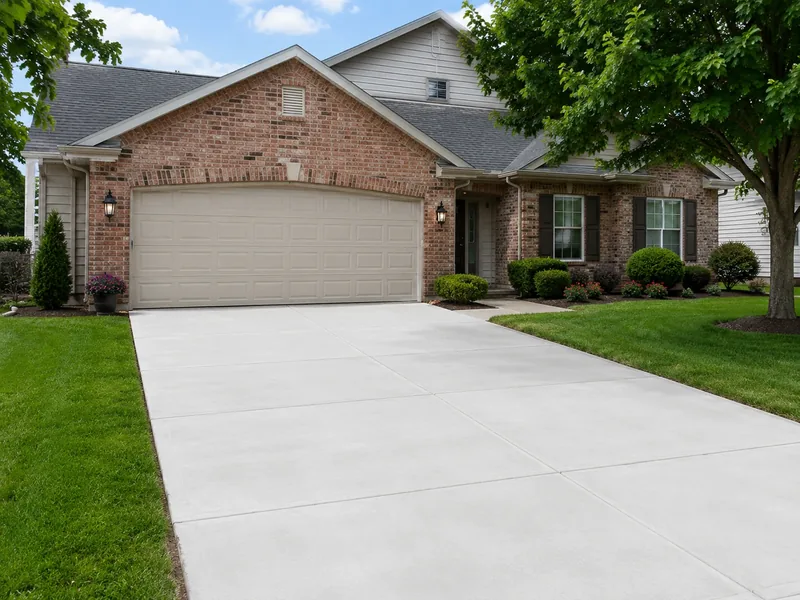
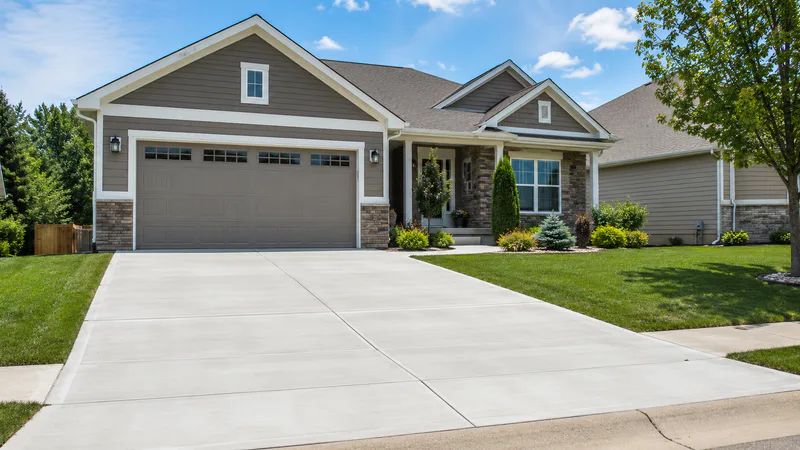
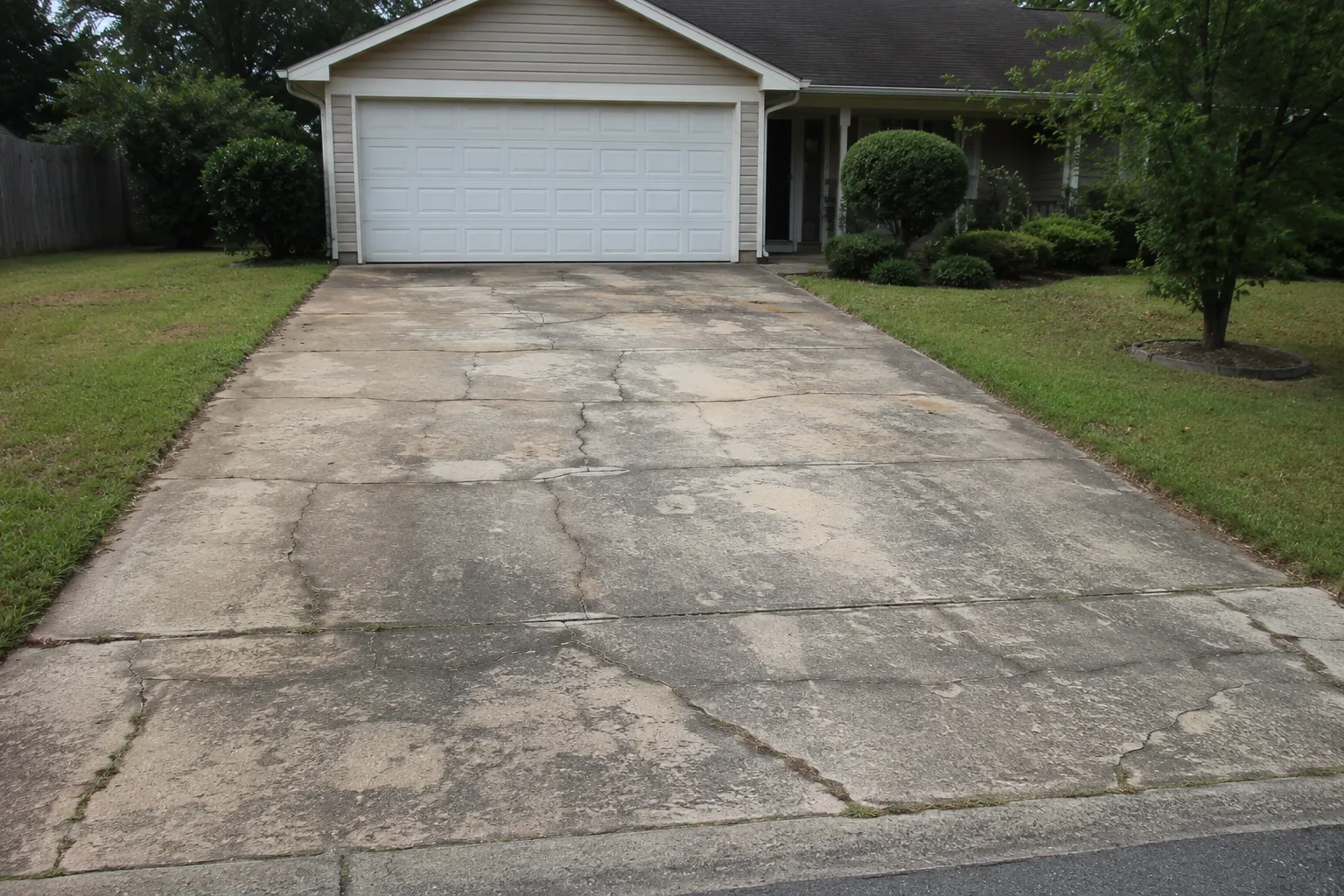
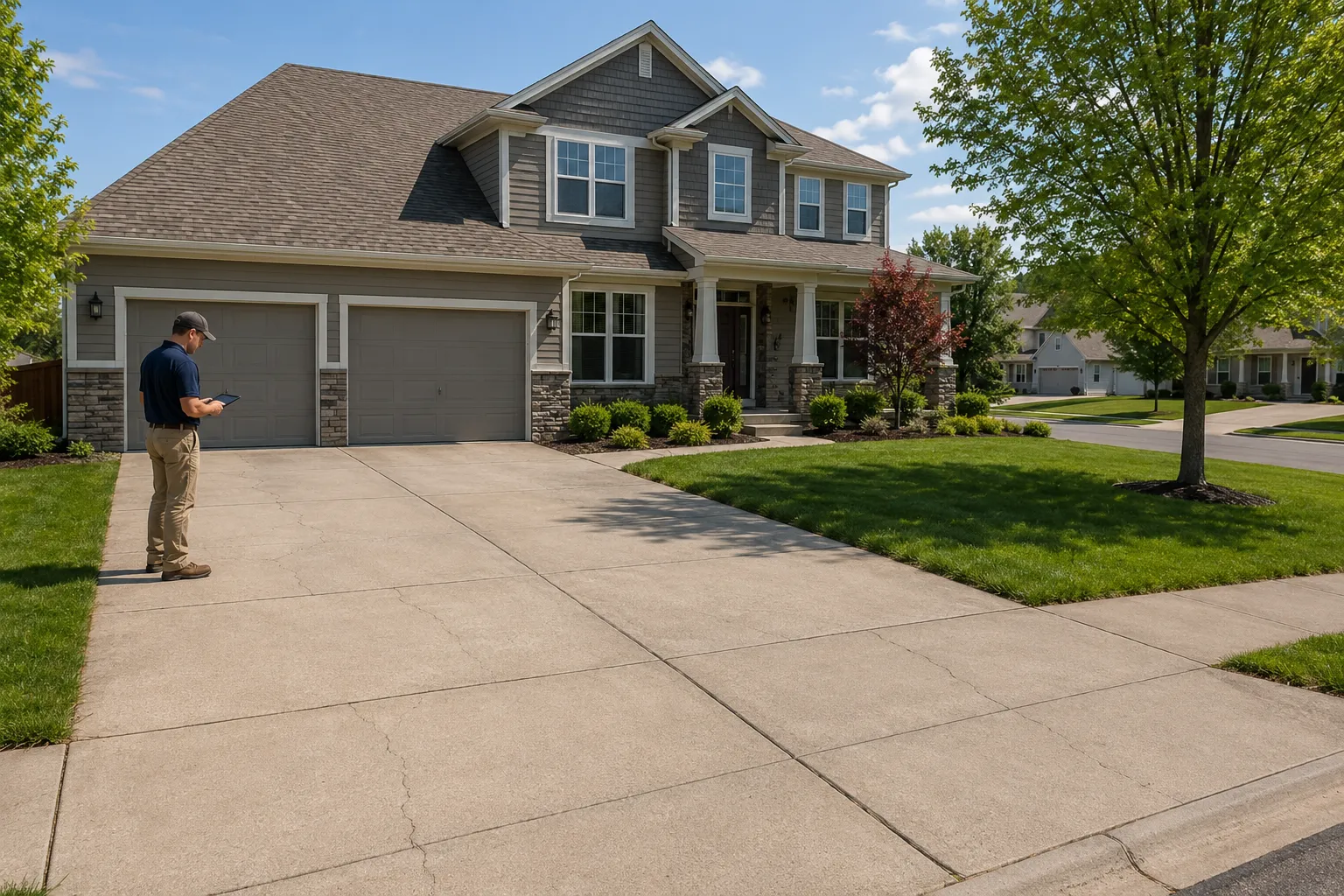
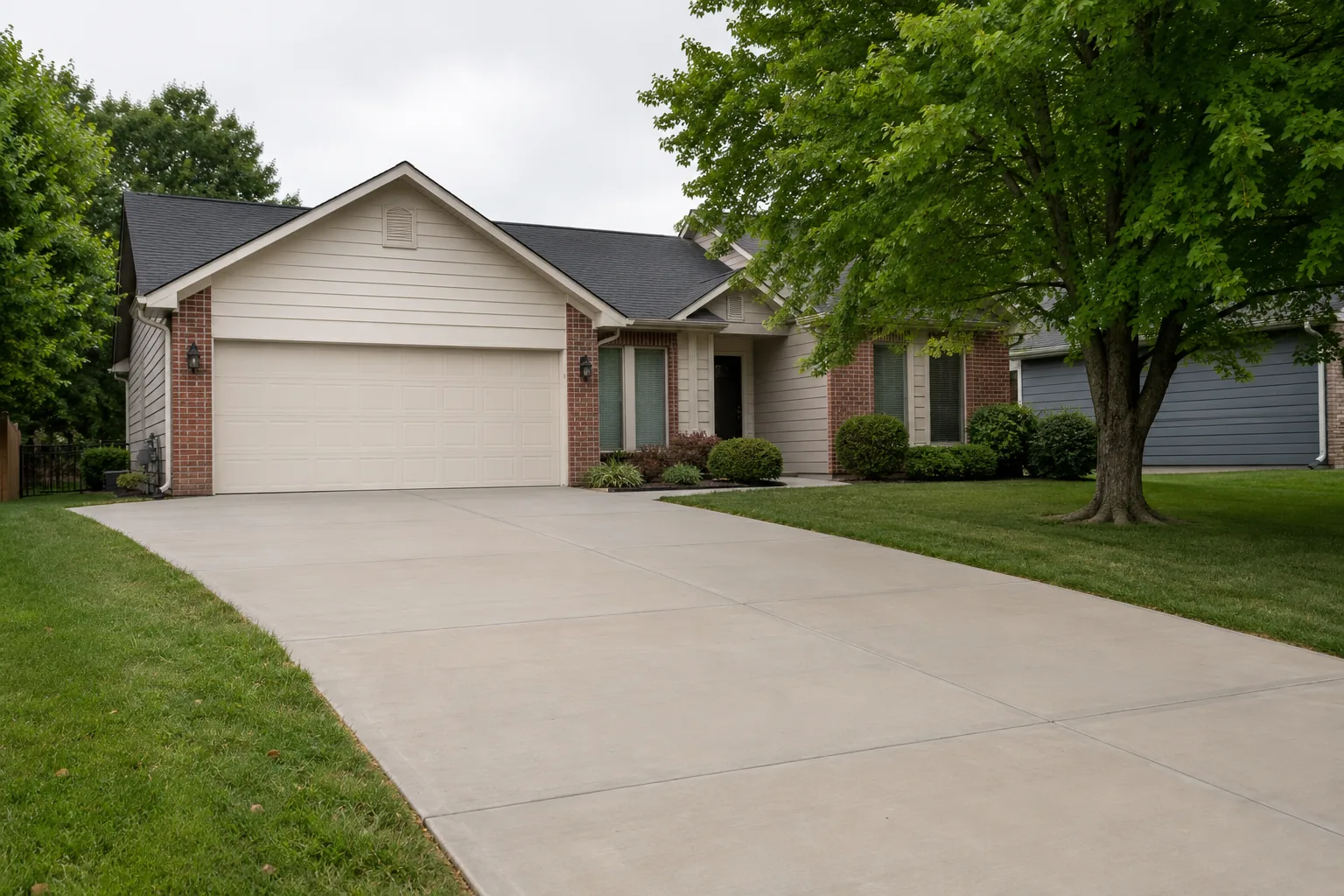
Driveways carry repeated vehicle loads and are exposed to moisture, temperature changes, and deicing materials. We address cracks, chipped edges, surface deterioration, damaged joints, and localized slab failure. If the driveway is extensively broken or sections have shifted beyond a reasonable repair, partial or full replacement may be recommended.
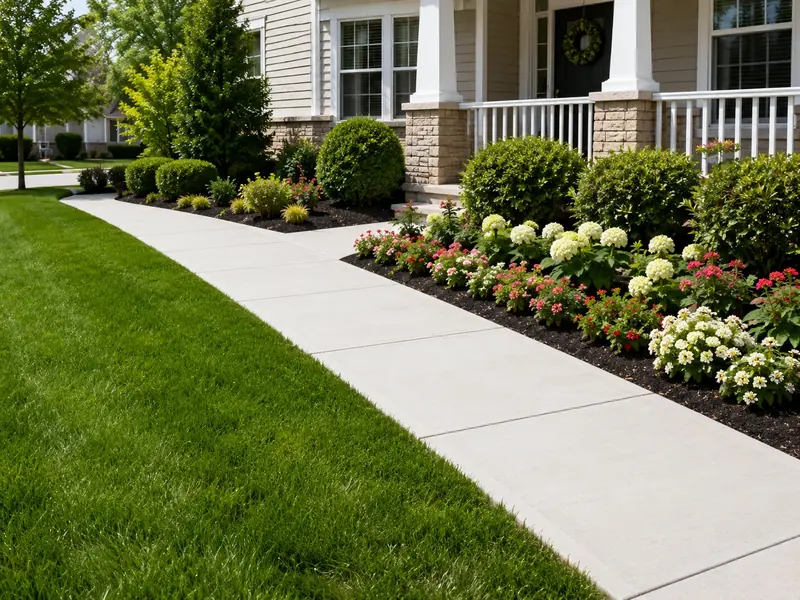
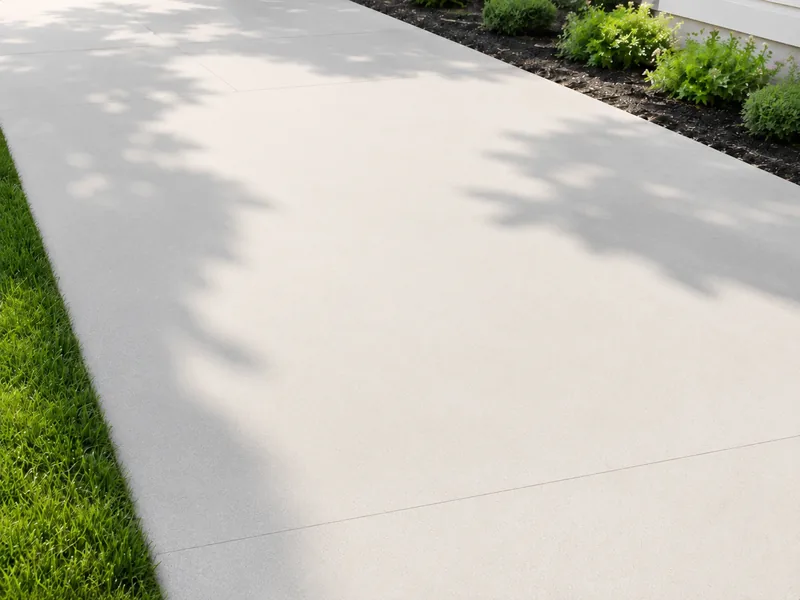
Cracked, broken, or displaced sidewalk sections can become difficult to use and may create a trip hazard. Depending on the condition, the solution may involve crack repair, edge repair, patching, or replacement of the affected section.
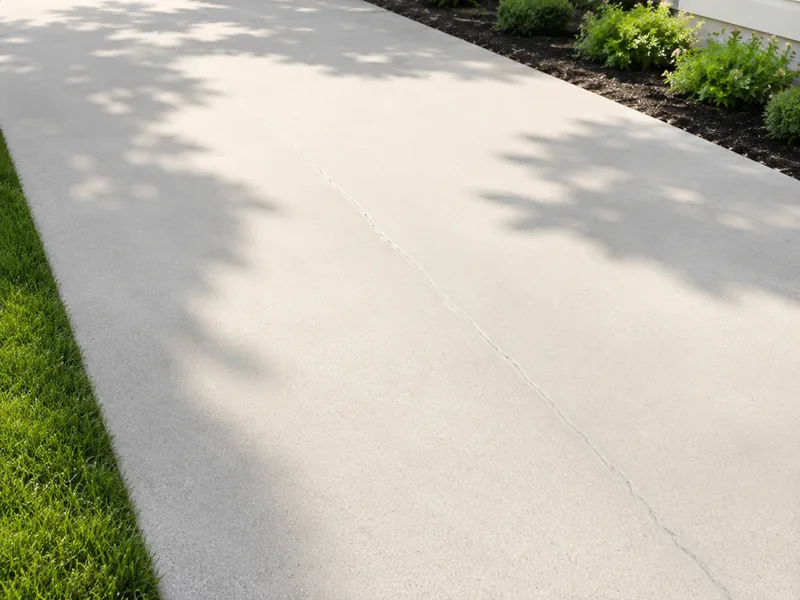
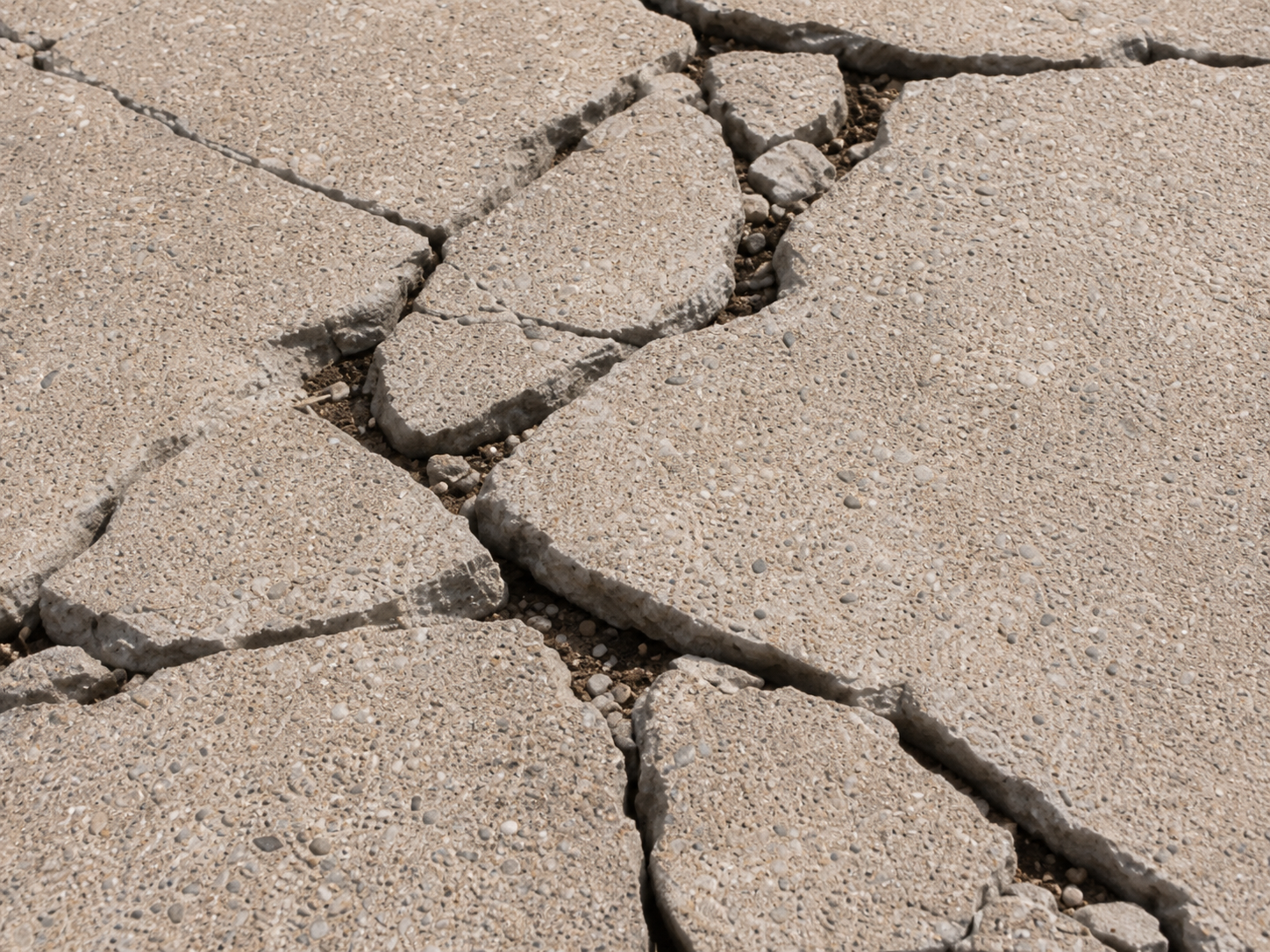
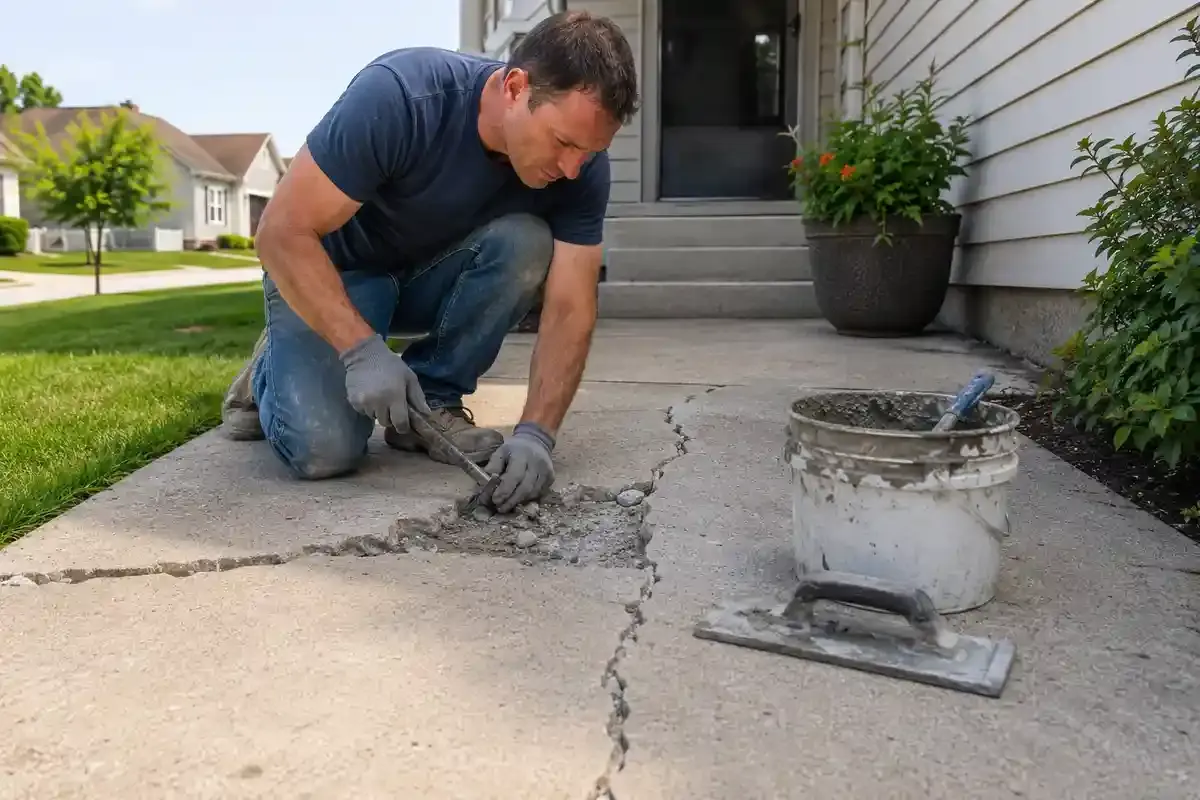
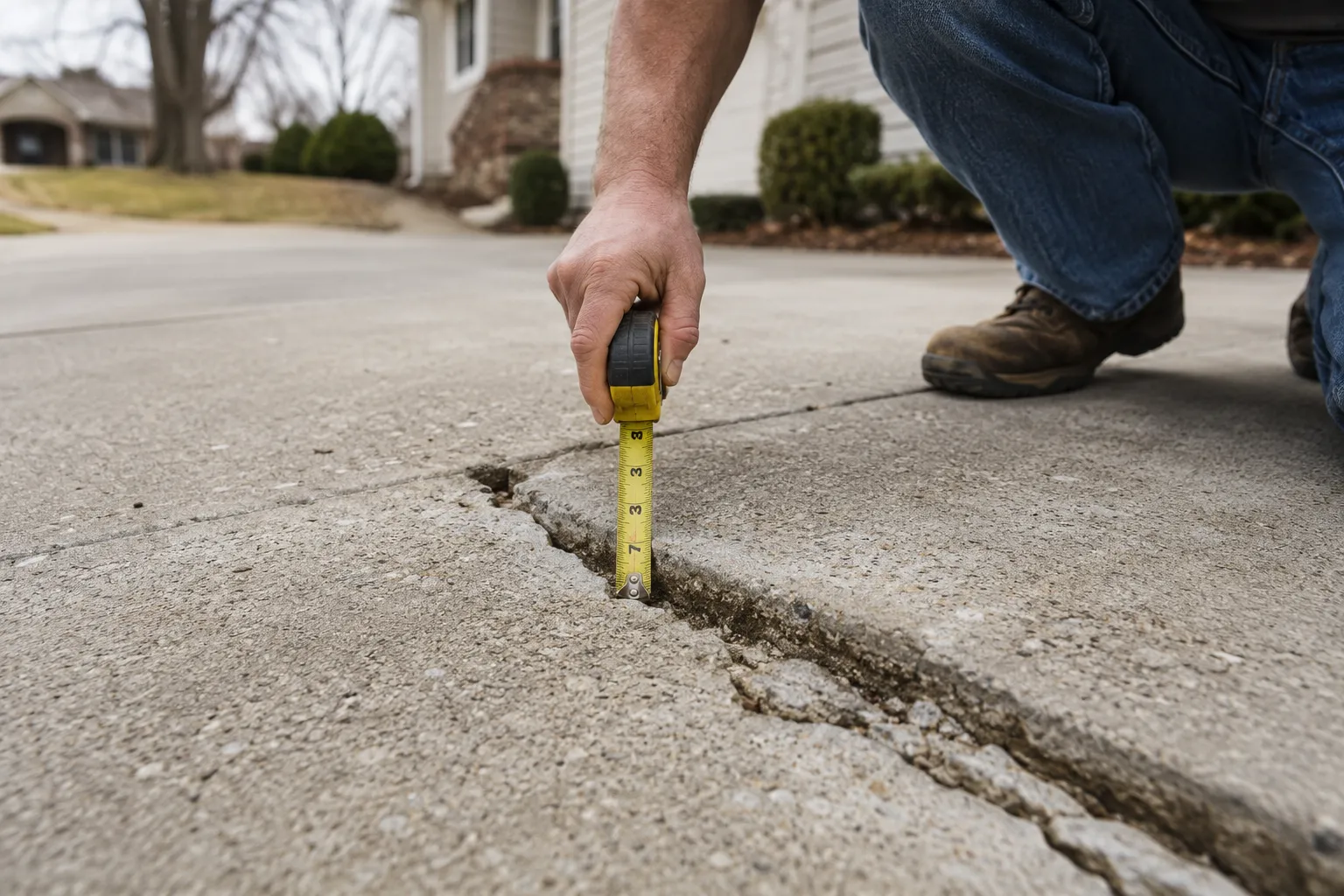
Concrete cracks vary in width, depth, movement, and cause. Some cracks can be cleaned and sealed to reduce water entry and further deterioration. Wider, recurring, or offset cracks may indicate movement that requires a more substantial repair or slab replacement.
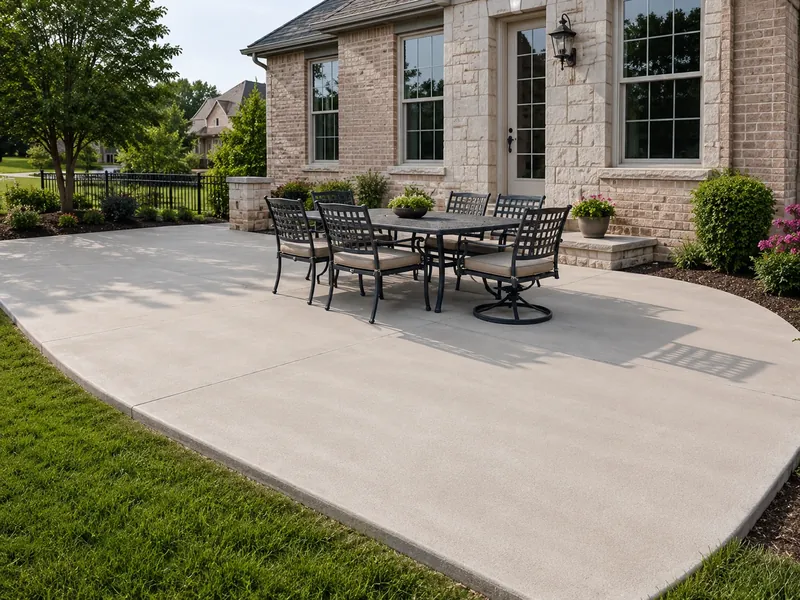
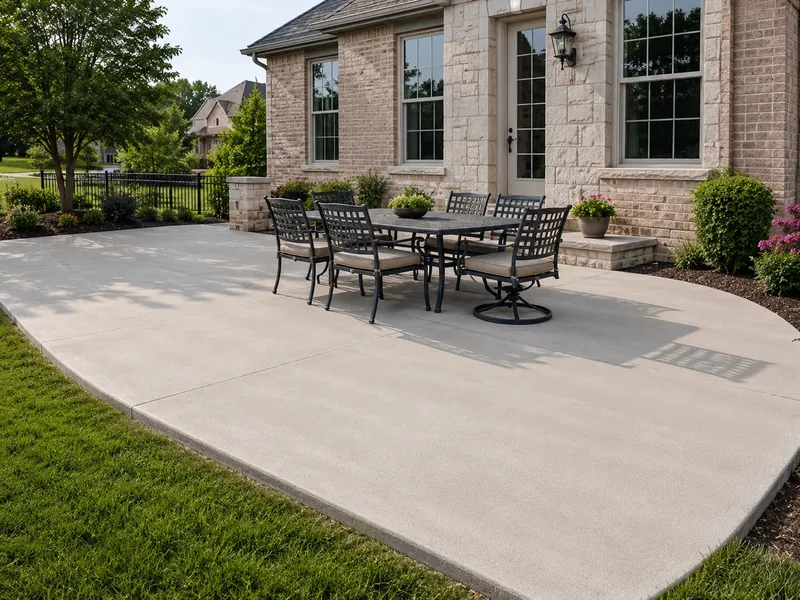
Patio damage may include cracks, scaling, chipped edges, broken corners, separation near steps, or sections that hold water. We assess whether the surface is a good candidate for repair or whether replacing part or all of the patio is the better long-term option.
Repair First—But Not Repair at Any Cost
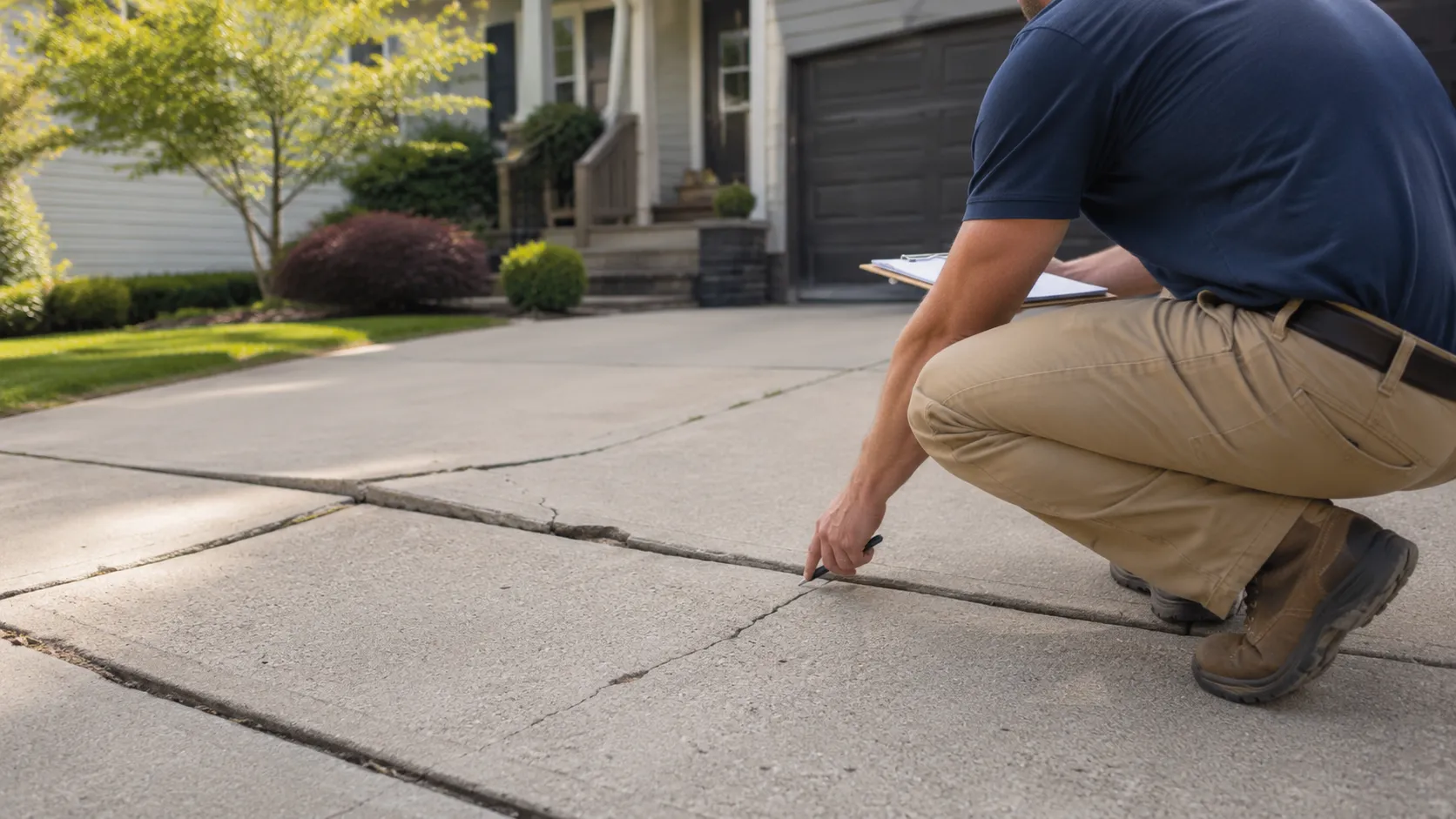
A repair should solve a real problem, not simply cover visible damage for a short time. Before recommending a repair, the slab should be evaluated for movement, base failure, drainage issues, and the overall extent of deterioration.
Repair may be appropriate when:
- The damage is limited to a small area.
- Cracks are stable and do not show major vertical displacement.
- The surrounding concrete remains structurally sound.
- A localized repair can restore function without creating a weak transition.
- The expected service life justifies the cost of the repair.
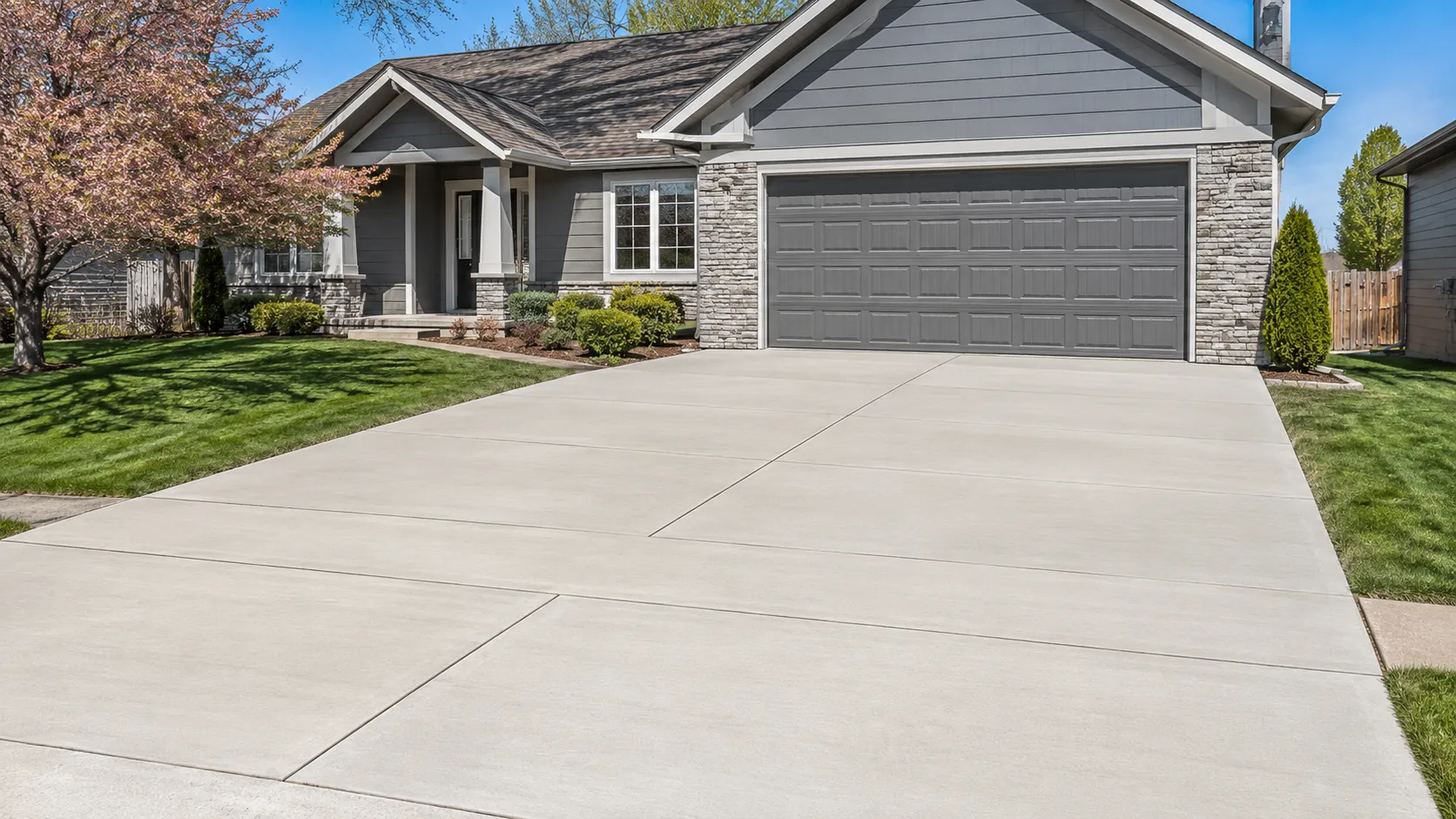
Replacement may be the better choice when:
- Multiple sections are badly fractured.
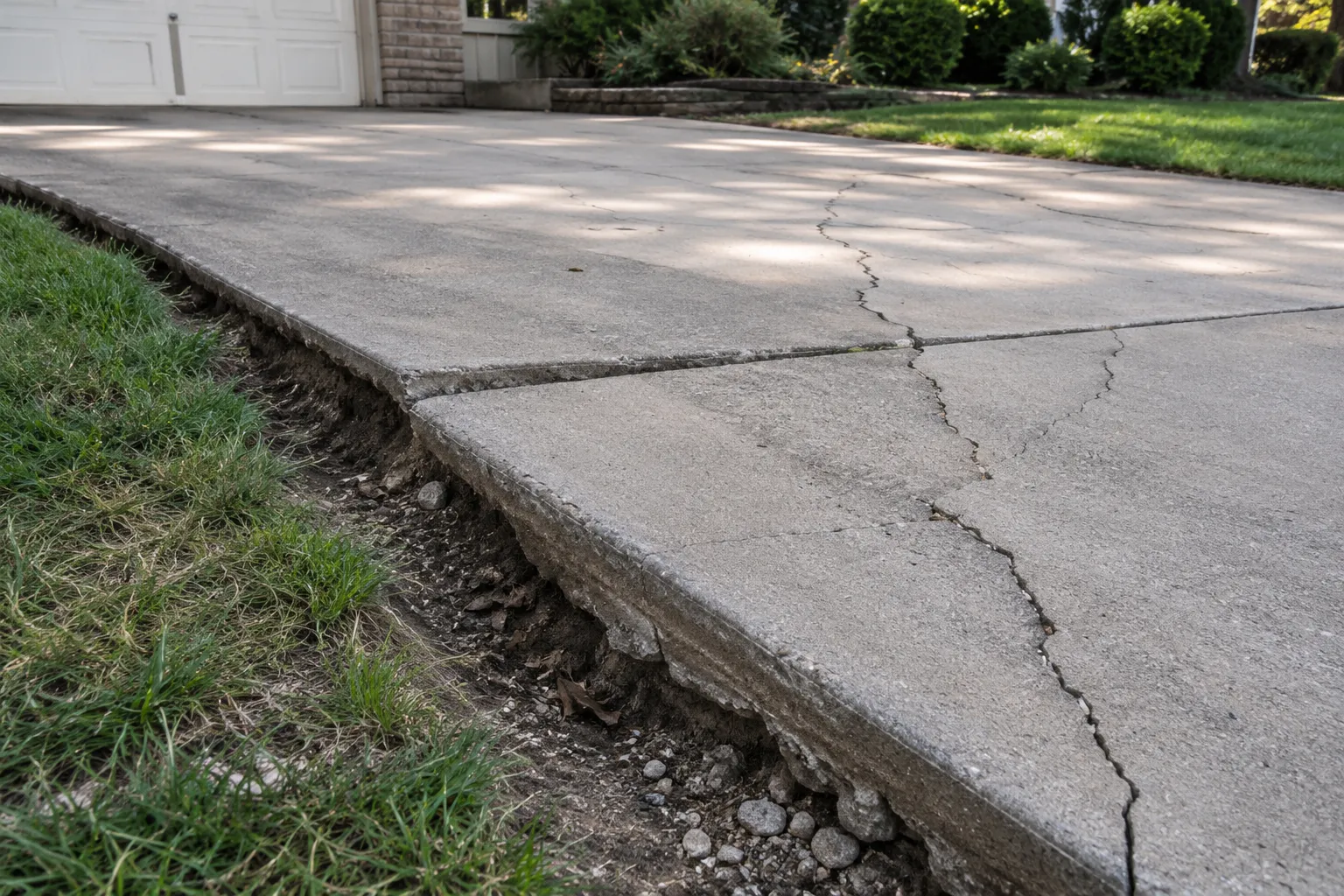
- One side of a crack is noticeably higher than the other.
- The slab rocks, shifts, or continues to move.
- Large areas are scaling, crumbling, or separating.
- Drainage problems cannot be corrected with a surface repair.
- Previous patches have repeatedly failed.
The goal is to choose the solution that makes sense for the condition of the concrete—not to force every project into the same service.
Common Concrete Problems in Lee's Summit
Exterior concrete is continually exposed to moisture, seasonal temperature changes, vehicle weight, soil movement, and normal aging. Small defects can become more serious when water enters cracks or joints and the slab continues to move.
Common problems include:
- Hairline and widening cracks
- Chipped driveway or sidewalk edges
- Surface flaking or scaling
- Broken corners
- Deteriorated expansion or control joints
- Localized low spots that hold water
- Cracked sections near garages, steps, or curbs
- Uneven or displaced sidewalk panels
- Previous repairs that have separated from the original concrete
Early evaluation can help determine whether a focused repair is still practical. Waiting does not automatically mean replacement will be necessary, but ongoing movement and water intrusion can reduce the number of repair options.
What to Expect
1. Tell Us About the Project
Complete the inquiry form with the property location, type of concrete, and a brief description of the damage. Photos are helpful, especially wide views and close-ups of cracks or broken areas.
2. Initial Review
The project details are reviewed to identify the likely scope and whether the damage appears suitable for repair, localized replacement, or a larger replacement project.
3. Site Evaluation
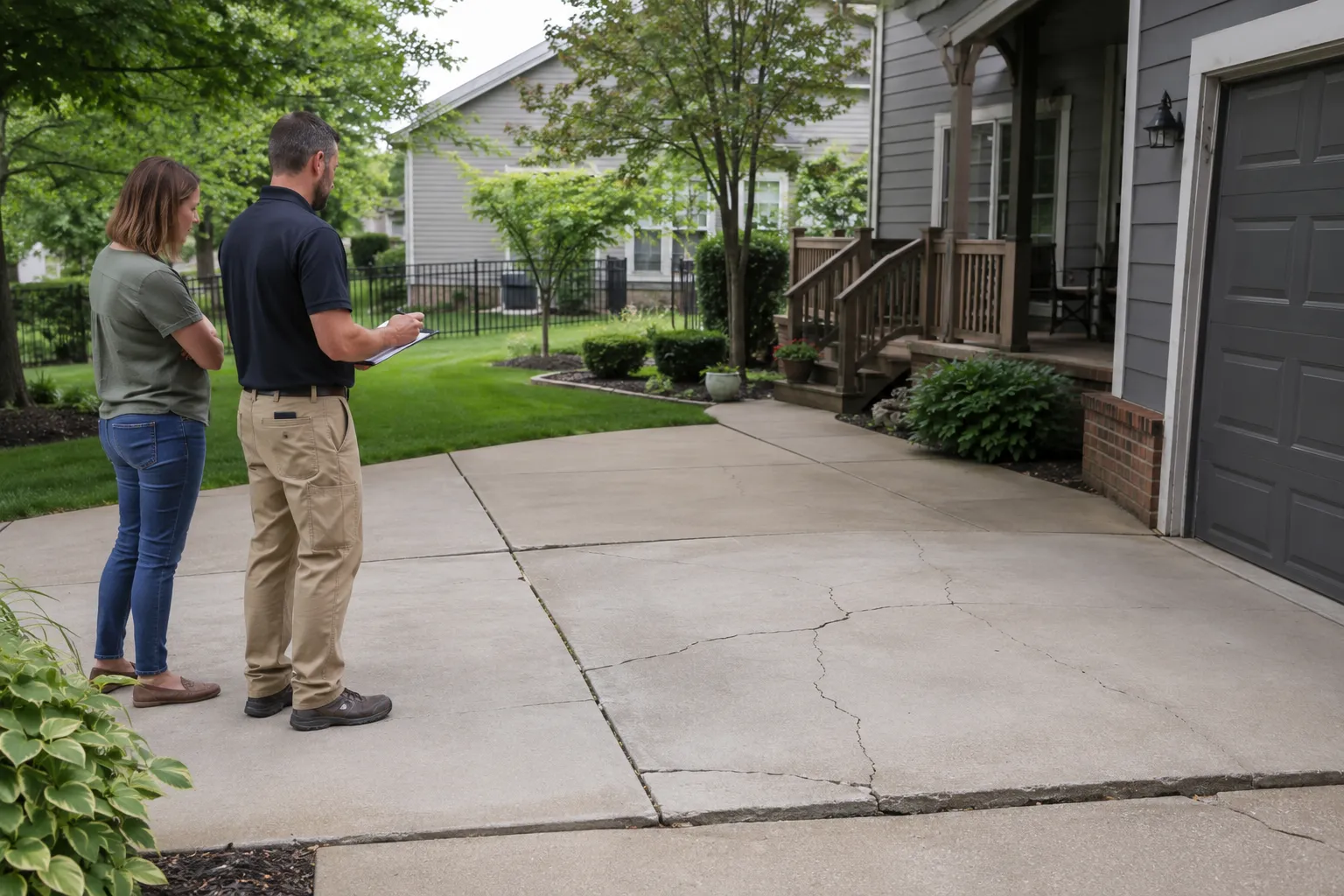
Concrete conditions cannot always be confirmed from photos alone. A site evaluation may be needed to check slab movement, drainage, access, dimensions, and the surrounding concrete.
4. Recommended Scope
The recommended work should clearly state what will be repaired or replaced, which areas are included, and any limitations of the proposed solution.
5. Project Scheduling
Once the scope is accepted, the project can be scheduled around site access, weather, material requirements, and curing time.
A Clearer Way to Start a Concrete Project
Concrete damage is not always easy to describe. A homeowner may know that a crack is getting wider or that a sidewalk section feels unsafe without knowing the technical cause. The inquiry process is designed to start with the visible problem and work toward the correct scope.
You do not need to decide in advance whether the project is a repair or replacement. Send the details you have, and the condition of the concrete can guide the recommendation.
For a problem limited to a driveway, visit Driveway Repair in Lee's Summit. For damaged walkways, see Sidewalk Repair. For individual cracks, review our Concrete Crack Repair page. Patio-specific problems are covered under Patio Repair.
Frequently Asked Questions
Can cracked concrete be repaired without replacing the entire slab?
Often, yes. Stable cracks, small damaged areas, chipped edges, and some surface defects may be repairable. Replacement becomes more likely when the slab has major displacement, widespread deterioration, or continued movement.
How do I know whether repair or replacement is the better value?
The decision depends on the percentage of damaged concrete, the stability of the slab, drainage, previous repairs, and the expected life of the proposed fix. A lower-cost repair is not a good value if the underlying movement is likely to cause an early failure.
Can you evaluate a project from photos?
Photos can help with an initial review, but they may not show vertical movement, hollow areas, drainage conditions, or base failure. A site evaluation may still be needed before a final scope is provided.
Do you repair both residential and small commercial concrete?
The site is focused primarily on residential exterior concrete and similar small-property projects. Submit the project details so the scope can be reviewed.
Will a repaired crack disappear completely?
Not always. A repair can seal, stabilize, or rebuild a damaged area, but the repaired location may remain visible because new repair material rarely matches aged concrete exactly.
What information should I include in the form?
Include the type of surface, approximate size of the damaged area, how long the problem has been present, whether it is changing, and any drainage or access concerns. Attach up to three useful photos when available.
Request a Concrete Repair Estimate
Tell us what is happening with your driveway, sidewalk, patio, or other concrete surface. Include photos if possible. We will review the project details and help identify whether repair, partial replacement, or full replacement is the most appropriate next step.