
Learn how we compare concrete repair and replacement for cracks, settling, drainage, surface damage, and failed panels in Lee’s Summit.
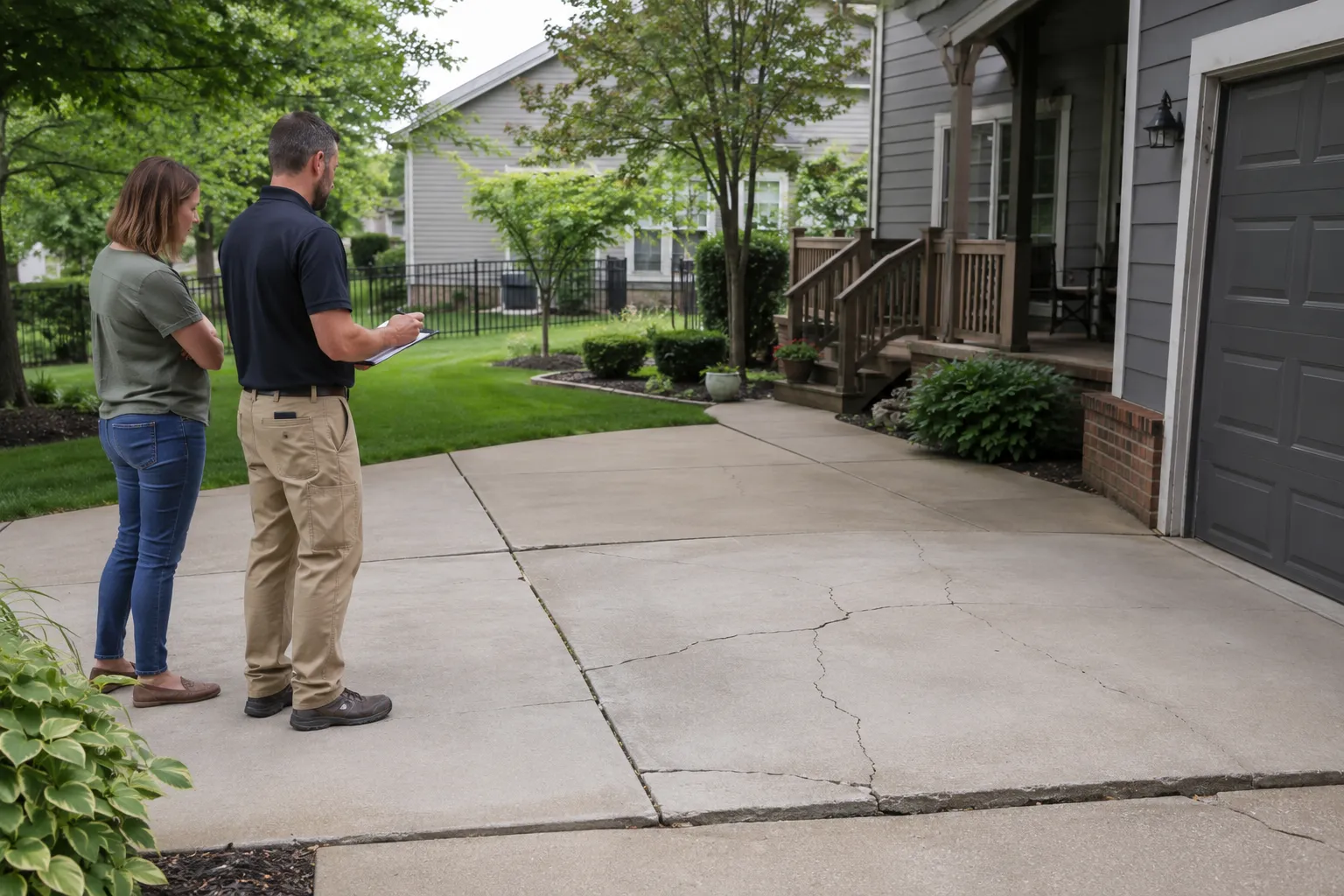
Visible concrete damage starts a repair-or-replacement conversation, but appearance alone does not decide the work. We look at crack patterns, panel movement, water paths, surrounding concrete, and the surface’s intended use. A photo can identify questions, but it cannot confirm every condition below a slab or provide a final structural diagnosis.
Repair or Replacement Starts With the Condition of the Concrete
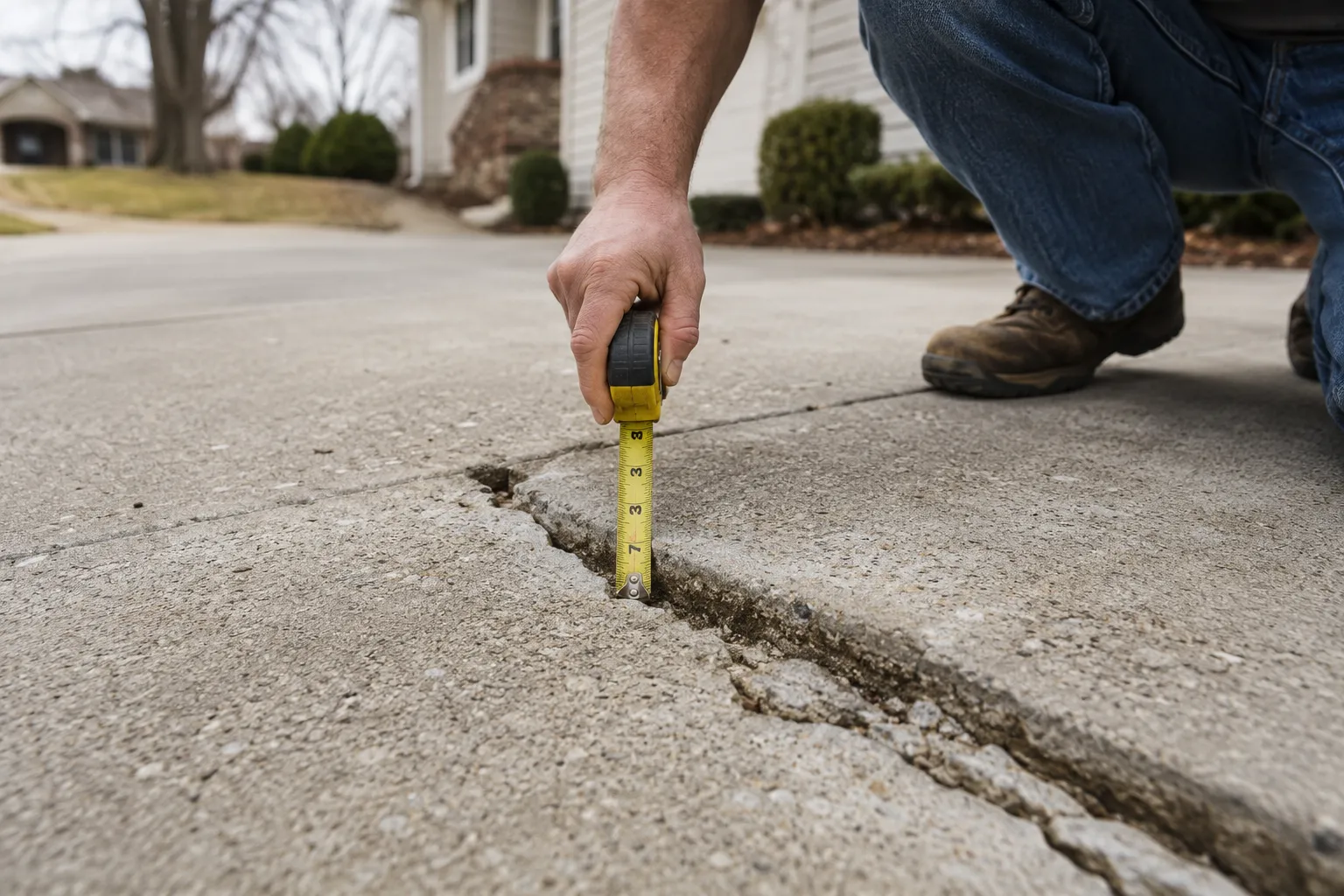
A narrow crack at a joint is different from a crack that branches across several panels, opens again after patching, or has one side sitting higher than the other. Likewise, small areas of surface loss can differ from concrete that is breaking apart through its full depth. We inspect the visible damage along with adjoining panels, edges, transitions, drainage paths, and signs that support below the concrete may have changed.
We identify whether sound, stable concrete remains for a focused repair or whether failed material needs removal. The recommendation may involve one panel, connected panels, or a larger section.
When Repair May Extend Service Life
Isolated Cracks, Edges, and Joint Damage
Repair may fit when damage is limited and surrounding concrete remains stable. A crack, broken corner, worn joint, or damaged edge can sometimes be addressed without removing sound panels. We look for movement, recurring opening, nearby cracking, and a dependable transition.
For crack-specific concerns, see concrete crack repair. Filling a crack can reduce water and debris entry, but a repaired area can remain visible and movement may cause it to reopen.
Surface Damage With Sound Concrete Below
Scaling, pitting, shallow spalling, and worn finish can be surface-level concerns when the slab below remains solid. We check whether deterioration is confined to the finish or extends deeper into the panel.
Surface repairs have limits. They do not correct a slab that is moving, unsupported, extensively broken, or draining poorly. A review also considers whether the repair area has enough sound material at its edges to avoid creating a weak patch beside damaged concrete.
When Replacement May Make More Sense
Widespread Deterioration and Multiple Failing Panels
Replacement may be the better route when surface loss, cracking, broken edges, or deterioration affects multiple panels or a large part of one slab. We consider the number of affected panels, joint locations, and remaining sound concrete.
Settlement, Lifting, and Trip Hazards
Vertical movement between panels can create trip hazards and drainage changes. Settlement, lifting, rocking concrete, or an uneven transition may need more than a surface patch. We also consider adjoining panels, slopes, and signs that water has moved soil near the slab.
Walkway concerns can be reviewed through sidewalk repair or sidewalk replacement. A trip hazard does not automatically require replacement, but a patch may not correct a moving or unsupported panel.
Repeated Patch Failure or Broken Concrete
When a previous patch has separated, a crack keeps returning, or concrete has broken into moving pieces, replacement of the affected panel or section may offer a clearer work limit. Full-depth failure, loose fragments, and broad cracking can mean the repair area is no longer stable for another patch.
What We Inspect Before Recommending the Work
Drainage and Water Movement
We note where water collects, enters, and leaves after rain. Downspouts, low spots, eroded soil, joints, steps, and other slabs can affect water movement. Concrete work should not be presented as a guaranteed solution to a separate water problem.
For local context on drainage, seasonal exposure, and City coordination considerations, see Concrete in Lee’s Summit.
Base, Subgrade, and Support Clues
Open cracks, slab edges, settled sections, washed-out soil, rocking panels, and void-like gaps can offer clues about support beneath the concrete. They do not reveal every buried condition. We consider these signs when deciding whether a repair area is stable enough to retain or whether demolition may be needed to inspect and prepare the material below a failed section.
Full-Depth Damage Versus Surface Wear
The depth of damage changes the conversation. Surface wear may be limited to the finish, while a deep break, crumbling edge, or fracture through the slab can affect the panel’s ability to carry normal use. We also look at joints, adjoining concrete, and access because the selected work has to fit the location as well as the damage.
Swipe horizontally to view all columns.
| Condition | Repair | Section Replacement | Full Replacement |
|---|---|---|---|
| Isolated stable crack | Often considered when surrounding concrete remains stable | Usually unnecessary | Usually unnecessary |
| Broken single panel | Limited suitability if damage is contained and stable | Often considered when adjoining panels remain sound | Sometimes considered when damage is not isolated |
| Vertical displacement | Limited suitability; depends on a stable transition | Often considered when one or more panels have moved | Depends on the overall extent, adjoining slabs, and support |
| Widespread scaling or surface deterioration | Sometimes considered for shallow, contained wear | Often considered for defined failing panels | Often considered when deterioration is widespread |
| Repeated patch failure | Limited suitability unless the cause has been addressed | Often considered if failure is confined | Depends on the extent of failure and remaining sound concrete |
| Broad base, settlement, or drainage problems | Limited suitability | Sometimes considered after preparing the affected area | Often considered when deterioration or support concerns are widespread |
Final recommendations depend on movement, drainage, base support, access, the extent of deterioration, and the specific slab or work area.
How the Decision Changes by Surface
Driveways
Driveways carry vehicle loads and connect to garage floors, streets, curbs, and other concrete. A localized crack or edge may be a candidate for driveway repair, while widespread breaks, settlement, or multiple failing sections may call for driveway replacement. We consider traffic, transitions, drainage, and whether stable joints can define a clear work area.
Sidewalks and Walkways
Walking surfaces require attention to changes in elevation, broken edges, and the path people use every day. Sidewalk repair may address limited damage, while sidewalk replacement may be considered for a displaced, unstable, or extensively damaged panel. Nearby steps, curbs, and connecting slabs matter when reviewing the transition.
Patios
Patios often meet doors, steps, landscaping, and outdoor furniture areas. A contained crack, joint issue, or shallow surface defect may be suited to patio repair. When drainage, settling, deep damage, or several broken areas affect the surface, patio replacement may provide a better way to rebuild the affected area and its transitions.
Commercial Entrances, Common Areas, and Service Surfaces
Commercial concrete can involve pedestrian routes, entrances, service paths, and access requirements. We review affected panels, visible hazards, and temporary use restrictions before discussing a focused repair or replacement section. See commercial concrete repair for the conditions we review.
Access, Demolition, Curing, and Daily Disruption
Replacement usually creates more demolition, hauling, access restrictions, and curing time than a focused repair. Existing concrete may need cutting, breaking, loading, and removal before the area below is prepared. Equipment routes, landscaping, gates, vehicles, and areas that must remain open affect the work arrangement.
Repair materials and new concrete need protection before normal use. Foot traffic, vehicles, furniture, pets, sprinklers, and water flow may need temporary limits. We do not publish a fixed timeline because return-to-use guidance depends on the material, weather, slab use, and work performed.
Cost Factors Without a One-Size-Fits-All Price
Cost depends on panel condition, damage depth, preparation, demolition, access, drainage, finish expectations, and curing restrictions. Our concrete repair cost factors guide covers those estimate inputs in more detail.
Questions to Ask Before Requesting an Estimate
Before contacting us, note which panels are affected, whether there is vertical movement, where water collects or drains, and whether the area has been patched before. Also identify access that must remain open, appearance or matching concerns, and useful photos and measurements.
Our guide to preparing for a concrete repair estimate explains how to gather those details without a full project checklist. Clear notes and photos help us understand visible conditions, while an on-site review may still confirm work limits.
Frequently Asked Questions
Can one damaged concrete panel be replaced?
Often, yes. A panel can sometimes be removed and replaced when joints, adjoining concrete, drainage, and transitions allow a defined work area. We inspect nearby panels before recommending a limit.
Can a crack be repaired instead of replacing the slab?
Sometimes. A limited, stable crack with sound concrete around it may be repaired. Major vertical movement, repeated opening, widespread cracking, or broken concrete can change that recommendation.
Does a trip hazard always mean replacement?
No. The height difference, panel stability, damage depth, and cause of movement all matter. A visible trip point should be reviewed rather than assumed to need one method.
Can drainage problems affect a repair decision?
Yes. Pooling, runoff, erosion, or a changed slope can contribute to damage and affect the proposed work. Concrete work does not automatically resolve every drainage issue.
Will new concrete match the existing surface?
An exact match should not be expected. Age, weather exposure, materials, finish, and curing conditions can create visible differences in color and texture.
What photos help us review repair versus replacement?
Send wide photos, close views of damage, adjoining panels and joints, any height difference, drainage clues, and the access route. Include safe, simple measurements.