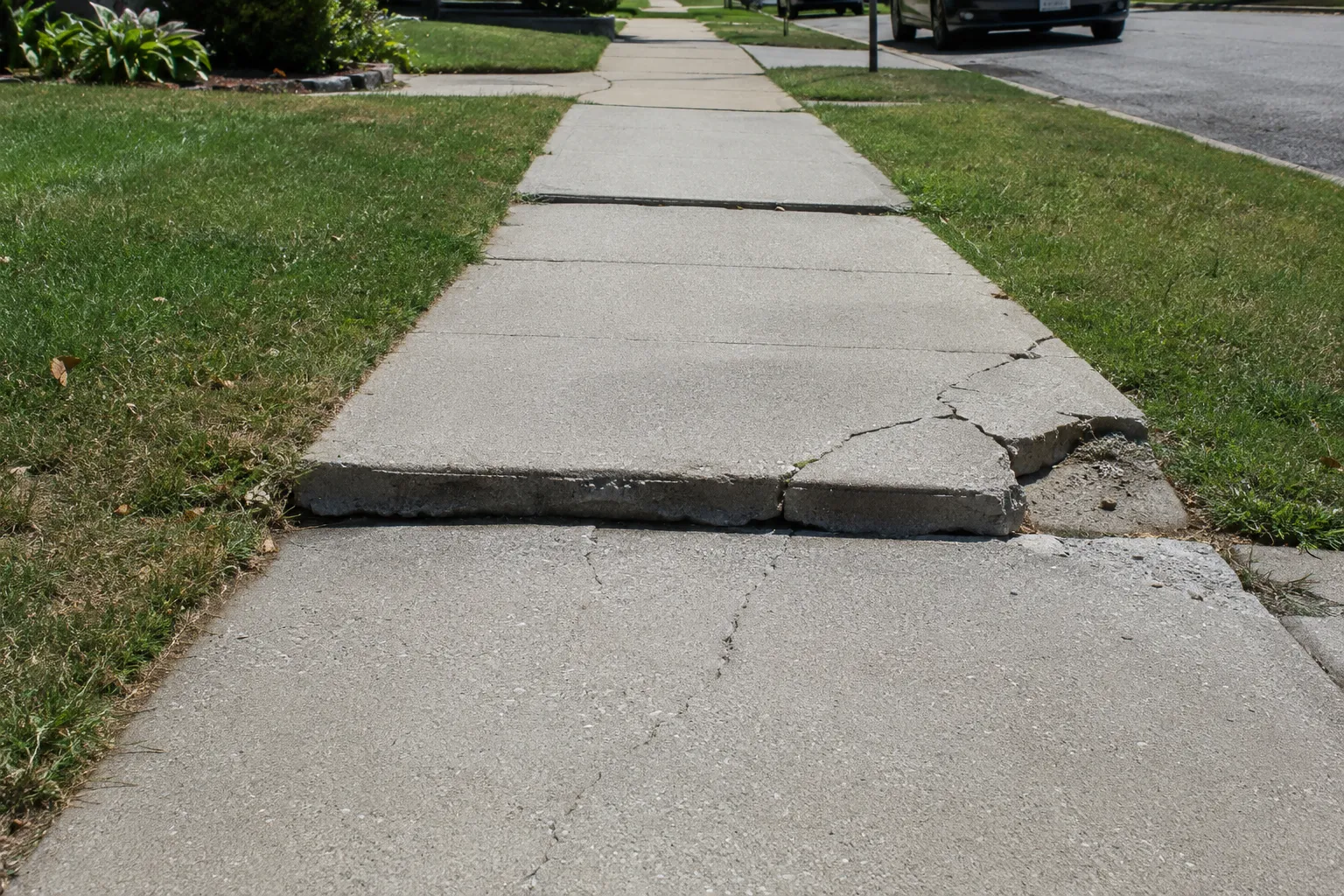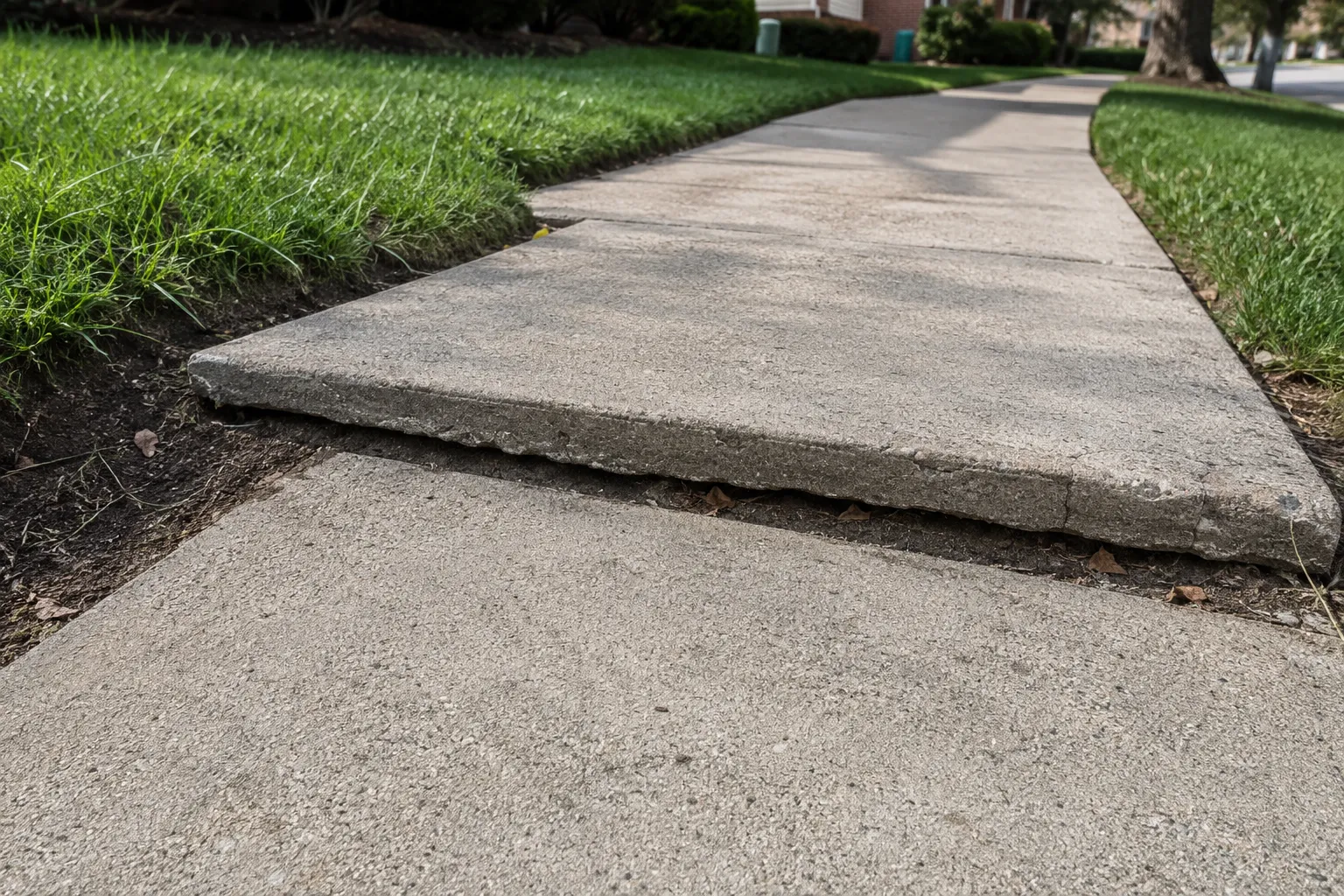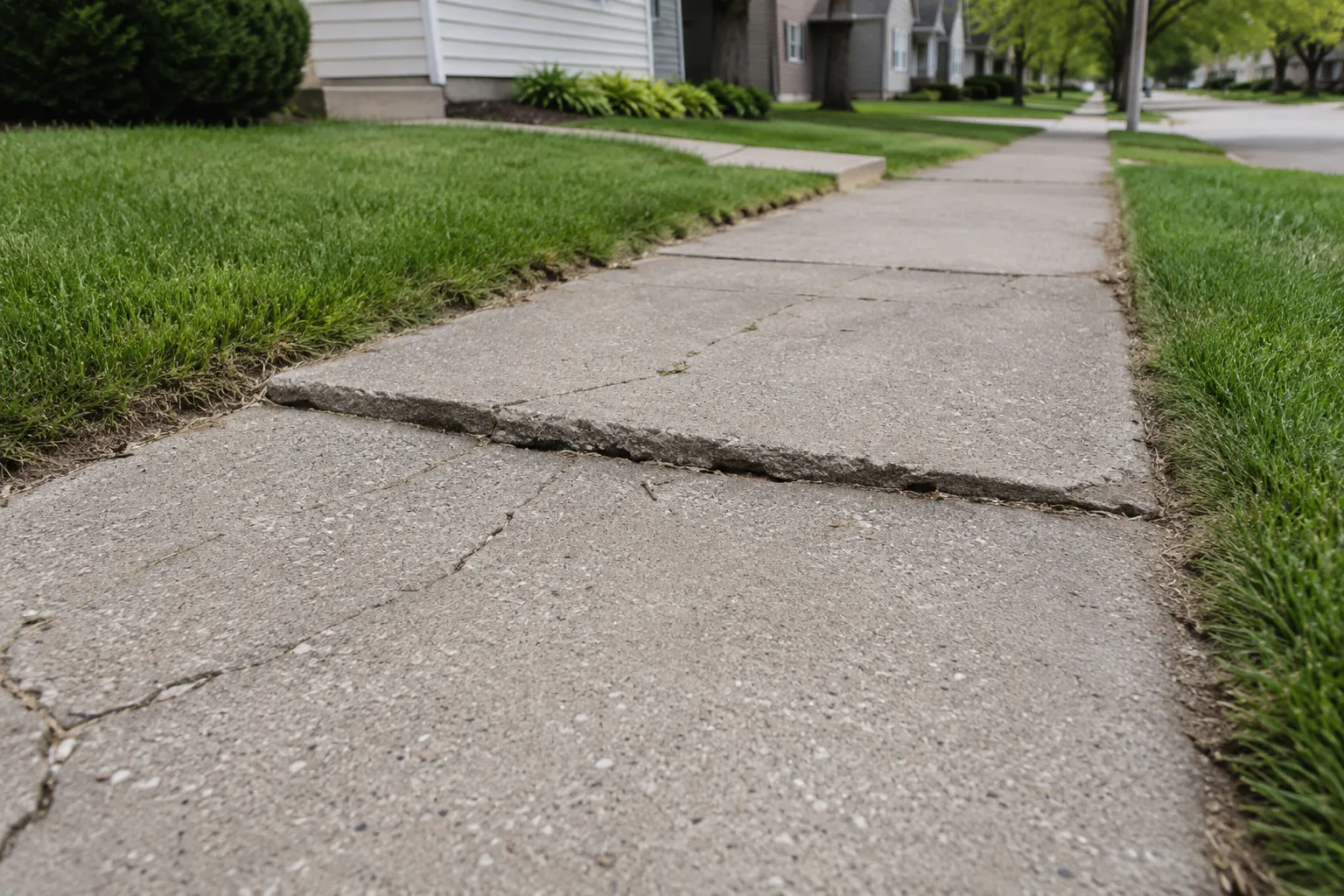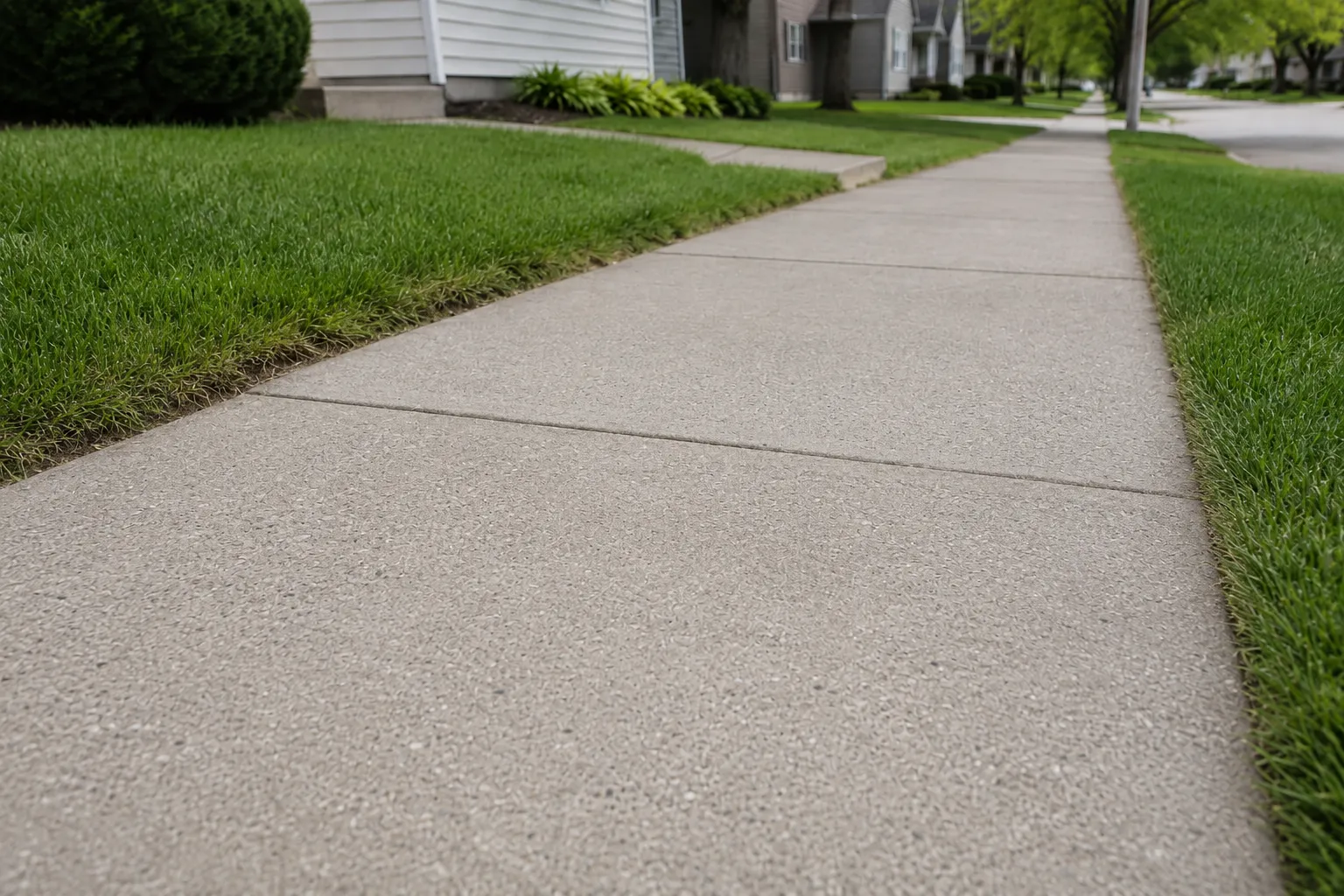
Sidewalk Damage We Evaluate
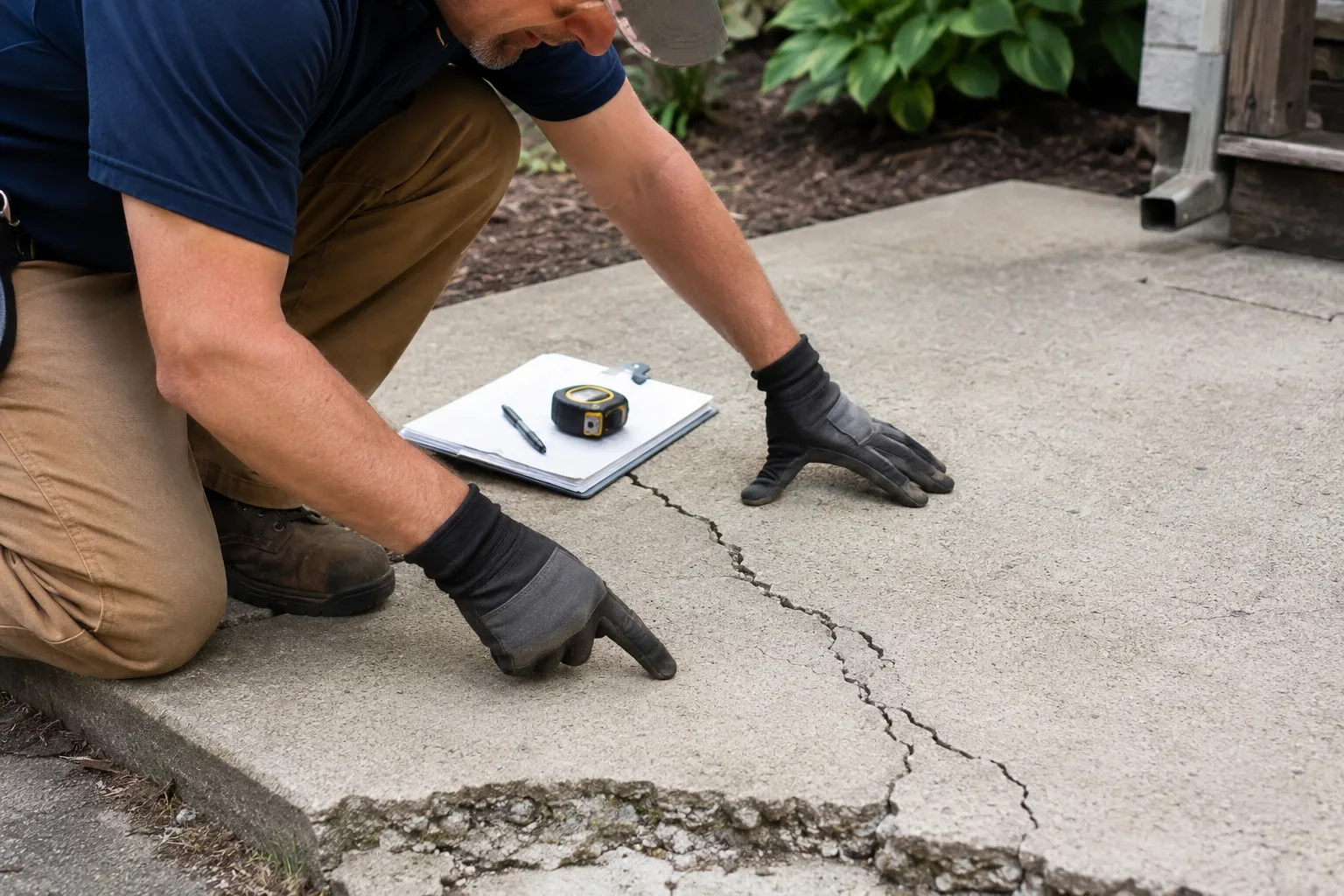
Cracked Walkway Sections
A narrow, stable crack may be suitable for cleaning and sealing. Cracks that continue to widen, cross an entire panel, or show vertical movement need a closer evaluation. Visit Concrete Crack Repair for more information about crack types and repair limitations.
Uneven or Displaced Panels
A height difference between sidewalk panels can develop from base movement, root growth, erosion, or settlement. Because this site does not offer a dedicated concrete leveling service, substantially displaced panels are evaluated for removal and replacement rather than promoted as a lifting project.
Broken Corners and Edges
Corners and edges may break when they lose support or receive impact. A small, stable defect may be rebuildable. A fractured corner that moves independently usually requires removal of the weakened area or replacement of the panel.
Surface Deterioration
Scaling, pitting, and flaking can make a walkway rough and unattractive. A surface repair may be considered when deterioration is shallow and the slab below remains sound. Deep or widespread damage may make replacement a better value.
Damage Near Steps, Driveways, or Curbs
Transitions require careful attention because small height differences can affect how the walkway is used. The recommended scope should account for the adjoining driveway, steps, porch, curb, and drainage path.
Repair, Panel Replacement, or Full Walkway Replacement?
Not every sidewalk problem requires rebuilding the entire walkway. Concrete sidewalks are commonly divided into individual sections, allowing a damaged panel to be addressed separately when the surrounding sections remain stable.
Repair May Be Appropriate When
- The crack is narrow, stable, and has minimal vertical displacement.
- Damage is limited to a small corner or edge.
- Surface deterioration is shallow.
- The panel remains well-supported and does not move under load.
- The repair can restore a usable surface without creating a weak patch.
Panel Replacement May Be Appropriate When
- One panel is badly cracked or broken.
- The panel is vertically displaced from the adjoining section.
- Previous patches have separated.
- The panel rocks or has lost base support.
- Damage is concentrated near a driveway, step, or utility transition.
Larger Replacement May Be Appropriate When
- Multiple panels have failed.
- The entire route has inconsistent grades or drainage.
- Widespread deterioration makes separate repairs inefficient.
- The walkway layout needs to change.
- Accessibility and transition issues cannot be corrected one panel at a time.
A clear scope should explain why a specific section is being repaired or replaced and how it will connect to the existing walkway.
Why Sidewalk Damage Should Be Evaluated Early
A small crack does not always require immediate replacement. However, early evaluation can identify whether the defect is stable or part of an active movement problem.
Water can enter open cracks and joints. Unsupported edges may continue to break. A panel that has started to move may become more displaced over time. Addressing the cause is more important than simply covering the visible defect.
The objective is to restore a dependable walking surface while avoiding unnecessary removal of sound concrete.
Sidewalk Repair Process
1. Submit the Walkway Details
Use the form to identify whether the sidewalk is on private property, near a driveway, or along a street. Include photos of the full route and close-ups of the damaged panels.
2. Review the Surface and Transitions
The evaluation considers crack width, height differences, panel movement, drainage, adjoining concrete, and access.
3. Confirm Responsibility and Requirements
Sidewalks near a street or public right-of-way may involve city, utility, association, or property-owner requirements. Responsibility and approvals should be confirmed before work begins.
4. Define the Repair Scope
The scope may include crack treatment, edge rebuilding, surface repair, joint work, replacement of one or more panels, or a larger walkway replacement.
5. Complete and Protect the Work
Concrete replacement requires removal, base preparation, forming, placement, finishing, jointing, and curing. Access restrictions should be communicated before the walkway is reopened.
Sidewalks Connected to Other Concrete Areas
A sidewalk problem may extend into the driveway, porch approach, or patio. For driveway transitions, visit Driveway Repair. For outdoor living surfaces, see Patio Repair. You can also return to the main Concrete Repair in Lee's Summit page for an overview of all services.
Frequently Asked Questions
Can you repair a sidewalk trip hazard?
It depends on the cause and amount of displacement. Minor surface defects may be repairable. A panel with a substantial height difference or active movement may need to be removed and replaced.
Do you offer concrete leveling for sidewalks?
No dedicated concrete leveling page or lifting service is promoted on this site. When a sidewalk panel is significantly displaced, the project is evaluated for repair or replacement based on the slab condition and surrounding grade.
Can one sidewalk panel be replaced without replacing the entire walkway?
Often, yes. Individual panel replacement can be a practical solution when adjoining sections remain stable and the new panel can be installed with appropriate transitions.
Who is responsible for repairing a sidewalk near the street?
Responsibility can vary by location, property conditions, association rules, and whether the sidewalk is within a public right-of-way. The specific responsibility should be verified before authorizing work.
Will a repaired sidewalk match the old concrete?
A perfect match is unlikely. Existing concrete changes in color and texture over time. New repair material or a replacement panel may remain visibly different even when the finish is coordinated.
Do sidewalk repairs require permits?
Private walkway repairs may differ from work that affects a public sidewalk, curb, or right-of-way. City requirements should be confirmed when the project touches public infrastructure or street access.
Request a Sidewalk Repair Estimate
Send the location of the damaged panels, a description of the cracks or height differences, and up to three photos. The initial review will focus on whether the walkway is a candidate for repair, individual panel replacement, or a larger replacement project.