Concrete Repair Service

Driveway Repair in Lee's Summit, MO

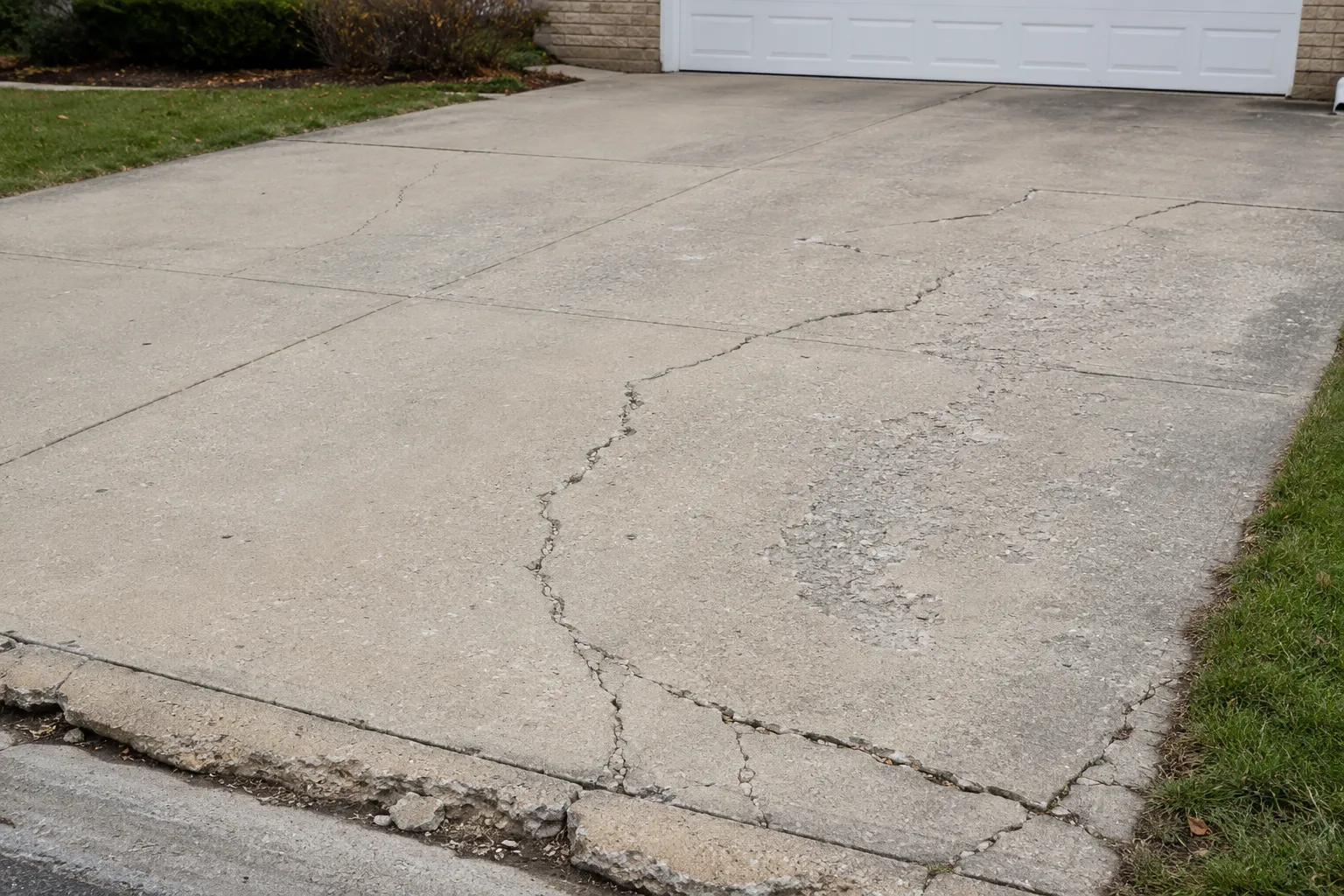
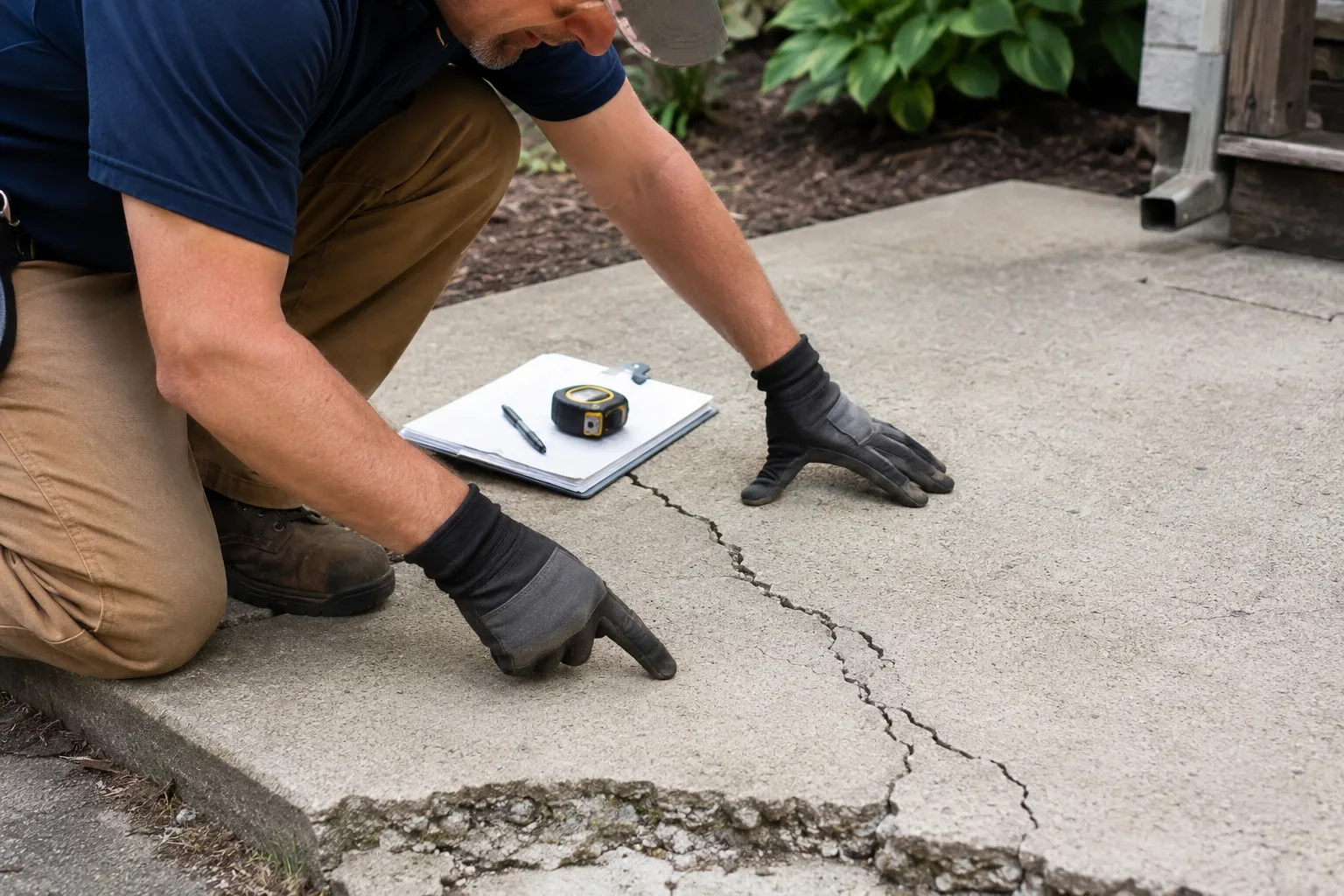
A damaged driveway can affect more than appearance. Cracks allow water into the slab and joints, broken edges can continue to crumble, and displaced sections can make the approach to a garage uncomfortable or difficult to use.

Driveway repair may be a practical option when the damage is localized and the surrounding slab remains stable. When cracking is widespread, sections have moved, or the surface is deteriorating across most of the driveway, partial or full replacement may produce a better long-term result.

Send the project details through the inquiry form and attach photos of the full driveway and the damaged areas. The first step is determining what can reasonably be repaired.

Driveway Problems We Evaluate

Concrete driveways can develop several types of damage, and each problem requires a different response.

Cracks

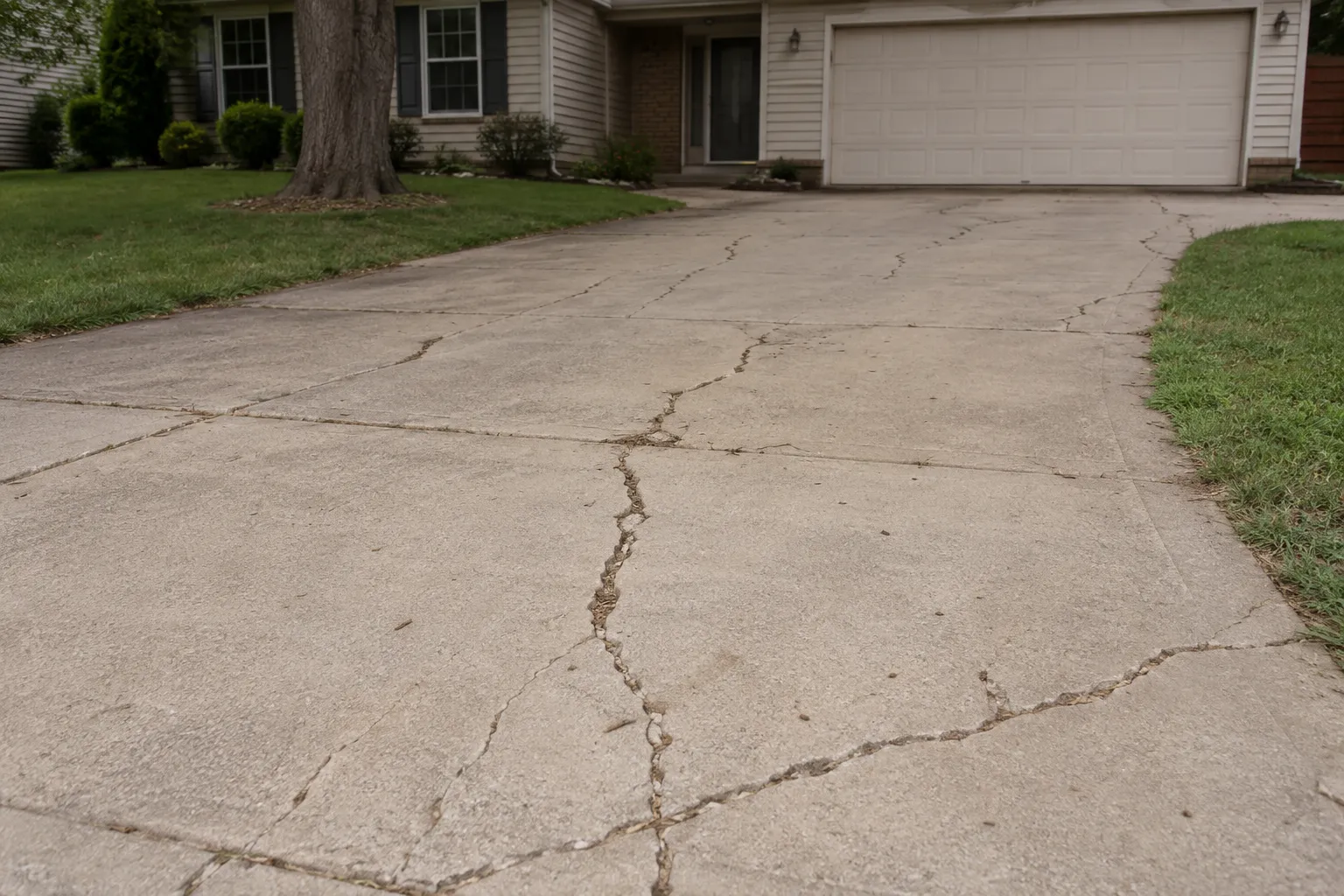
Small, stable cracks may be cleaned and sealed to reduce water entry. Wider cracks, recurring cracks, or cracks with vertical displacement may require a stronger repair or replacement of the affected slab section. Learn more about the limitations and options on our Concrete Crack Repair page.

Chipped or Broken Edges

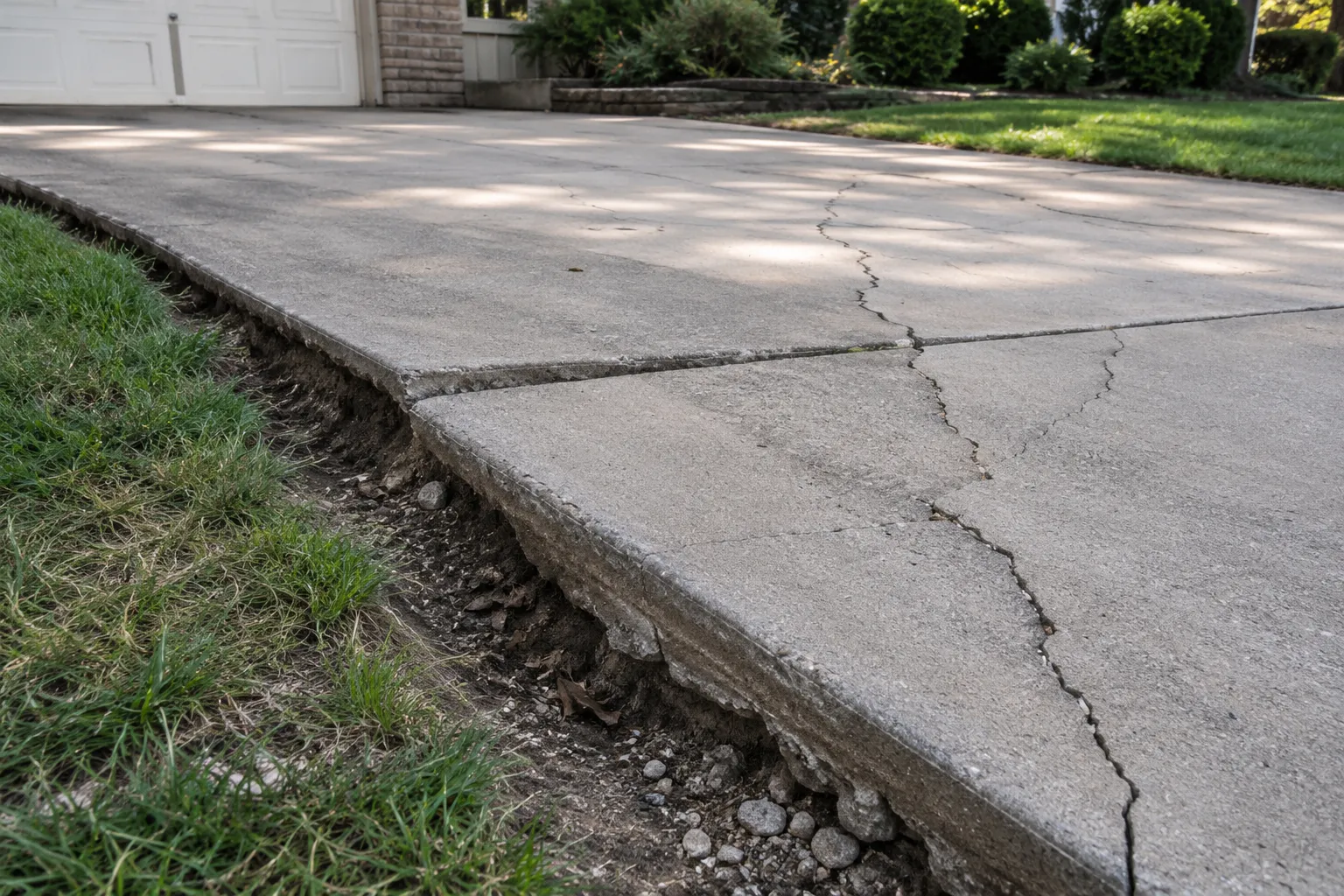
Driveway edges are vulnerable when vehicles repeatedly drive near an unsupported side or when the base beneath the edge erodes. Small defects may be rebuilt with an appropriate repair material. Long sections that are breaking away may need to be removed and replaced.

Surface Scaling and Flaking

The top layer of a driveway may begin to flake, pit, or wear away. A surface repair may be possible when the damage is shallow and the concrete below remains sound. Deep deterioration or large affected areas often make replacement more cost-effective.

Damaged Joints

Control and expansion joints help concrete accommodate normal movement. Missing or deteriorated joint material can allow water and debris into the openings. Joint maintenance may help protect the slab, although it will not reverse movement that has already occurred.

Broken or Displaced Sections

A slab section that is badly fractured, rocking, or vertically offset usually cannot be corrected with a simple crack filler. Localized removal and replacement may be appropriate when the surrounding driveway remains serviceable.

Damage Near the Garage or Street

Cracks and movement near the garage apron, curb, or street connection require careful evaluation. The scope may involve transitions, drainage, or areas close to the public right-of-way. Project requirements should be confirmed before work begins.

When Driveway Repair Makes Sense

Repair is generally most useful when the damaged area is limited and the slab is still performing as a unit.

A repair may be considered when:

  • One or two cracks are stable and have little or no vertical offset.
  • A corner or edge has broken away, but the remaining slab is solid.
  • Surface deterioration is shallow and limited to a defined area.
  • A control joint needs cleaning or resealing.
  • One isolated section can be replaced without rebuilding the entire driveway.
  • The repair can restore function for a reasonable portion of the cost of replacement.

The expected appearance should also be considered. Fresh repair material may not match the color or texture of older concrete. A sound repair can still remain visible.

When Replacement Is the Better Option

Some driveway problems are symptoms of broader slab or base failure. Repeated patching can become expensive when the surrounding concrete continues to deteriorate.

Replacement may be recommended when:

  • Cracks run through several connected sections.
  • One side of a crack is significantly higher than the other.
  • Multiple pieces move independently.
  • The surface is crumbling over a large percentage of the driveway.
  • Water regularly collects because the driveway no longer drains properly.
  • Previous repairs have failed in the same locations.
  • The driveway has reached the point where several separate repairs would cost close to replacement.

Replacement does not always mean removing the entire driveway. If the damage is concentrated in one area, one or more sections may be replaced while serviceable sections remain.

What Causes Concrete Driveway Damage?

Concrete is durable, but it is not unaffected by its environment. Driveway damage often develops from a combination of factors rather than one single cause.

Common contributors include:

  • Water entering cracks and joints
  • Seasonal freezing and thawing
  • Poor drainage or water flowing along slab edges
  • Base erosion or settlement
  • Repeated vehicle loads
  • Impact at unsupported corners or edges
  • Deicing materials and surface wear
  • Inadequate joint placement
  • Normal aging

A repair should account for the likely cause whenever possible. Filling a crack without addressing active movement or drainage may improve appearance temporarily without producing a durable result.

Our Driveway Repair Process

Project Submission

Use the form to describe the damage and provide the driveway location. Include a wide photo showing the full area, close-ups of the defects, and a side angle if there is a height difference.

Condition Review

The review considers crack pattern, slab movement, surface condition, drainage, and how much of the driveway is affected.

Repair or Replacement Recommendation

The recommended scope may include crack treatment, edge rebuilding, surface patching, joint repair, replacement of selected sections, or full driveway replacement.

Clear Project Boundaries

Before work begins, the scope should identify which sections are included, how transitions will be handled, and what visual differences to expect between new and existing concrete.

Site Preparation and Completion

Work requirements depend on the selected method. Replacement projects require removal, base preparation, forming, placement, finishing, jointing, curing, and temporary limits on use.

Related Concrete Repairs

Driveway damage is often connected to nearby concrete. A cracked front walk can be reviewed through our Sidewalk Repair service, and damaged outdoor living areas are covered under Patio Repair. For a broader overview of available services, return to Concrete Repair in Lee's Summit.

Frequently Asked Questions

Can a cracked driveway be repaired without replacing it?

Yes, when the crack is stable and the surrounding slab is sound. Cracks with major vertical movement, widespread branching, or continuing displacement are less likely to respond well to a simple repair.

Is driveway crack filling permanent?

No crack treatment should be described as permanent when the slab is still moving. A well-prepared repair can reduce water entry and slow deterioration, but movement in the soil or slab may cause the crack to reopen.

Can only one driveway section be replaced?

Often, yes. Concrete is commonly divided by control joints, which can make localized section replacement practical. The condition of adjoining sections and the location of the damage determine whether partial replacement is appropriate.

Will new concrete match my existing driveway?

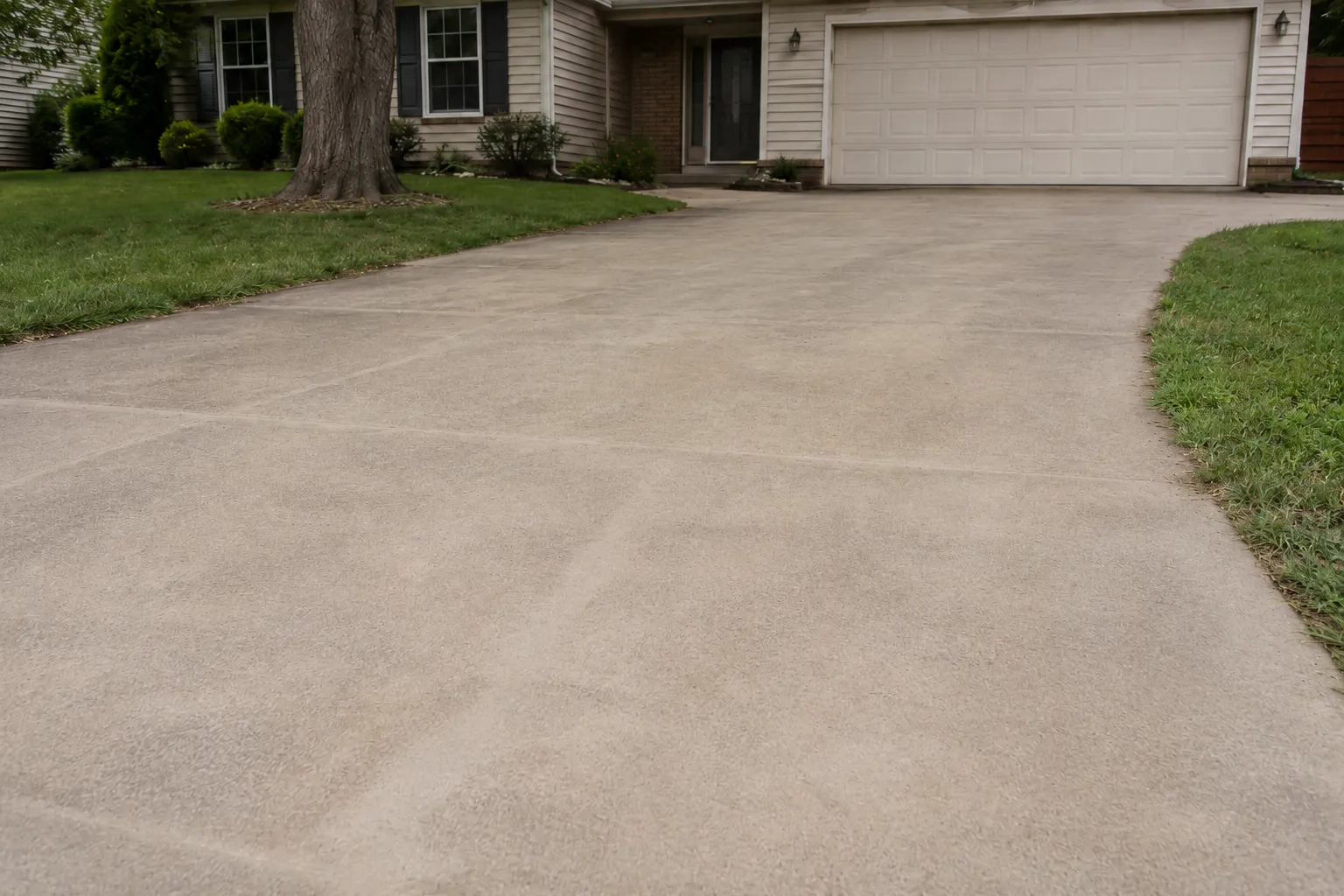
An exact match is unlikely. Existing concrete changes color and texture as it ages. New concrete can be finished to coordinate with the existing surface, but a visible difference should be expected.

How soon can I drive on repaired or replaced concrete?

The answer depends on the repair material, concrete mix, weather, and project specifications. The project provider should give a clear curing and access schedule before the surface is returned to vehicle use.

Do driveway projects require a permit?

Requirements depend on the scope and location. Work that affects a curb, street connection, drainage, or public right-of-way may require approval. The applicable requirements should be confirmed for the specific project.

Request a Driveway Repair Estimate

Describe the cracks, broken edges, surface damage, or displaced sections in your driveway. Attach up to three photos to help with the initial review. You do not need to decide whether the project is repair or replacement before submitting the form.

Have Damaged Concrete?

Describe the problem and attach photos for an initial project review.

Request an Estimate