Learn how soil, seasonal freezing, drainage, and public right-of-way considerations can affect concrete repair and replacement projects in Lee’s Summit, MO.
Soil and Subgrade Conditions Are Property-Specific
Concrete depends on the support beneath it, but no city-wide statement can confirm the soil, fill, compaction, moisture, or support condition below a particular slab. The USDA NRCS Web Soil Survey can provide mapped context for a selected area of interest; it does not diagnose a property or establish the existing condition beneath concrete.
When a section is open or failed concrete exposes material below the slab, we may look for visible support concerns, disturbed material, moisture, or erosion. Those observations help frame the project scope. They do not substitute for site-specific evaluation or an engineering conclusion.
Some cited technical sources in this guide apply to public infrastructure. We use them as context for the conditions that can matter around concrete, not as automatic specifications for every private residential project.
Seasonal Freezing Makes Moisture Control Important
Lee’s Summit regularly experiences freezing temperatures from fall into spring. The National Weather Service average freeze dates list October 17 as the average first 32°F freeze and April 13 as the average final freeze.
Water near cracks, joints, slab edges, and surface defects can be important when temperatures move through freezing conditions. That does not mean every crack has the same cause or that a general freeze-date record can predict a slab’s condition. We consider seasonal exposure together with the visible concrete, water movement, and intended use of the surface.
Drainage Can Affect the Support Beneath Concrete
Existing slope, low areas, swales, runoff paths, nearby downspouts, and adjoining elevations can all influence project planning. Public infrastructure standards also recognize low points and subsurface moisture as drainage concerns. For a residential project, that is useful context—not a rule that every private slab must follow the same public specification.
Before recommending repair or replacement, we look at where water appears to come from, collect, and leave the work area. A repair that changes a transition or slope can affect water movement, and concrete work alone may not resolve a separate drainage problem.
Public Right-of-Way and City Confirmation
The City of Lee’s Summit states that excavation in public right-of-way requires a right-of-way permit. Public right-of-way may extend beyond the visible curb or street edge, so the work limits and property-specific boundaries should be confirmed before assuming a driveway, sidewalk, curb, or street-side transition is entirely private.
Driveway Approaches and Sidewalks
Driveway approaches within public right-of-way are subject to City requirements. A sidewalk, curb, gutter, or street-side driveway connection can involve a different review from a slab that is confirmed to be wholly on private property. The available guidance does not establish one permit answer for every private driveway replacement or every sidewalk scope.
Projects That May Require City Coordination
Authorized work that affects normal vehicle or pedestrian movement may also require temporary traffic-control approval. Covered patio construction, replacement, or repair requires a residential building permit. Permit requirements for an uncovered ground-level concrete patio should be confirmed with the City for the specific scope.
How Local Conditions Affect Repair or Replacement
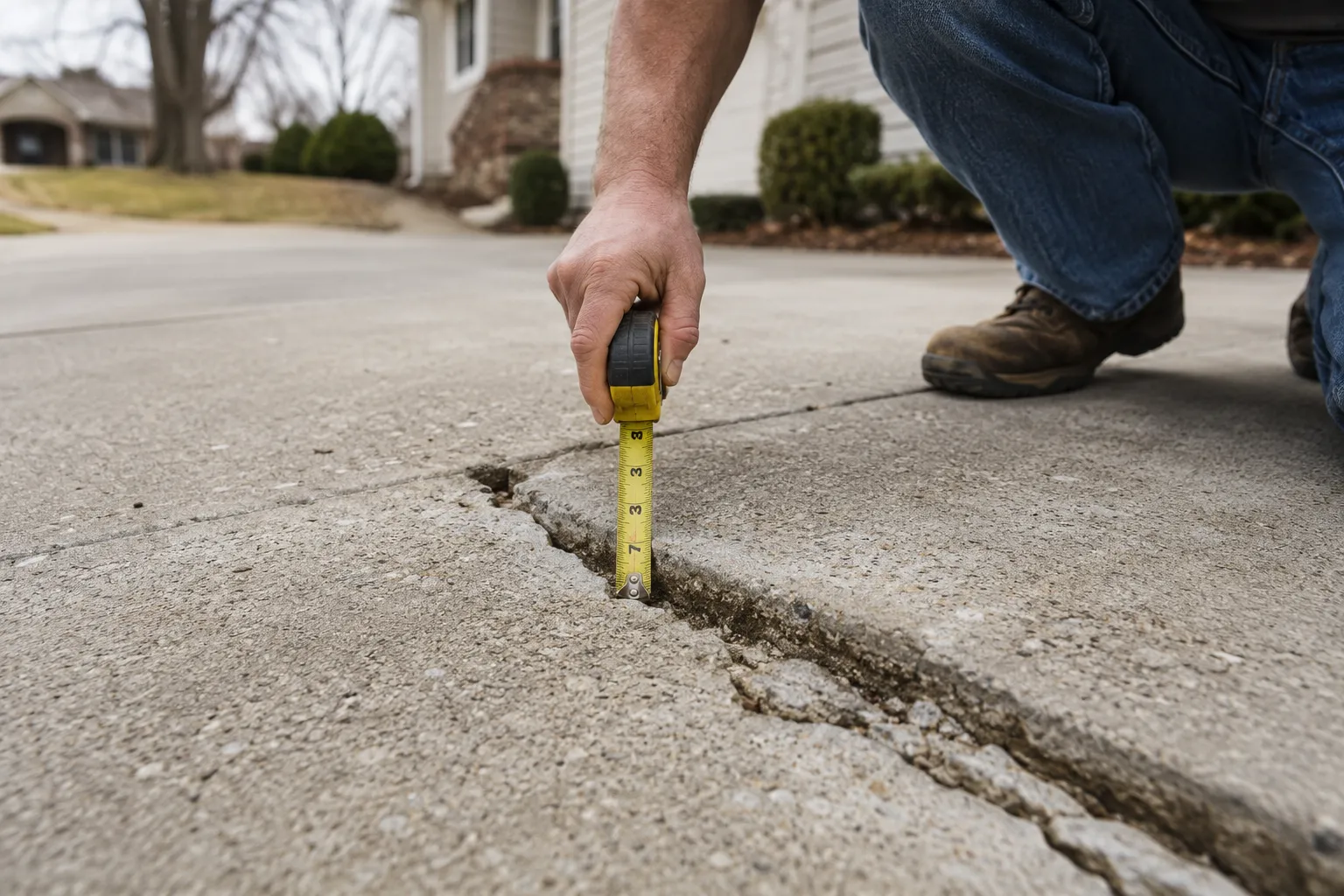
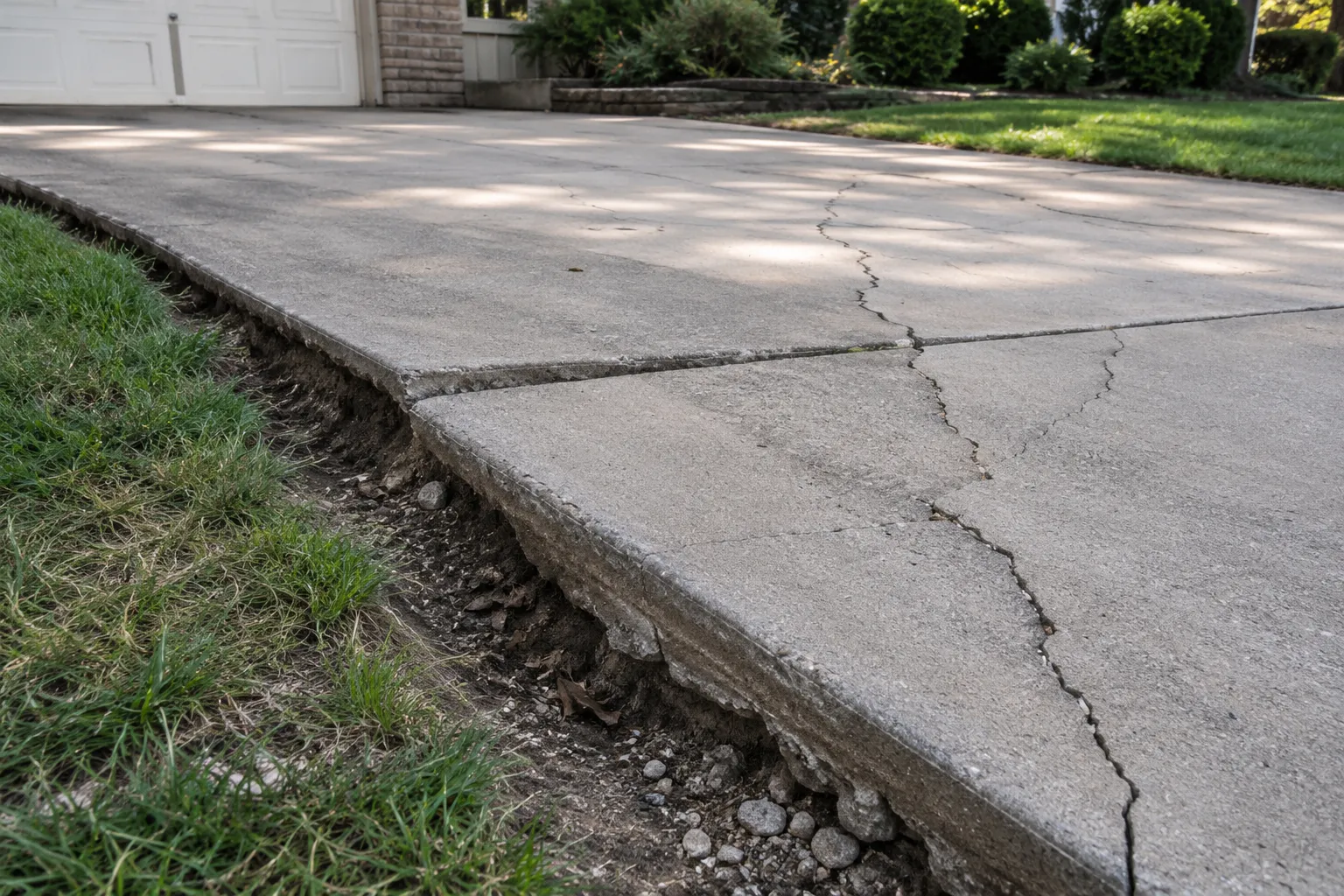
Visible damage is only part of the decision. Settlement clues, broken edges, surface loss, water paths, access, transitions, and support conditions can change whether a localized repair area appears suitable or whether replacement planning needs more preparation. Read our concrete repair or replacement guide for a closer look at that decision.
Local research helps identify questions; it does not decide the outcome from a map, photo, or city-wide average. The work plan should remain tied to the actual conditions found at the property.
What We Check During a Project Review
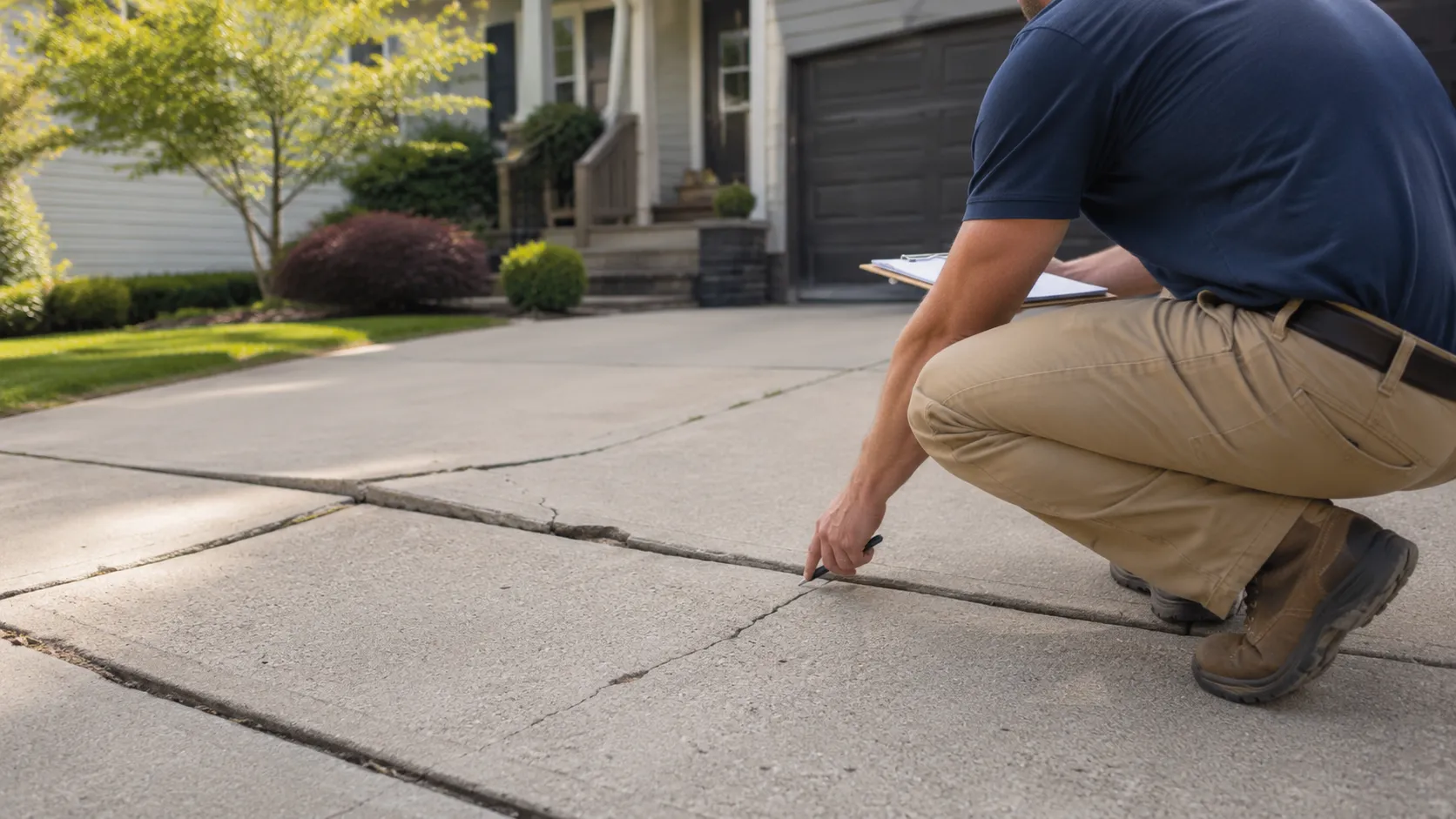
We review the affected surface, crack and joint patterns, broken or settled areas, nearby elevations, drainage clues, access, and the connection to adjoining concrete. For a driveway or walkway near the street, we also identify questions about work limits, right-of-way, and pedestrian or vehicle movement.
To organize the project details before requesting a review, use the Concrete Project Scope Estimator. It provides a general scope category, not a fixed quote or a permit determination.
Plan Your Lee’s Summit Concrete Project
Share the surface involved, the visible condition, drainage observations, access details, and clear photos so we can begin the conversation with the actual work area in view. When city boundaries, easements, permits, or grading questions may affect the scope, confirm them with the City before work begins.
Sources and Information Date
Information reviewed: July 31, 2026.
- City of Lee’s Summit Right-of-Way Permit Guidance
- City of Lee’s Summit Residential Building Permits
- Lee’s Summit Design and Construction Manual
- National Weather Service Average Freeze Dates
- USDA NRCS Web Soil Survey
City requirements and technical standards may change. Property boundaries, easements, permit requirements, and site conditions should be confirmed for the specific project.